Helicopter And Scenic Flight Tours Near Glacier National Park
Glacier National Park forbids commercial sightseeing flights over its interior, so every helicopter tour sold in the region launches outside the boundary. Here is what that means for the views you actually get, and what to book instead.
Short answer
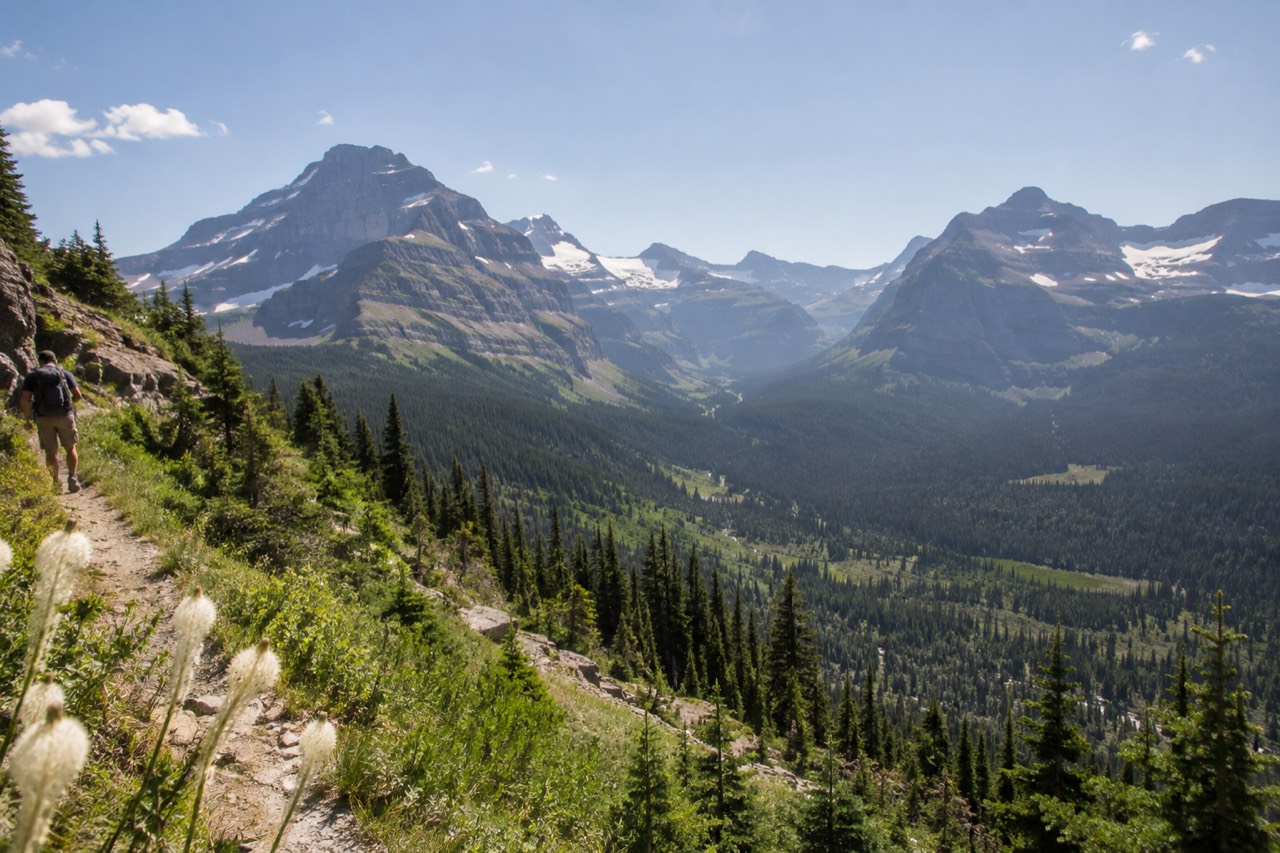
No helicopter tour operates inside Glacier National Park: the park prohibits aircraft low over its wilderness, and no operator holds a concession for scenic flights. Flights sold in the region launch from towns outside the boundary. For aerial-style panoramas of the park itself, a guided driving tour on Going-to-the-Sun Road is the closest bookable experience.
Glacier National Park covers 1,013,126 acres of northern Montana, and not one commercial helicopter flies a sightseeing route inside it. The park's recommended wilderness spans 986,358 of those acres, and federal wilderness rules keep aircraft high above it. Every "Glacier helicopter tour" sold anywhere in the region launches from outside the boundary, over the Flathead Valley, the Bob Marshall Wilderness complex or the Rocky Mountain Front, and the park's interior appears as a distant horizon rather than the main event.
That fact surprises a lot of planners, and it reshapes what a flight is actually worth here. This guide explains where flights launch, what each direction of flight shows, how per-seat pricing scales with duration, and, most usefully, which guided ground experiences deliver the vertical, high-country panoramas that draw people toward helicopters in the first place. If you came looking for a way over the park, the honest answer is that the road does the job better than you might expect.
Why There Is No Helicopter Tour Inside Glacier National Park
No operator holds a concession to fly scenic helicopter tours inside Glacier National Park, and none ever departs from within it. The park's backcountry is managed as recommended wilderness under federal law, which keeps commercial aircraft from flying low over it, and the National Park Service has not authorized any sightseeing flight operation. Any tour marketed as a Glacier helicopter tour launches from outside the boundary.
The mechanism is the Wilderness Act, which prohibits the use of motorized equipment and aircraft landings in designated wilderness, and the park manages nearly all of its backcountry as recommended wilderness under that same standard. Glacier's own Superintendent's Compendium goes further: it prohibits launching, landing or operating unmanned aircraft anywhere in the park except with written superintendent approval, and the same compendium framework governs manned aircraft. There is no airstrip inside the park, no helipad at Apgar, and no concessioner with flight rights. The result is simple and permanent-feeling: the only way to see the interior of Glacier up close is to enter it on the ground, by road, trail or boat.
This is worth stating plainly because search results are full of listings that imply otherwise. A tour titled for the Glacier region is not a tour of Glacier National Park. The flight may be spectacular, and the region around the park, including the Flathead Valley, the Swan Range and the Rocky Mountain Front, is genuinely dramatic flying country. But the peaks you came for, the Garden Wall, Grinnell Glacier, the Many Glacier valley, stay at a distance, seen from outside the park's airspace. Anyone promising a low pass over Logan Pass is promising something no licensed operator can deliver.
Where Scenic Flights Over The Glacier Region Actually Launch From
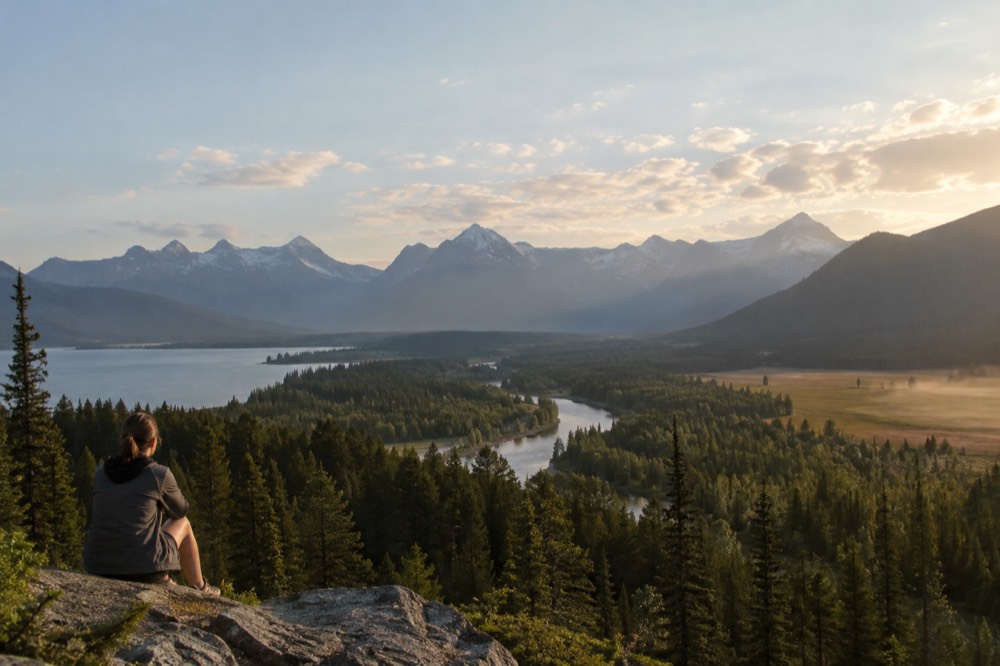
Scenic flights in this corner of Montana launch from airports and heliports outside the park, mostly around Kalispell, Whitefish and Columbia Falls to the west, and along the Rocky Mountain Front east of the divide. None of them can cross low over the park's interior. A typical route flies the Flathead Valley, the Swan Range or the Front, with Glacier's high country visible on the horizon.
To the west, the operations cluster around Glacier Park International Airport, which sits about 30 miles west of the West Entrance and handled 1,114,491 passengers in 2025. Flights from that side head toward the Swan Range, the Mission Mountains and the Flathead River system, which carries federal Wild and Scenic protection along 219 miles of its forks. The Middle Fork of the Flathead alone runs 92 miles from its headwaters in the Bob Marshall Wilderness to its confluence with the North Fork near West Glacier, and much of it forms the park's western and southern border. That border country is legitimate flight territory, and it is genuinely scenic, but the park itself sits on the other side of the river.
To the east, operators fly out of Front towns and ranch strips along Highway 89, where the mountains rise straight off the plains in a wall the Blackfeet call the Backbone of the World. Those flights show the east face of the Lewis Range, the escarpment the park shares with the Blackfeet Reservation, and on clear days the sweep from the border peaks down toward the plains is one of the most dramatic transitions in the American West. What neither direction offers is the interior: the road corridor, the big lakes, the glacier basins. Those belong to the ground.
| Flight region | Launch area | Typical scenery | Relationship to the park |
|---|---|---|---|
| Flathead Valley and Swan Range | Kalispell, Whitefish, Columbia Falls | Valley, rivers, Swan and Mission mountains | Park visible across the Middle Fork border |
| Rocky Mountain Front | Highway 89 towns east of the divide | East face of the Lewis Range, plains transition | Park's east boundary forms the flight's western edge |
| Bob Marshall Wilderness complex | West-side and southern strips | Remote ranges, river headwaters | Park sits north and east of the routes |
If a flight is still what you want, book it as a regional experience and pair it with a day inside the park. The pairing matters more than the flight itself, because the ground half of the trip is where the actual park happens. These three bookable options cover the ground half well, from a fully guided drive to a private custom day to a self-guided audio route in your own car.
What A Flight Shows Versus What Going-To-The-Sun Road Shows
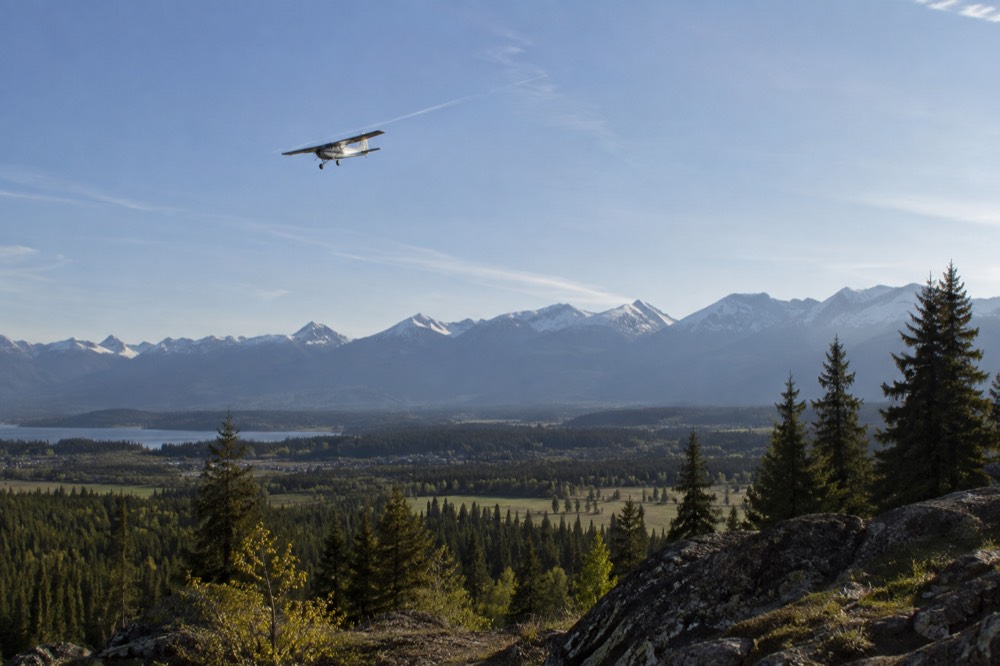
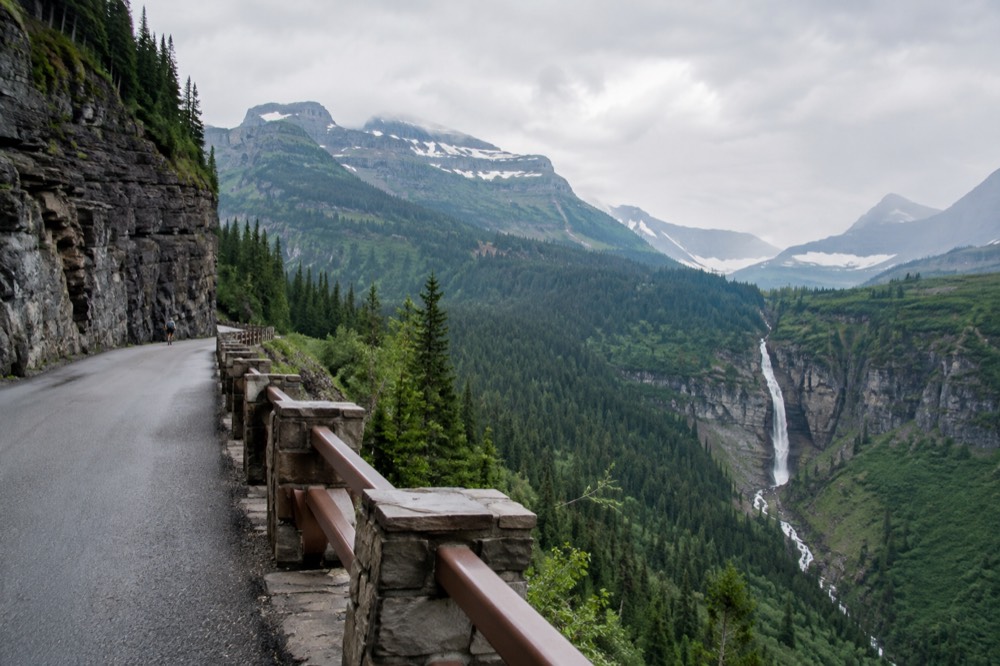
A regional flight shows scale: mountain ranges stacked to the horizon, river systems and the flat geometry of the valley. Going-to-the-Sun Road shows detail the air cannot: waterfalls you can hear, mountain goats on the Garden Wall, and the drop from Logan Pass at 6,646 feet down to the valley floor. The road is the closer substitute for a helicopter tour, because it puts you at eye level with the high country.
The road is 50 miles from the West Entrance to St. Mary, and its alpine section between Avalanche Creek and Rising Sun is where the comparison with flying collapses in the road's favor. From a helicopter at a distance you see the Garden Wall as a long white ridge. From the road you are on it, with the Highline Trail leaving directly from the Logan Pass parking area and running 7.6 miles to Granite Park Chalet along the wall's spine. The park records 184 named mountains and 135 named lakes, and the road passes the biggest of them, Lake McDonald, which runs 9.4 miles long and 464 feet deep, before climbing to the pass.
There is one more practical reason the road substitutes well: your own vehicle may not be allowed on it. Vehicles longer than 21 feet including bumpers or wider than 8 feet including mirrors are prohibited between Avalanche Creek and Rising Sun, and vehicles over 10 feet tall can have trouble with rock overhangs west of the pass. That is a large share of rental RVs and trucks. The National Park Service itself says the answer for oversized vehicles is a shuttle ticket or a tour with an authorized operator, which makes a guided drive the park's own recommended workaround, not just a convenience.
How Scenic Flight Prices Scale With Duration
Scenic flight pricing scales with time in the air far more steeply than ground tours do, because the aircraft's cost runs every minute the rotors turn. Short flights of roughly 20 to 30 minutes cover one headline feature, mid-length flights of about an hour add a second range or river system, and anything longer crosses into charter territory priced per aircraft rather than per seat. Check the operator's live listing for current rates.
The honest structural point is this: a helicopter bills you for flight time, and flight time buys distance, not intimacy. Doubling the price does not get you twice as close to the park, because the distance is fixed by the park boundary. It gets you more of the region. A short hop is a single dramatic feature, the nearest ridgeline or a valley loop. A full hour might link the Swan Range, the Middle Fork canyon and the Front. Beyond that, operators shift to private charter pricing, where you are renting the whole aircraft and the per-seat math changes entirely.
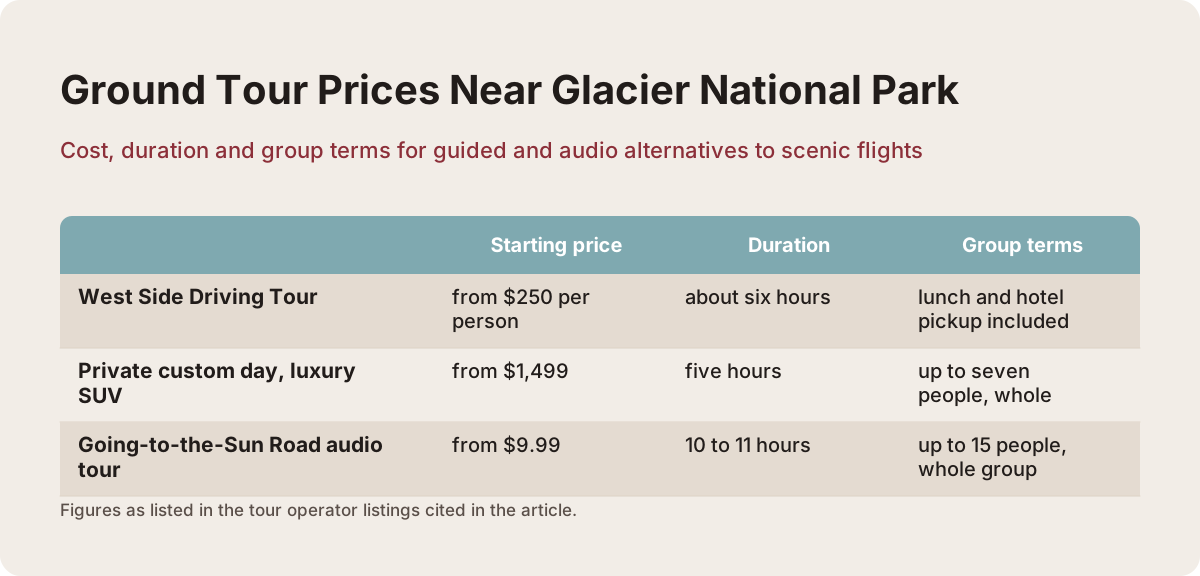
Compare that with how ground tours scale. The West Side Driving Tour runs about six hours with lunch and hotel pickup included, from $250 per person, and it holds 4.8 across 37 reviews. A private custom day in a luxury SUV runs from $1,499 for the whole vehicle, up to seven people, over five hours. Neither of those prices buys distance the way a flight does. They buy access, to corridors and trailheads and viewpoints that no aircraft can legally reach at low altitude. When a reader asks whether a helicopter tour is "worth it" at Glacier, the price-per-view question almost always resolves toward the ground.
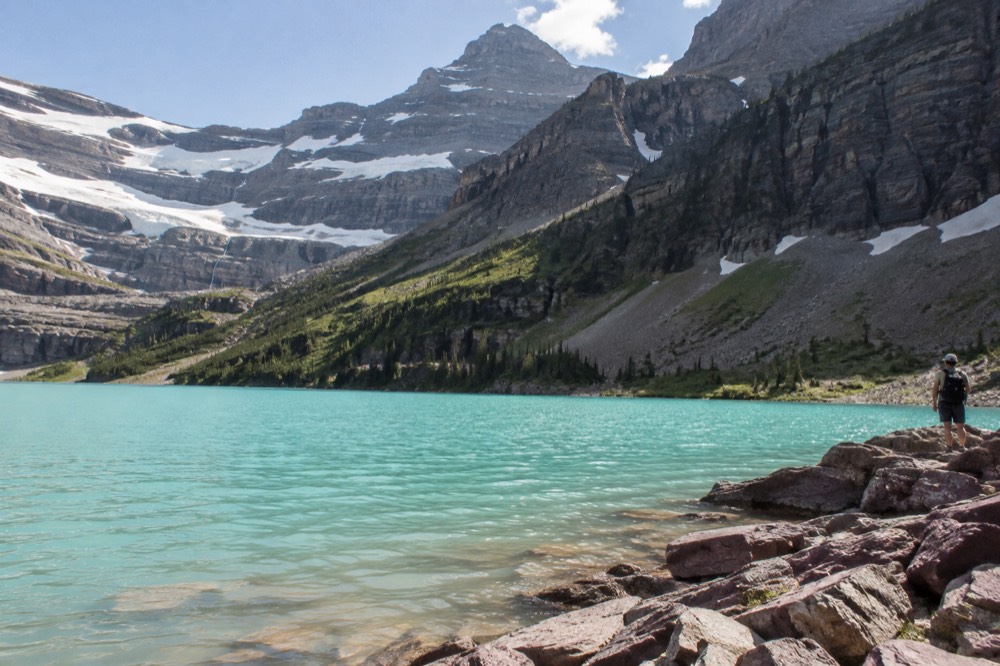
The Rules That Govern The Park's Airspace
Aircraft may cross above Glacier National Park only at altitudes that leave the wilderness undisturbed, and no scenic operator advertises a route that descends into the park's valleys. Landing anywhere inside the park is prohibited. Drones are banned outright without written superintendent approval. These rules come from the Wilderness Act, the park's compendium and Federal Aviation Administration minimums together.
The layering matters for a buyer. The Federal Aviation Administration sets the baseline minimum safe altitudes over terrain and over national park and wilderness areas, and the Wilderness Act adds the purpose behind the altitude: keeping the backcountry quiet. The park's compendium then closes the gaps locally, with the drone ban as its clearest written piece. None of this makes the region unflyable. It makes the park's interior unflyable as a product, which is why every operator's route map shows the park as a border rather than a destination.
For photographers, this is the practical takeaway: if the shot you want is a glacier basin or the Garden Wall from above, that shot does not exist from a legal commercial flight. The honest aerial alternatives are the overlooks the park built for exactly this, Jackson Glacier Overlook on the road's east side, where a named glacier is visible from the pullout, and Sun Point above St. Mary Lake. Both are free with park entry. The park's entrance fee is $35 per private vehicle for seven days, and no vehicle reservation was needed anywhere in 2026.
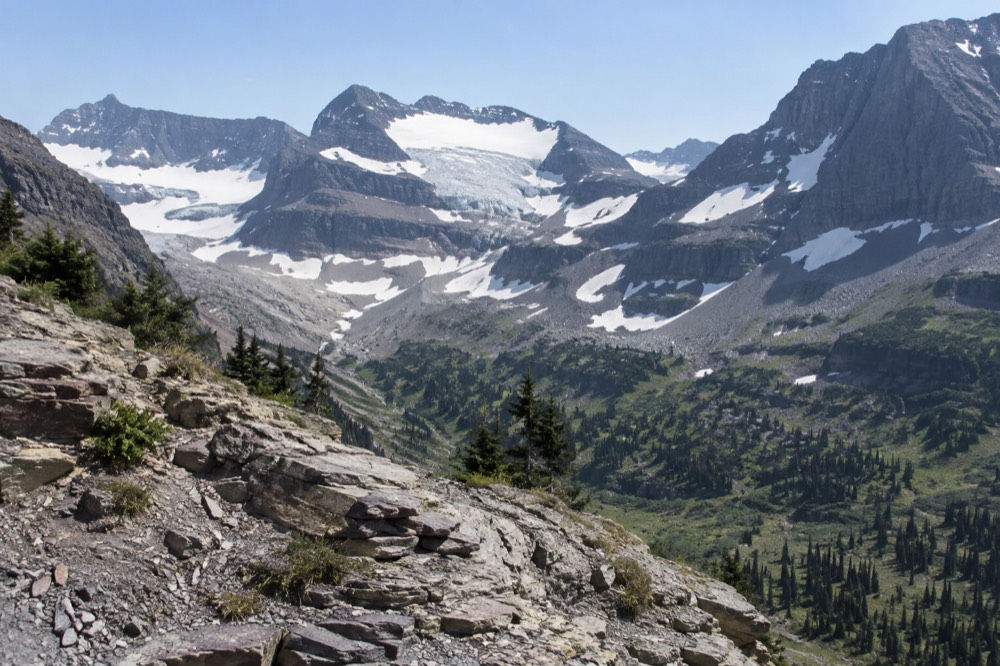
Guided Ground Tours That Deliver The Views A Flight Cannot
The closest bookable substitute for a helicopter tour is a guided driving tour on Going-to-the-Sun Road, which reaches Logan Pass, Jackson Glacier Overlook and Lake McDonald with a driver who narrates the corridor. A private luxury SUV day adds custom routing for up to seven people, and a self-guided audio tour covers the same road in your own car for a flat group price. All three are bookable with free cancellation.
The guided drive is the strongest of the three for most travelers. The West Side Driving Tour runs from $250 per person for roughly six hours, includes lunch and hotel pickup, and carries 4.8 across 37 reviews. Its confirmed stops are Apgar Village and Lake McDonald, and it deliberately skips the Sun Road's alpine section, which makes it a west-side overview rather than a Logan Pass run. For the pass itself, the private SUV option is the one that can be shaped around it, and the audio tour drives it at your own pace with 27 confirmed waypoints from West Glacier to Saint Mary Visitor Center.
The audio option deserves more attention than it usually gets. The Going-to-the-Sun Road audio tour costs from $9.99 for the whole group, up to 15 people, runs 10 to 11 hours if you stop everywhere, and lists 27 confirmed stops including Lake McDonald Lodge, Trail of the Cedars, Avalanche Lake, The Loop, Logan Pass, Jackson Glacier Overlook and Wild Goose Island. It is the cheapest way to cover the full road with narration, and at that price a family of four pays less for the day than a single seat on a 20-minute helicopter hop. Its rating, 4 across 27 reviews, is solid rather than stellar, and the trade is obvious: no live guide, no one to answer questions, but total control of the schedule.
For travelers who want the pass, the narration and the flexibility at once, the private custom day is the premium route. It runs from $1,499 per group for up to seven people over five hours, with hotel pickup and a 5 rating from 2 reviews, and the itinerary is yours to shape within the day. Split across a full vehicle it lands near the per-person price of a mid-length guided drive, with the alpine section included and no one else's schedule to respect. It is also the option that most resembles what people imagine when they book a helicopter: a private experience, a route built around what you want to see, and a price that scales with the vehicle rather than the seat.
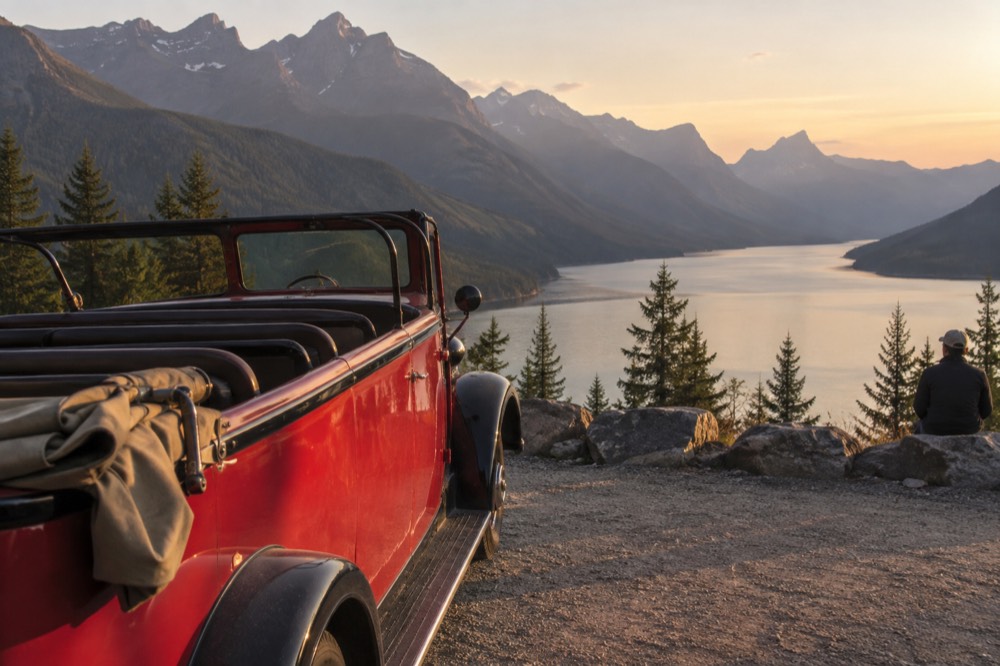
Comparing The Options: Flight, Guided Drive, Private Day And Audio Tour
Across the four ways to spend a sightseeing budget here, the guided drive offers the best views-per-dollar inside the park, the private SUV day offers the most control, the audio tour offers the lowest cost, and the regional flight offers the only thing the others cannot, which is the region-wide panorama. No option reaches the park's interior from the air. The table below compares what each one actually includes.
| Option | Price basis | Duration | What it reaches | Bookable here |
|---|---|---|---|---|
| Regional scenic flight | Per seat, on the operator's listing | 20 minutes to 1 hour plus | Valley, ranges and Front outside the park boundary | No |
| West Side Driving Tour | From $250 per person | 6 hours | Apgar Village, Lake McDonald, lunch included | Yes |
| Private Luxury SUV Custom Day | From $1,499 per group, up to 7 | 5 hours | Custom routing with hotel pickup | Yes |
| Going-to-the-Sun Road Audio Tour | From $9.99 per group, up to 15 | 10 to 11 hours | 27 confirmed stops, full road corridor | Yes |
The flight row is the one to read twice. It is the only row that cannot enter the park, and the only one priced per seat for time in the air. Everything else is priced for access. That inversion is the whole decision: if the goal is the region's shape, fly. If the goal is Glacier itself, drive, and spend the flight budget on a longer, better ground day.
Choosing Between A Flight And A Guided Drive
Choose the flight only if the regional panorama, the Flathead Valley and the Rocky Mountain Front, is itself the goal, and pair it with a ground day for the park. Choose the guided drive if your interest is Glacier's interior, because the road reaches places aircraft cannot legally go, and the alpine section delivers the vertical drama people expect from the air. Travelers with oversized vehicles should lean guided, since the road's size limits exclude many rentals.
Two traveler profiles make the flight genuinely worth it. The first is the photographer or filmmaker who needs the region-wide establishing shot, the wall-of-mountains image with the plains in front, which only the Front flights deliver. The second is the visitor with limited mobility or time who wants one sweeping impression of northern Montana from above, accepting that the park stays on the horizon. Everyone else is usually better served on the ground, and the money goes further there. A six-hour guided drive with lunch at $250 per person buys a full day inside the corridor; the same money on a flight buys roughly an hour of valley airtime.
The oversized-vehicle point deserves its own sentence because it decides for a lot of families. If your rental is longer than 21 feet or wider than 8 feet, you cannot legally drive the alpine section yourself, and the National Park Service names guided tours as the sanctioned alternative. That converts a guided drive from a luxury into the only road-based way to reach Logan Pass, and it is exactly the situation where skipping the flight is not a compromise at all.
If you are weighing the full range of guided experiences beyond driving, the private tour options at Glacier cover custom days in detail, and the guided hikes at Glacier National Park explain what a walk with a concessioner adds over the road. For a broader comparison of every operator and format, Glacier National Park Tour Packages reviews all 34 bookable tours and the direct-only experiences the concessioners sell themselves.
Planning Around The Season
The flight season runs longer than the park's alpine season, because valley and Front flights operate whenever weather allows, while Going-to-the-Sun Road's alpine section typically opens in late June or early July and closes around the third Monday in October. In 2026 the road opened fully on June 22. Book the ground tour inside that window, and treat September as the sweet spot: crowds drop, wildlife is active, and the road is still open.
The asymmetry catches planners every year. A helicopter over the Flathead Valley can fly in May, when the rivers are high and the peaks are still white, but the road over Logan Pass is plowed open only after months of work, and the park's own table of opening dates shows full openings ranging from June 16 to July 13 over the past two decades. In 2026 the full 50 miles opened on June 22, and a September 14 snowfall closed the alpine section temporarily the same day, a reminder that even within the season the pass answers to weather first.
September is the month this site recommends most often, and the visitation numbers explain why. The park recorded 552,479 visits in September 2025 against 765,061 in July, a steep drop while the road, the shuttles and the tours were still running. Wildlife is more visible, the larch and aspen begin turning, and the guided drives that sold out in July often have seats in mid-September. For a deeper breakdown by month, see the best time to visit Glacier National Park.
| Month (2025 visits) | Visits | What it means for booking |
|---|---|---|
| July | 765,061 | Peak pressure on tours, parking and lodging |
| August | 718,766 | Still crowded, book guided days well ahead |
| September | 552,479 | Road and tours running, far fewer people |
| October | 127,537 | Alpine section typically closes mid-month |
Common Questions About Helicopter Tours At Glacier National Park
Can You Take A Helicopter Tour Over Glacier National Park?
No. No operator holds a concession for scenic flights inside the park, and wilderness rules keep aircraft from flying low over its interior. Flights sold in the region launch from outside the boundary and show the park from a distance.
Why Are There No Helicopter Tours Inside Glacier National Park?
Nearly all of the park's backcountry is managed as recommended wilderness, where motorized equipment and low-level aircraft are prohibited, and the park has never authorized a scenic flight concession. The same framework bans drones without written superintendent approval.
Where Do Scenic Flights Near Glacier National Park Launch From?
From airports and heliports outside the park, mostly around Kalispell, Whitefish and Columbia Falls to the west, and along the Rocky Mountain Front to the east. Routes cover the Flathead Valley, the Swan Range and the Front, with the park visible on the horizon.
What Is The Best Alternative To A Helicopter Tour At Glacier?
A guided driving tour on Going-to-the-Sun Road. It reaches Logan Pass at 6,646 feet, Jackson Glacier Overlook and Lake McDonald, and it is the option the National Park Service itself recommends for visitors whose vehicles exceed the road's 21-foot length limit.
How Much Does A Scenic Flight Near Glacier Cost?
Pricing is per seat and scales with time in the air, from short hops covering one feature to hour-plus routes linking multiple ranges, with longer trips priced as full-aircraft charters. Current rates are on each operator's live listing, since flight prices change with fuel and demand.
Is A Helicopter Tour Worth It If I Only Have One Day At Glacier?
Usually not. One day is enough to drive the road corridor with a guide or an audio tour and see the high country at eye level, which is the part of the park a flight cannot reach. Save the flight for a second day focused on the region.