Guided Hiking In Glacier National Park: Permits, Trails, And What A Guide Adds
Glacier National Park maintains 151 trails across 745.6 miles of backcountry, but not every hiker needs a guide. On high-alpine routes where grizzly encounters are frequent and parking is scarce, a guided day hike solves the logistics and the safety equation in a single booking. This guide walks through the legal requirements, the real benefit of hiking with a naturalist on bear-heavy trails, and exactly how guided hikes connect with the 2026 shuttle and boat schedules to open up trailheads that are otherwise a headache to reach.
Short answer
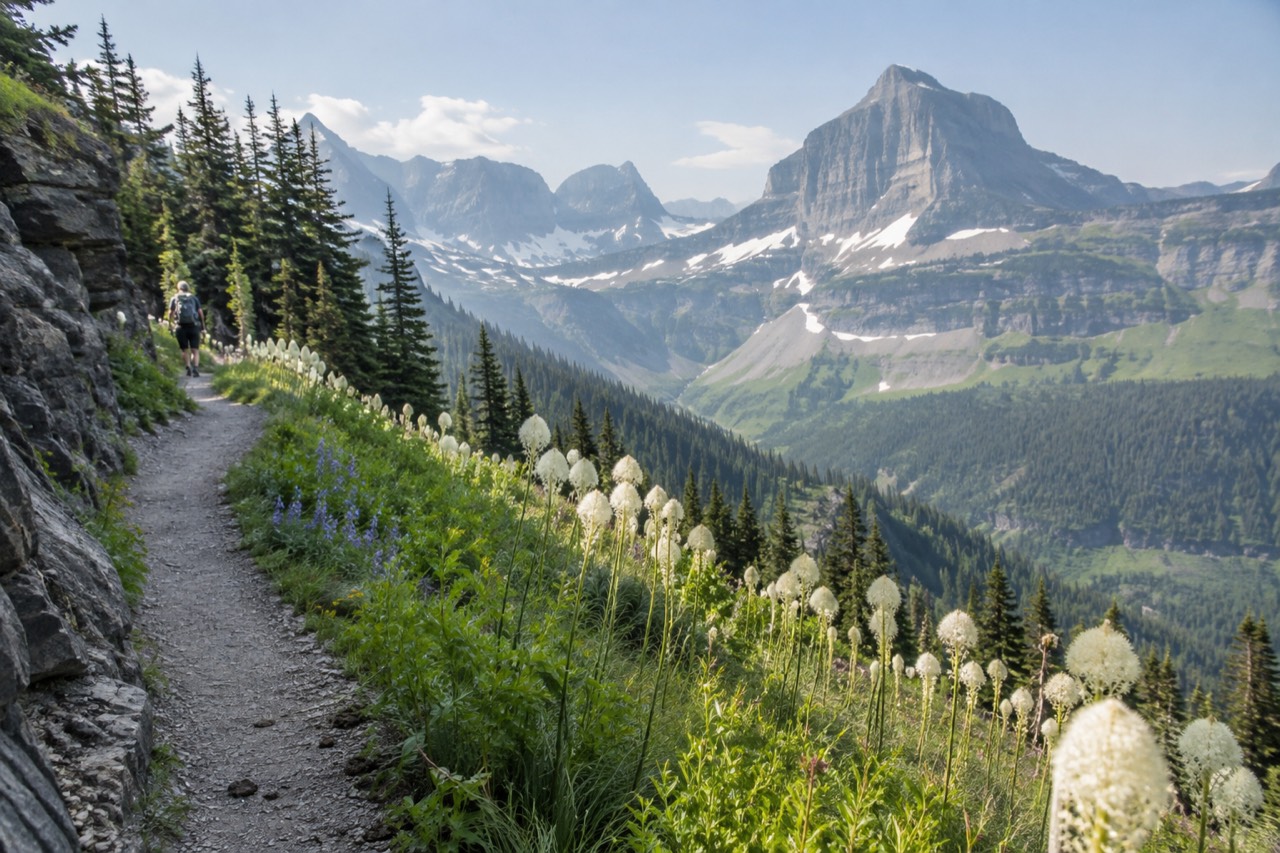
Glacier National Park offers guided day hikes ranging from a 4-hour nature walk ($70 per person) to private full-day treks through Glacier Guides, the park's sole authorized hiking concessioner. No trail legally requires a guide for the general public, but guided hikes provide bear safety in numbers, eliminate parking and shuttle logistics, and pair with the Many Glacier boat to cut 3.4 miles off the Grinnell Glacier hike. Most guided hikes run June through September.
Glacier National Park's 151 trails cover 745.6 miles, but the 4.8-mile Iceberg Lake trail and the 7.6-mile Highline Trail are among the most popular guided routes in 2026. For visitors looking beyond self-drive itineraries, Glacier National Park Tour Packages compares the guided hikes, rafting trips, and audio tours that make the park accessible without the stress of parking and permits.
A guided day hike in Glacier is not a luxury add-on. It is a practical tool for exploring a park where grizzly bear activity closed two major trail sections on September 14, 2026 alone, and where parking at Logan Pass runs on a three-hour timer from July 1 through September 7. This article explains which trails legally require a permitted guide service, what a naturalist guide actually adds on bear-heavy terrain, and how guided hikes pair with the 2026 shuttle and boat schedules to open up trailheads that are otherwise a logistical puzzle.
What Is A Guided Hike In Glacier National Park And Who Runs Them?
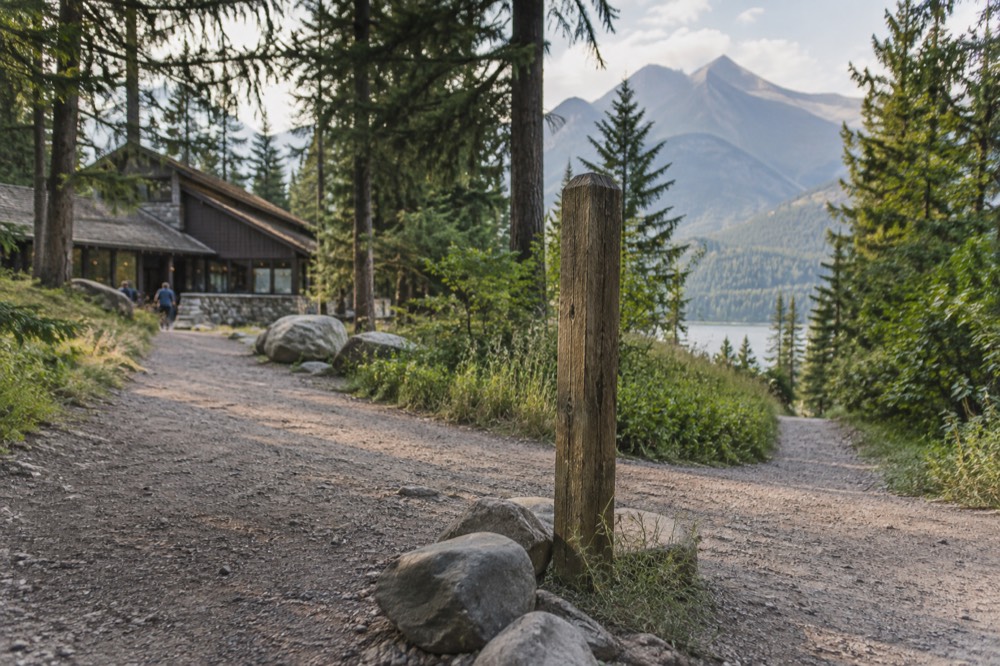
A guided hike in Glacier National Park is a day trip led by a trained naturalist employed by an authorized concessioner. The sole on-trail concessioner is Glacier Guides, which runs nature walks, full-day alpine hikes, and private treks. Outside the park, other outfitters operate on adjacent national forest land, but only Glacier Guides holds the Commercial Use Authorization for guided hiking on park trails.
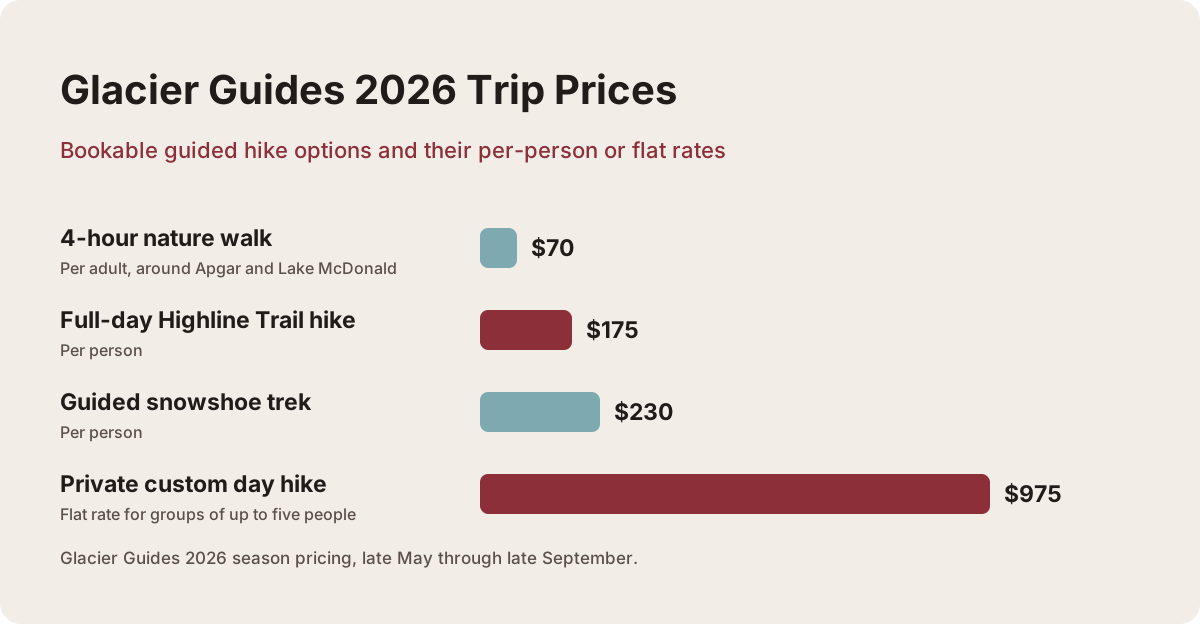
Glacier Guides has been the park's exclusive hiking concessioner for years, and its 2026 season runs from late May through late September, depending on snowmelt. The company offers a range of trips: a 4-hour nature walk ($70 per adult), full-day hikes on the Highline Trail ($175 per person), and private custom day hikes for groups of up to five people at a flat $975. All trips include a guide, bear spray, and transportation from a meeting point near West Glacier.
Other guided hiking experiences exist but do not operate on park trails. Several whitewater rafting outfitters offer half-day hikes paired with a float, and a handful of backcountry lodges like Granite Park Chalet provide guided add-ons for overnight guests. The distinction matters because only a Glacier Guides trip lets you step onto a park trail with a permitted guide who can interpret the landscape and manage wildlife encounters under the park's own safety protocols.
Do You Need A Guide To Hike In Glacier National Park?
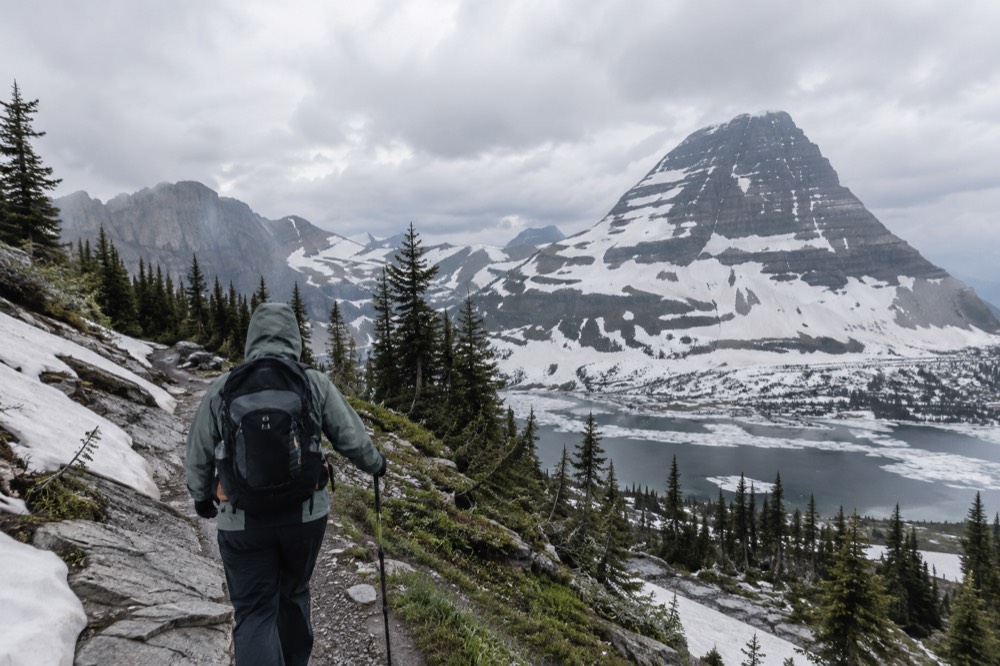
No trail legally requires a guide for the general public, but two practical realities make a guide the sensible choice on certain routes: the high density of grizzly bears on trails like Grinnell Glacier and Iceberg Lake, and the parking and shuttle logistics that can eat hours of a self-guided day. On the Highline Trail, where a narrow ledge section has a hand cable, a guide provides route-finding confidence that many hikers value.
The National Park Service does not mandate guided hiking, but it strongly recommends hiking in groups of three or more on bear-heavy trails and carrying EPA-registered bear spray with 1-2% capsaicinoids. A guided group satisfies that recommendation automatically, and the guide is trained to deploy spray and manage a close encounter. In 2026, a grizzly bear charged and fractured a hiker's arm on the Grinnell Glacier Trail near Lake Josephine on May 28, and a fatal attack occurred on the Mount Brown Lookout trail on May 3. Those incidents underscore why many visitors choose to hike with a professional who reads bear sign and carries communication devices.
Beyond safety, a guide eliminates the scramble for parking. Logan Pass, the trailhead for the Highline and Hidden Lake trails, fills by 7:00 a.m. on peak summer days, and the 2026 pilot parking limit is three hours, enforced 24/7 from July 1 through September 7. A guided hike that includes transportation drops you at the trailhead without circling the lot, and the guide handles the return logistics.
What Does A Guide Add On Grizzly-Heavy Trails?
A guide on a grizzly-heavy trail adds group size that deters curious bears, real-time bear spray readiness, knowledge of recent bear activity from park ranger reports, and a communication device to call for help if a hiker is injured. On trails like Iceberg Lake, where the NPS requires staying 100 yards from bears, a guide ensures the group maintains safe distances and never surprises an animal on a blind corner.
The park's 2026 bear safety page, updated May 14, reiterates that intentionally approaching or viewing bears within 100 yards is prohibited. A solo hiker or a small group without a guide often lacks the collective awareness to spot a bear at a distance and adjust course. Guides carry bear spray in a chest holster, not buried in a pack, and they practice drawing it in training. After the May 3 fatality on Mount Brown Lookout, the interagency review noted that the hiker was alone and did not deploy bear spray. Guided groups avoid that scenario entirely.
Guides also interpret the landscape in ways that reduce risk. They know which drainages hold ripe huckleberries in late summer and where a daybedding grizzly is likely to be, and they choose rest stops accordingly. On the Grinnell Glacier Trail, where the boat shuttle cuts 3.4 miles round trip but still leaves 3.6 miles of hiking with 1,600 feet of elevation gain, a guide keeps the group moving at a pace that minimizes time in the most exposed sections.
How Do Guided Hikes Pair With The 2026 Shuttle And Boat Schedules?
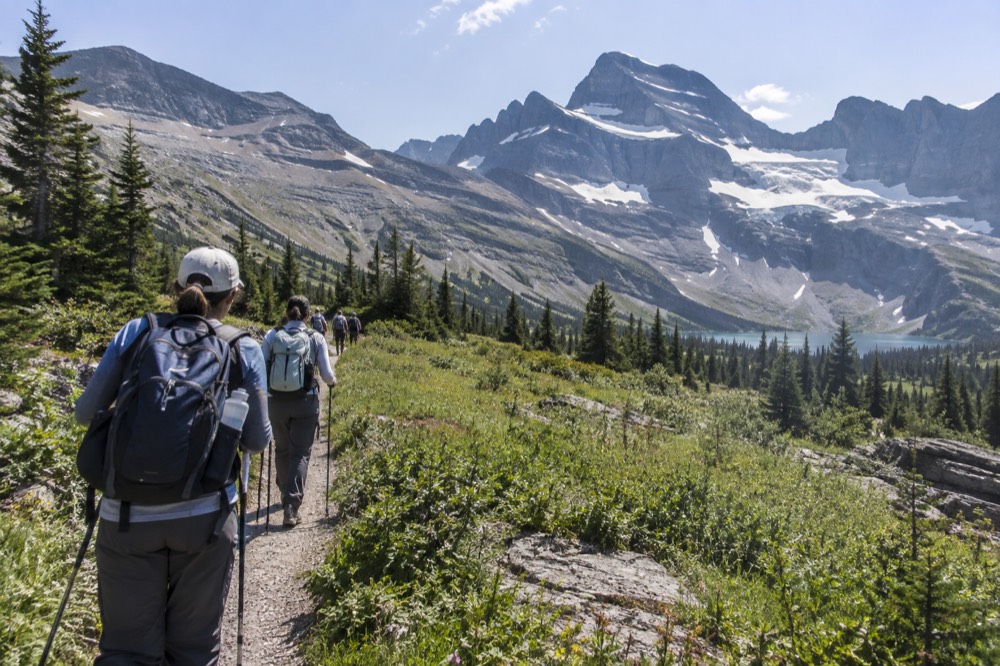
Guided hikes solve the biggest logistical headache in Glacier National Park in 2026: reaching trailheads that are either inaccessible by private vehicle or choked by parking limits. A guided hike that includes transport bypasses the ticketed Logan Pass shuttle and drops you directly at the trailhead. On the east side, a guided hike that pre-books the Many Glacier boat cuts 3.4 miles off the Grinnell Glacier hike and eliminates the separate reservation step.
The 2026 Logan Pass shuttle is a reservation-only system with tickets released 60 days ahead and a next-day batch at 7 p.m. MDT. Shuttles run from 6:00 a.m. to 7:30 p.m. westbound, but there is no other public transport if you miss the last departure. A guided hike that meets you at the trailhead and returns you to your car removes that deadline pressure. For a deeper comparison of shuttle and guided options, see our guide on the Glacier National Park shuttle versus a guided tour.
The Many Glacier boat tour, operated by Glacier Park Boat Company since 1938, runs from June 10 to September 19 in 2026. A round-trip adult ticket costs $41.70 and crosses Swiftcurrent Lake and Lake Josephine, depositing hikers at the Grinnell Glacier trailhead. A guide who pre-books those boat seats and times the hike to the boat schedule turns a 7.6-mile round-trip trek into a 5.8-mile hike with the same 1,600 feet of climbing. Several guided hiking itineraries build the boat into the day, and the guide manages the timing so the group never misses the last boat back. Read more about boat tours in Glacier National Park to see how the concession works.
What Are The Best Guided Hikes Available In 2026?
The best guided hikes in Glacier National Park in 2026 fall into two categories: bookable day trips through the sole authorized concessioner, Glacier Guides, and direct-only guided hikes offered by the park's historic concessioners that cannot be booked through this site. The bookable options include a 4-hour nature walk, a snowshoe trek, and a combo driving and snowshoe tour.
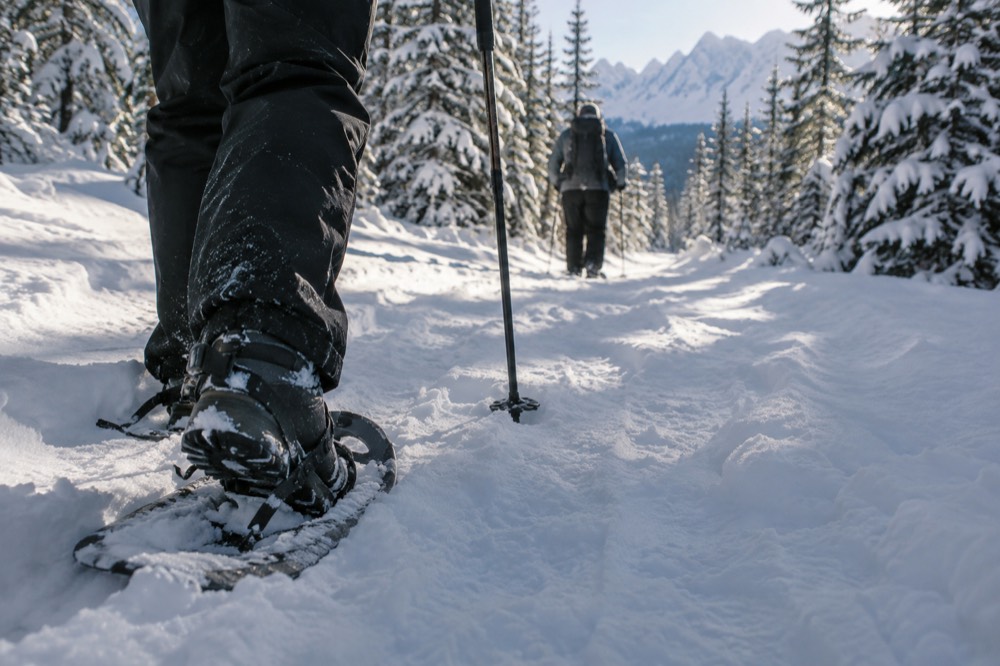
The bookable guided hikes on this site are a small, curated selection that covers the most popular entry-level and winter experiences. The 4-hour nature walk ($70 per person, 4.9 stars from 127 reviews) explores the trails around Apgar and Lake McDonald with a naturalist who points out wildflowers, wildlife sign, and the park's glacial geology. The guided snowshoe trek ($230 per person, 5 stars from 2 reviews) runs in winter and includes hotel pickup and snowshoes, taking you into the quiet, snow-covered forests near West Glacier. The combo driving tour and snowshoe trek ($230 per person, 5 stars from 3 reviews) pairs a scenic drive through the Apgar area with a guided snowshoe walk, ideal for visitors who want a taste of winter hiking without committing to a full day on foot.
Direct-only guided hikes, sold by Glacier Guides on its own website, cover the iconic alpine trails. The Highline Trail day hike ($175 per adult, ages 10 and up) covers 7.2 miles from Logan Pass to The Loop, running July 7 through September 29. The Grinnell Glacier hike uses the boat and covers 3.6 miles one way with a guide. Private custom day hikes ($975 for 1-5 people) let you choose the trail and pace. These direct-only trips are the core of the park's guided hiking program, and they sell out weeks in advance for July and August dates.
| Trail | Distance (one way) | Elevation Gain | Guide Availability | Bookable Here? |
|---|---|---|---|---|
| Highline (Logan Pass to The Loop) | 7.2 mi | +2,388 ft, -4,773 ft | Glacier Guides direct | No |
| Grinnell Glacier (with boat) | 3.6 mi | +1,600 ft | Glacier Guides direct | No |
| Iceberg Lake | 4.8 mi | +1,200 ft | Ranger-led (free) or private guide | No |
| Hidden Lake Overlook | 1.4 mi | +460 ft | Ranger-led (free) or private guide | No |
| Nature Walk (Apgar/Lake McDonald) | 2-4 mi | Minimal | Yes, via this site | Yes |
How Much Do Guided Hikes Cost In Glacier National Park?
Guided hike prices range from $70 per person for a half-day nature walk to $975 for a private full-day group hike. The bookable tours on this site sit at the lower end: the nature walk at $70, the snowshoe trek at $230, and the combo tour at $230. Direct-only guided hikes through Glacier Guides cost $175 per person for the Highline Trail and $975 for a private group of up to five.
The price difference reflects the guide-to-guest ratio and the logistics. A nature walk can accommodate a larger group and stays on lower-elevation trails near the road, keeping the per-person cost down. An alpine hike like the Highline requires a smaller group, a longer day, and often a vehicle shuttle to position a car at the endpoint, which drives the price up. The private custom hike is the most expensive because the guide's full day is dedicated to a single group.
| Guided Hike | Duration | Price (2026) | Bookable Here? |
|---|---|---|---|
| Nature Walk (Apgar/Lake McDonald) | 4 hours | $70 per person | Yes |
| Highline Trail (Logan Pass to The Loop) | 7.2 miles | $175 per person | No (direct only) |
| Grinnell Glacier with boat | 3.6 miles one way | Contact operator | No (direct only) |
| Private custom day hike (1-5 people) | Full day | $975 flat | No (direct only) |
| Guided snowshoe trek (winter) | 5 hours | $230 per person | Yes |
| Combo driving tour + snowshoe trek | 5 hours | $230 per person | Yes |
Prices are read off the operator's live listing and include the guide, bear spray, and often trekking poles. Lunch is included on the full-day hikes but not on the half-day nature walk. The direct-only hikes must be booked through Glacier Guides' own reservation system, and they tend to fill up for the peak July and August weeks by early spring.
How To Choose Between A Guided Hike And A Self-Guided Trek
Choose a guided hike if you are hiking a trail with known grizzly activity, if you want to hike the Highline or Grinnell Glacier without the parking and shuttle stress, or if you are a solo traveler who prefers the safety of a group. Choose a self-guided trek if you are comfortable with bear safety protocols, have your own transportation, and are hiking a well-marked trail like Avalanche Lake where the route is obvious and the bear risk is lower.
The decision often comes down to the trail itself. The Highline Trail includes a 0.3-mile ledge section with a hand cable, and in 2026 hikers on that trail encountered a grizzly on September 13 and climbed rocks to let it pass. A guide on that trail provides both route confidence and bear management. Grinnell Glacier is a long day with 1,600 feet of climbing, and the boat shortcut requires separate reservations. A guide who handles the boat booking and keeps the group on pace for the last boat back removes two layers of planning.
For shorter, frontcountry trails like the 0.7-mile Trail of the Cedars boardwalk or the 2.3-mile Avalanche Lake hike, a guide is not necessary. Those trails are well-traveled, the bear risk is lower, and parking at Avalanche is more forgiving than at Logan Pass. The park's free ranger-led hikes, which in 2026 included Hidden Lake Overlook and Iceberg Lake on a first-come, first-served basis, offer a middle ground: a guided experience at no cost, but with larger groups and no guaranteed spot. For a broader look at the park's top trails, see our guide to the best hikes in Glacier National Park.
| Factor | Guided Hike | Self-Guided Hike |
|---|---|---|
| Bear safety | Guide carries spray, reads sign, maintains group size | Hiker must carry own spray and know protocols |
| Parking at Logan Pass | Transportation included, no parking stress | Three-hour limit, lot fills by 7 a.m. in summer |
| Shuttle logistics | Guide handles timing, no shuttle ticket needed | Shuttle ticket required ($1 fee), last departure at 7:30 p.m. |
| Boat access (Many Glacier) | Guide books boat, times hike to schedule | Hiker must book boat separately ($41.70 round trip) |
| Cost | $70-$975 depending on hike | Free beyond park entry fee and any boat/shuttle costs |
| Route finding | Guide knows trail, no navigation needed | Hiker must read map, especially on less-marked trails |
What Should You Bring On A Guided Day Hike?
On a guided day hike in Glacier National Park, the outfitter provides the guide, bear spray, and often trekking poles and lunch on full-day trips. You still need to bring sturdy hiking boots, a rain jacket, at least two liters of water, sunscreen, and a daypack. The guide will brief you on what is provided, but the basics are your responsibility, and the weather at 6,646 feet can shift from sun to snow in an hour.
Glacier's alpine zone runs 10 to 15 degrees Fahrenheit cooler than the West Glacier valley, and snow can fall in any month. Even a July hike on the Highline can start in sunshine and end in a cold rain at The Loop. A puffy jacket and a waterproof shell are non-negotiable. Guides typically carry a first-aid kit and a satellite communication device, but they expect each hiker to carry their own snacks and water.
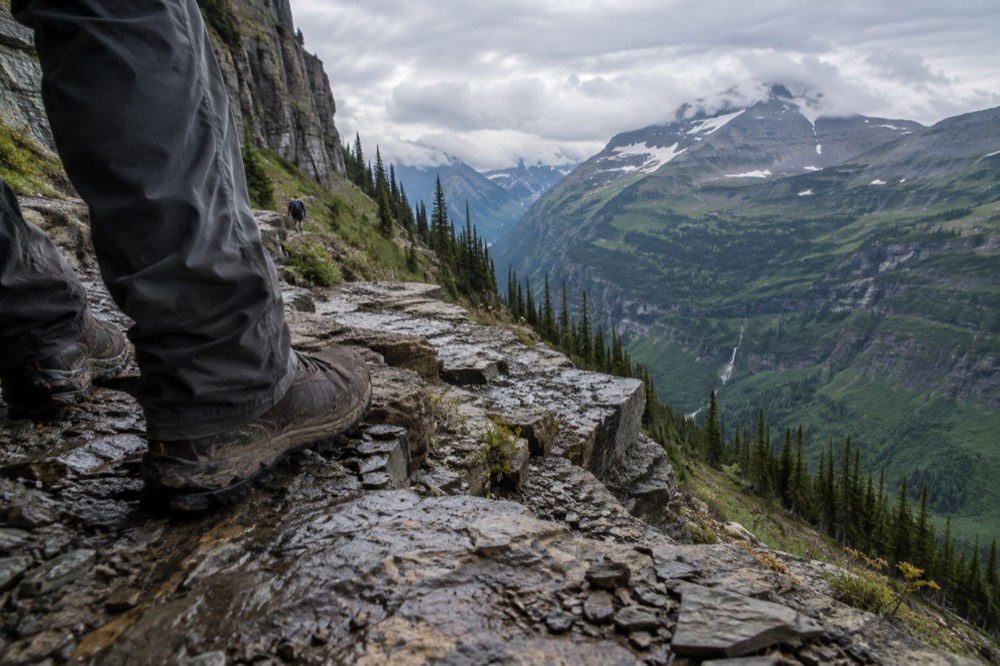
Footwear matters more than most first-time visitors realize. The Highline Trail's ledge section is narrow and often wet, and the Grinnell Glacier trail has rocky switchbacks. Sturdy, broken-in hiking boots with good ankle support are far better than trail runners. The guide will check footwear at the trailhead and may turn away a hiker in sandals.
How Do Winter Guided Hikes Differ From Summer Hikes?
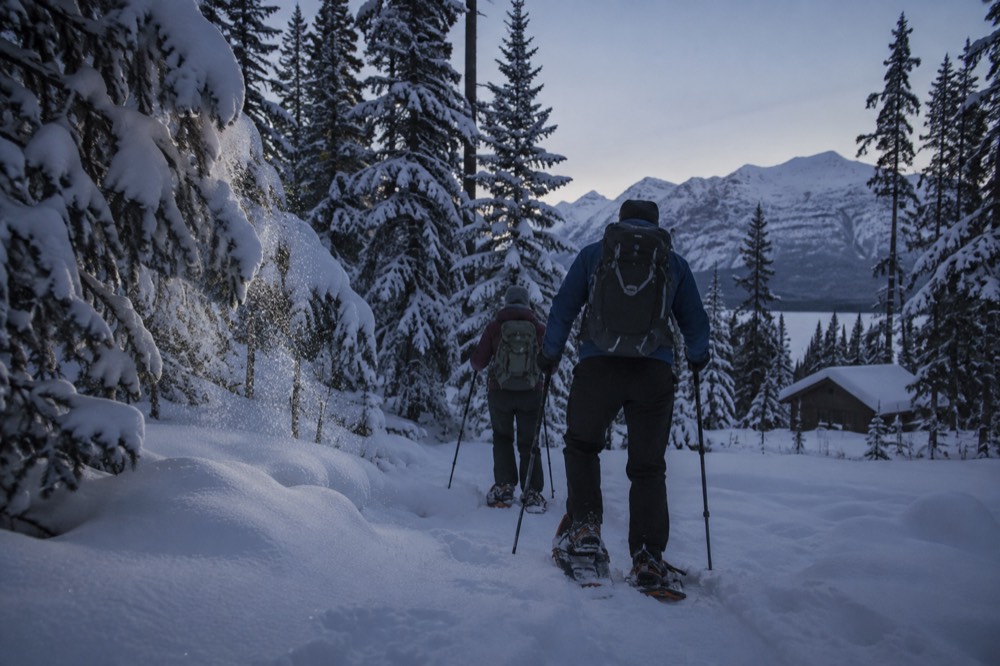
In Glacier National Park, winter guided hikes become snowshoe treks on forested routes because alpine trails are buried under snow and the Going-to-the-Sun Road closes at Lake McDonald Lodge. From December to March, these excursions offer a quieter, slower-paced experience with different wildlife, while providing snowshoes, poles, and hot drinks, though the guided format remains unchanged.
The bookable snowshoe trek on this site ($230 per person, 5 hours) includes hotel pickup from the Whitefish or Kalispell area, snowshoes, and a guide who interprets the winter ecology. The combo driving tour and snowshoe trek adds a scenic drive through the Apgar area before the snowshoe walk. Both trips run with small groups and include lunch or snacks.
Winter hiking in Glacier is not about peak-bagging. It is about silence, animal tracks in fresh snow, and the chance to see the park without the summer crowds. The 2026 winter season saw 48.7 inches of seasonal snow at West Glacier through early September, and a measurable snow event on May 17, so snowshoe conditions are reliable from December through March.
How Far In Advance Should You Book A Guided Hike?
Book popular summer hikes like the Highline Trail and Grinnell Glacier by March or April for July and August dates, as they fill soon after schedules release in early spring. Nature walks and snowshoe tours offer more flexibility, but weekends in peak months often sell out two to three weeks ahead, while winter trips may be available a few days before except during holidays.
The 2026 season saw July visitation hit 896,386 recreation visits, a 17 percent increase over July 2025, and the fourth-busiest July on record. That volume puts pressure on every guided service. Red Bus tours, for comparison, sell out on a daily basis in summer, and guided hikes follow a similar pattern. If you are planning a trip that includes a specific guided hike on a specific date, book it as soon as your travel dates are firm.
The nature walk is the easiest to book last-minute because it runs daily and has larger group capacity. The snowshoe trek and combo tour have smaller groups and fewer departure days, so a two-week buffer is wise even in winter.
How Do Guided Hikes Fit Into A Multi-Day Glacier Itinerary?
Guided hikes fit into a multi-day Glacier itinerary as the full-day centerpiece, best placed between lighter travel or self-guided days. A full-day guided hike on the Highline or Grinnell Glacier trail leaves you tired, so schedule easier days before and after. A half-day guided nature walk pairs well with an afternoon boat tour or scenic drive.
A sample 4-day west-side itinerary for July might look like this: Day 1, arrive and do the 4-hour nature walk in the afternoon to get oriented. Day 2, drive Going-to-the-Sun Road early, stopping at Logan Pass and hiking the Hidden Lake Overlook on your own. Day 3, take a full-day guided hike on the Highline Trail. Day 4, do a half-day whitewater rafting trip or a scenic float before departing. That rhythm spreads out the physical effort and uses the guided hike as the trip's high point.
For visitors staying on the east side, a Many Glacier itinerary might pair a guided Grinnell Glacier hike with the boat on Day 2, a self-guided Iceberg Lake hike on Day 3, and a Red Bus tour or a drive to Two Medicine on Day 4. The guided hike handles the hardest logistics, and the self-guided days fill in around it.
How Do Guided Hikes Compare To Ranger-Led Hikes?
Ranger-led hikes are free and first-come, first-served, often with 20 or more people, so you must arrive early for routes like Hidden Lake Overlook or Iceberg Lake. Commercial guided hikes are paid but cap groups at 10 or fewer, guarantee your spot, and typically include transportation, bear spray, and lunch.
The park's 2026 ranger programs included daily hikes, evening amphitheater talks, and Native America Speaks presentations, all free except for certain boat-inclusive hikes. On September 14, 2026, the park offered a Redrock Falls hike at 9 a.m., a Creekside Stroll at Apgar, and evening programs at Apgar and Many Glacier. Those ranger-led hikes are a genuine alternative for visitors who want interpretation without the cost.
The trade-off is group size and certainty. A ranger-led hike on Iceberg Lake might draw 25 people, which can feel crowded on a narrow trail and does not offer the same level of individual attention. A commercial guided hike caps the group at a smaller number and guarantees your spot regardless of how many people show up at the trailhead.
Common Questions About Guided Hiking In Glacier National Park
Do I Need A Guide To Hike In Glacier National Park?
No trail legally requires a guide for the general public, but a guide is strongly recommended on grizzly-heavy trails like Grinnell Glacier and Iceberg Lake, and on routes with tricky logistics like the Highline Trail. A guide provides bear safety, eliminates parking stress, and handles shuttle and boat reservations.
How Much Does A Guided Hike Cost In Glacier?
Bookable guided hikes on this site range from $70 per person for a 4-hour nature walk to $230 per person for a snowshoe trek or combo tour. Direct-only guided hikes through Glacier Guides cost $175 per person for the Highline Trail and $975 for a private group of up to five.
What Is The Best Guided Hike In Glacier National Park?
The Highline Trail is the most iconic guided hike, offering 7.2 miles of alpine scenery with a guide who handles the ledge section and bear awareness. The Grinnell Glacier hike with the boat is the best choice for visitors who want to see a glacier up close without the full 7.6-mile round trip.
Can I Book A Guided Hike On Going-To-The-Sun Road?
The Highline Trail and Hidden Lake Trail both start at Logan Pass on Going-to-the-Sun Road, and guided hikes on those trails include transportation to the trailhead. No guided hike operates on the road itself; those are driving tours, not hikes.
Are Guided Hikes Safe For Kids?
The 4-hour nature walk is suitable for children ages 6 and up, and the snowshoe trek accepts kids 8 and older. Full-day alpine hikes like the Highline Trail require a minimum age of 10 and a good fitness level due to the elevation gain and exposure.
Do Guided Hikes Run In Winter?
Yes, guided snowshoe treks run from December through March in the forested areas near West Glacier and Apgar. The alpine trails are buried under snow and inaccessible, but the snowshoe trips offer a quiet winter experience with a naturalist guide.