Glacier National Park Entrance Fees And Passes Explained
Glacier charges $35 per private vehicle for seven days in summer, but that is only one of three separate charges visitors confuse: the entrance fee, the vehicle reservation that does not exist in 2026, and the tour ticket that replaces the need to drive at all.
Short answer
A private vehicle pays $35 for seven days in summer, $25 in winter. No vehicle reservations were required anywhere in the park in 2026. Guided tours do not include the entrance fee unless the listing says so, and non-US residents aged 16 and over pay an extra $100 per person on top of the standard fee.
Glacier National Park collected 3,136,557 recreation visits in 2025, and 47.3 percent of them arrived in just two months, July and August. Every one of those visitors met an entrance station, and a surprising number left confused about what they had actually paid for. The entrance fee is not a tour ticket. It is not a vehicle reservation. It is not the $1 Logan Pass shuttle charge that appeared for the first time in 2026. These are three different things, and mixing them up is the single most common planning error at this park.
This guide separates them. It gives the full 2026 fee schedule from the National Park Service, lists every pass that works at the gate, explains what changed when the park dropped vehicle reservations entirely for 2026, and shows which costs a guided tour absorbs and which it does not. Where a figure matters, it comes from the park's own published pages, and where something is not yet confirmed, that is said plainly too.
How Much Is The Glacier National Park Entrance Fee?
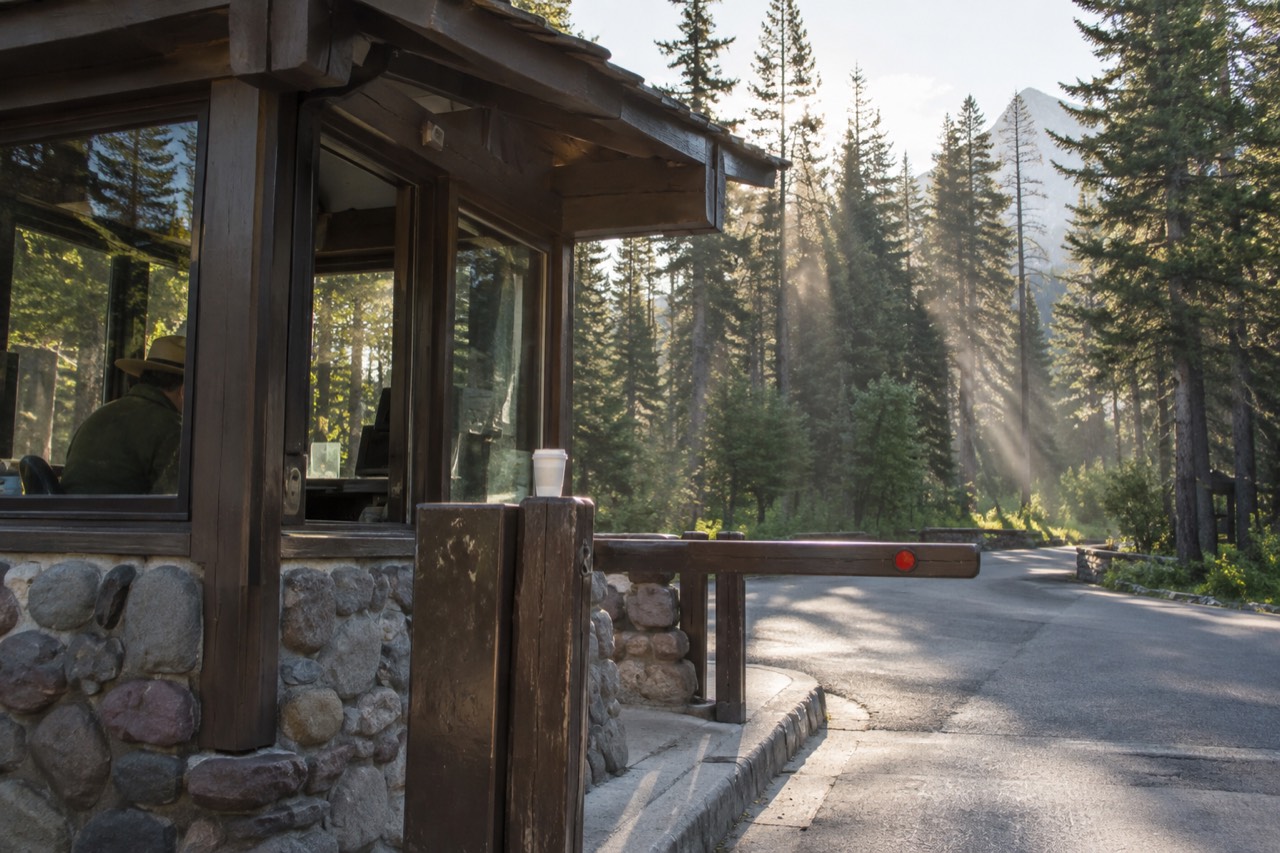
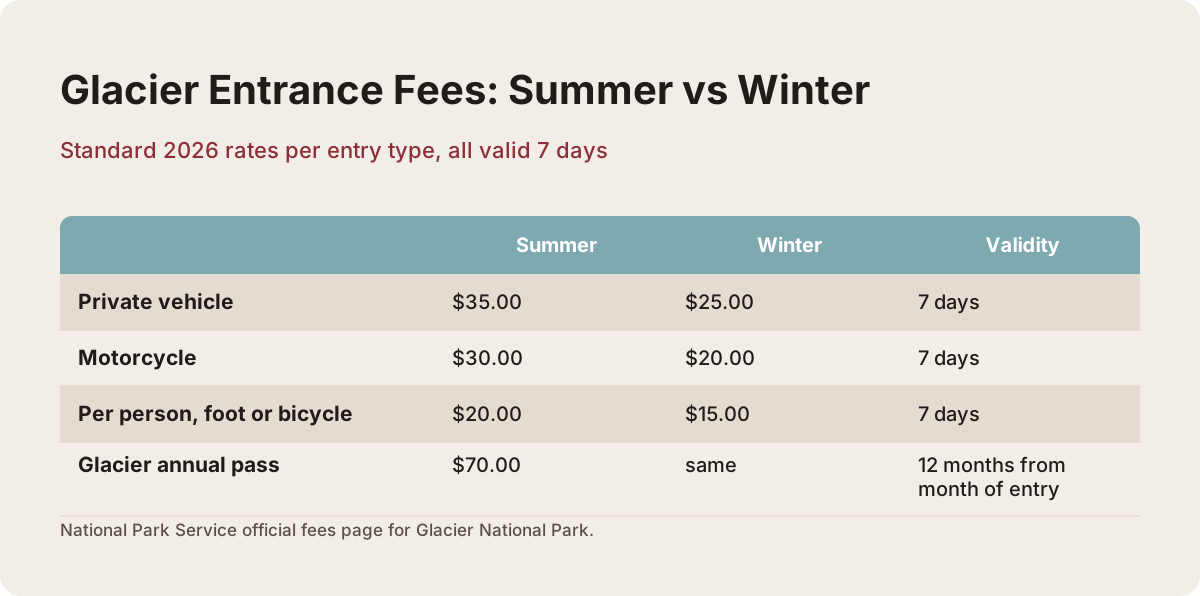
A private non-commercial vehicle pays $35 for a seven-day pass in summer and $25 in winter, which runs November 1 to April 30. A motorcycle pays $30 summer and $20 winter. Anyone entering on foot or by bicycle pays $20 per person for seven days, or $15 in winter. The fee covers entry only, and it is separate from camping, shuttle tickets and every commercial tour ticket.
Those are the standard rates published on the park's official fees page. The seven-day window is generous by national park standards, and it is per vehicle, not per person, so a car carrying five adults pays $35 total, not $175. That arithmetic is why families who plan more than one park stop often come out ahead with a pass, which the section below covers in full.
| Entry type | Summer rate | Winter rate (Nov 1 to Apr 30) | Validity |
|---|---|---|---|
| Private vehicle | $35.00 | $25.00 | 7 days |
| Motorcycle | $30.00 | $20.00 | 7 days |
| Per person, foot or bicycle | $20.00 | $15.00 | 7 days |
| Glacier annual pass | $70.00 | same | 12 months from month of entry |
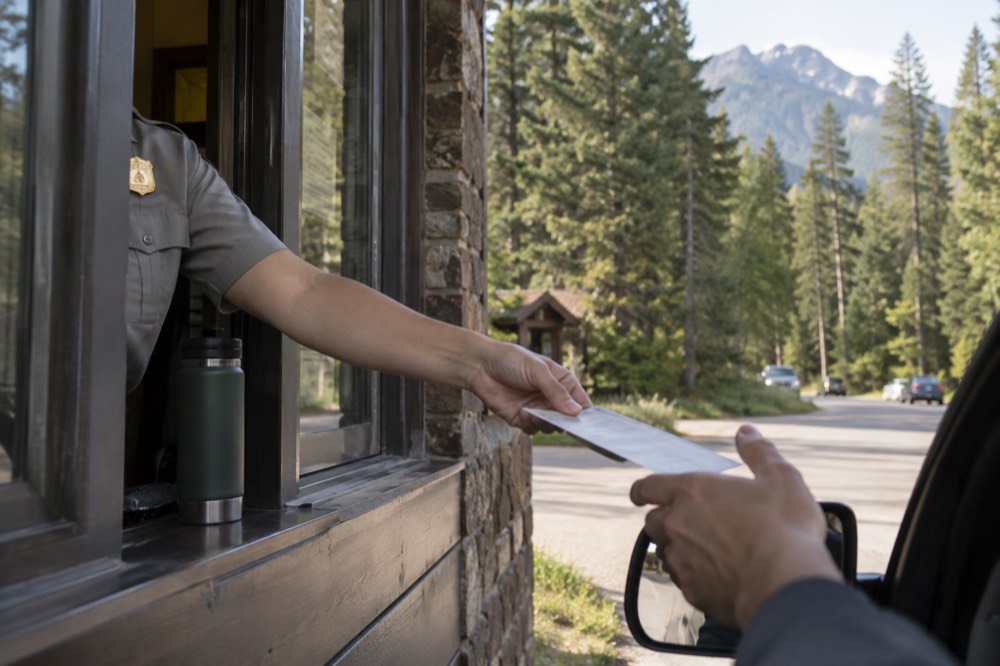
Two details catch visitors out. First, the park's own annual pass costs $70 and carries a single signature line since 2024, so it is genuinely one passholder plus vehicle occupants, not a shareable family card. Second, at unstaffed entrance stations you can self-register and buy the seven-day pass on the spot, which matters for early morning arrivals and for the quieter entrances where nobody is standing at the booth. The fee is the same either way.
Commercial vehicles pay differently, and this is where tour operators' costs come from. A commercial sedan with 1 to 6 seats pays $25 plus $20 per person aged 16 and over. A commercial van with 7 to 15 seats pays a flat $75, a mini-bus with 16 to 25 seats pays $100, and a full motor coach pays $200, all valid seven days and non-transferable. When you buy a guided driving tour, that commercial rate is part of what the operator is absorbing into the ticket price.
Entrance Fee, Vehicle Reservation, Tour Ticket: What Is The Difference?
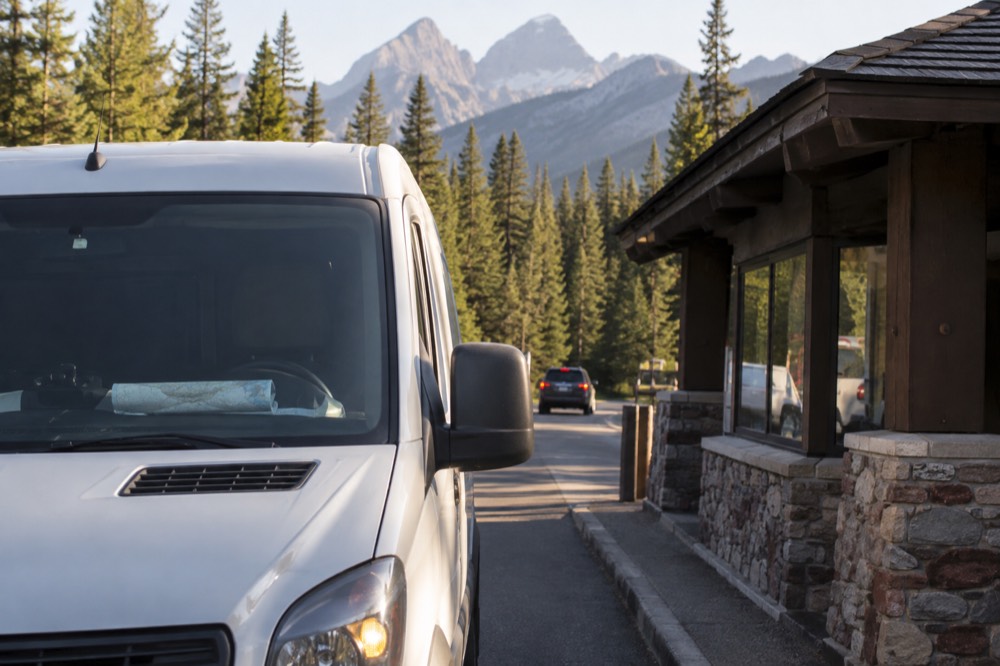
The entrance fee is what you pay to enter the park. A vehicle reservation was a timed-entry permit to drive a specific corridor, and it was abolished for all of 2026, so no visitor needed one anywhere. A tour ticket is a commercial service bought from an operator, and it never replaced the entrance fee, though a booked tour did exempt you from vehicle reservations in the years they ran.
The reservation system ran for five years and shaped almost every planning guide written in that window. In 2026 the park paused it completely: the official page states plainly that vehicle reservations will not be required in 2026, across Going-to-the-Sun Road, Many Glacier, Two Medicine and the North Fork alike. If you have read an older article telling you to wake up at midnight to grab a Recreation.gov slot, that advice is now obsolete, and a lot of third-party planning sites have not caught up.
What replaced it, in part, is a ticketed shuttle and parking management at Logan Pass specifically, covered in its own section below. But for the gate itself, the change is simple: pay the entrance fee, drive in, no timed permit. The historical scale of the old system explains why so many people still ask. In 2023 the park released 257,309 vehicle reservations across four corridors, up from 135,086 in 2021 when the system covered Going-to-the-Sun Road alone.
The tour exemption, meanwhile, is worth understanding because it was the park's own wording. When reservations ran, NPS stated that visitors with a commercial activity service reservation could use that reservation to gain access to the portion of the park it covered. A booked tour was, functionally, a reservation. In 2026 the equivalent advantage is narrower but real: during temporary congestion closures, the park states that visitors holding service reservations for boat tours, lodging, horseback rides or guided hikes are still let through, though they may be delayed.
For most visitors the practical question is not about exemptions anymore, it is about whether to drive at all. The alpine section of Going-to-the-Sun Road prohibits vehicles longer than 21 feet or wider than 8 feet including mirrors, and the park itself names the two answers for oversized vehicles: a shuttle ticket or a guided tour with an authorized operator. That comparison is laid out in detail in guided tour or drive yourself at Glacier.
Which Costs Does A Guided Tour Absorb?
A guided tour ticket covers the tour service, the guide and, on most driving tours, the commercial entrance rate the operator pays at the gate. It does not cover your personal entrance fee unless the listing explicitly says so. Lunch, pickup and equipment vary by listing, and the only reliable way to know is to read the inclusions line on the operator's live listing before booking.
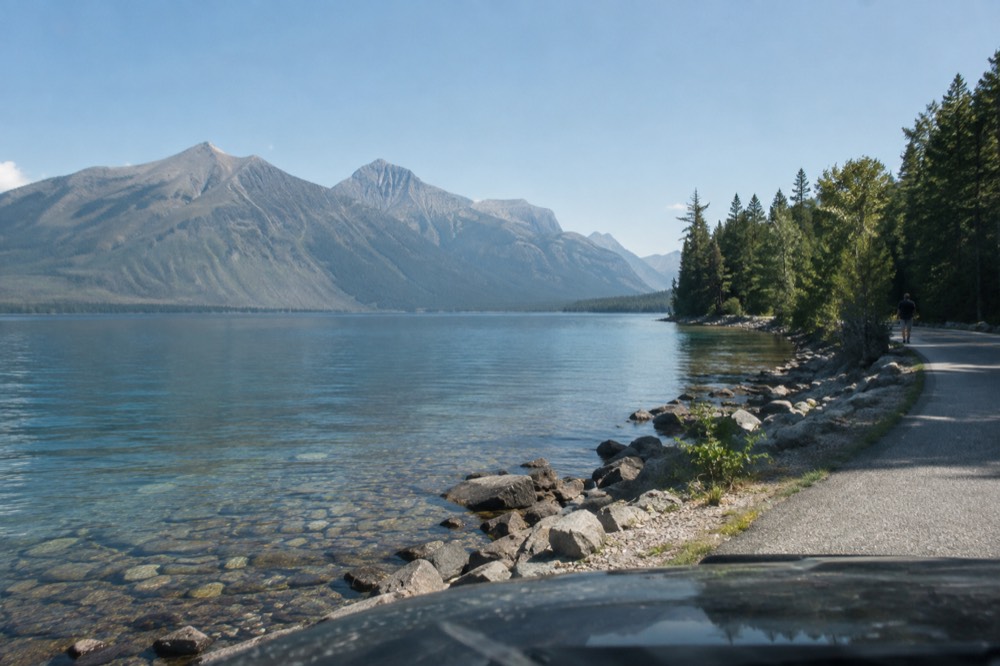
The roster of bookable tours at Glacier is broad, and the fee interactions differ by format. A guided driving tour with hotel pickup, such as the West Side Driving Tour, is the closest thing to a fee-simple day out: one price, one vehicle, no parking hunt at Logan Pass. It runs about 6 hours from $250 per person, carries a 4.8 rating across 37 reviews, includes lunch, and covers Apgar Village and Lake McDonald on its confirmed route.
The private end of the spectrum works differently. A private luxury SUV day runs from $1,499 per group of up to 7, lasts about 5 hours, and is customizable, which means the route conversation happens with the operator directly. With a group of six or seven split across that price, the per-person arithmetic can approach the group tours while removing every fixed-schedule constraint.
At the budget end, the self-guided audio tours change the fee question entirely. The Going-to-the-Sun Road audio app costs from $9.99 per group of up to 15 and runs in your own car, so your only gate cost is the standard $35 vehicle fee. It carries a 4 rating across 27 reviews and walks the driver through 27 confirmed stops from West Glacier to Saint Mary, which is most of the road's named viewpoints.
| Tour format | Price basis | What the ticket covers | Entrance fee |
|---|---|---|---|
| West Side Driving Tour | $250 per person | guide, vehicle, lunch, hotel pickup | not included |
| Private Luxury SUV Day | $1,499 per group up to 7 | private vehicle, custom route, pickup | not included |
| Sun Road Audio App | $9.99 per group up to 15 | app narration in your own car | not included |
| Half-Day Whitewater Rafting | $55 per person | guide, gear, shuttle to river | outside park boundary, no entry needed |
| Full-Day Fly Fishing | $756 per group up to 2 | guide, gear, meal | not included |
One honest note on the rafting rows: the popular whitewater and scenic float trips on the Middle Fork of the Flathead run along the park's border but outside the gate, so many rafters never pay an entrance fee on the day they raft. That is a genuine budget quirk worth knowing when you are building a multi-day plan. The full rafting picture, including the two-day Middle Fork adventure from $647.93 per person, is in Glacier National Park rafting tours compared.
Do You Need A Vehicle Reservation In 2026?
No. Vehicle reservations were not required at any Glacier National Park entrance or corridor in 2026, including Going-to-the-Sun Road, Many Glacier, Two Medicine and the North Fork. The system was paused for the whole season, so there was nothing to book on Recreation.gov for entry, and no timed-entry slot to miss.
This is the most consequential change at this park in years, and it deserves the plainest possible statement because so much stale advice is still in circulation. For five summers, entry to the marquee corridors depended on grabbing a timed permit, and visitors organized entire trips around release windows. In 2026 the park dropped all of it. The trade-off arrived at Logan Pass instead: a three-hour parking limit from July 1 through September 7, and a reservation-only shuttle serving the pass.
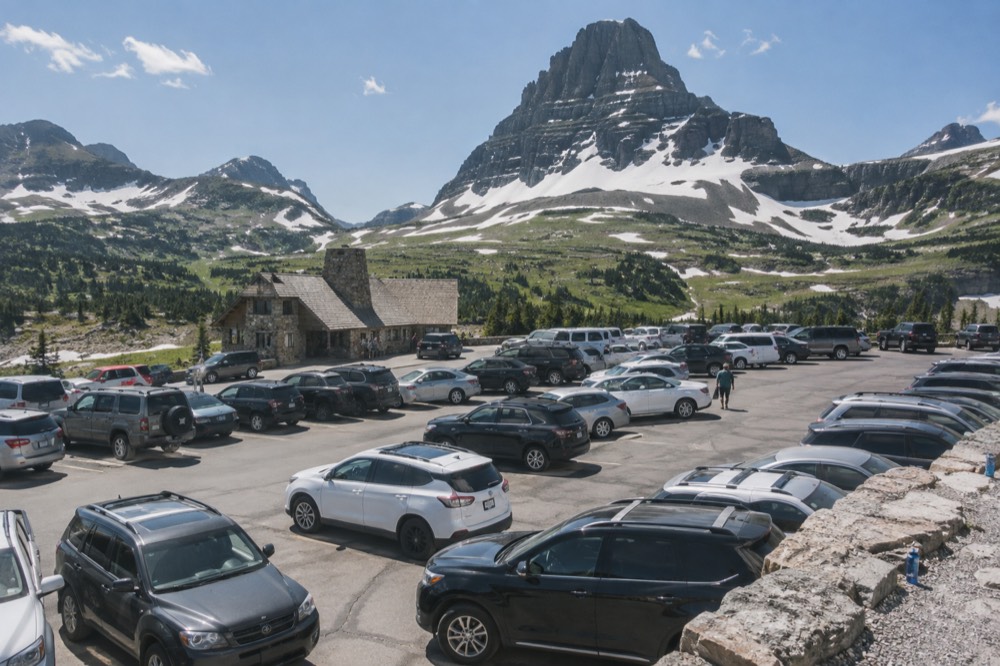
The parking rule is enforced 24 hours a day during its window. You park, collect a free timestamped permit from a kiosk, and put it on the dashboard. There is no overnight parking except for permitted backcountry users and Granite Park Chalet guests. None of this costs money, it costs planning instead, and it is the reason a guided driving tour or a shuttle ticket holds real value even in a no-reservation year.
The deeper background on the old system, the exemption rules and what happens during congestion closures is covered in do you need a vehicle reservation to enter Glacier, which carries the exact NPS wording on how service reservations worked when the system was live.
Which Annual Passes Work At The Glacier Gate?
The Glacier-specific annual pass costs $70 and is valid one year from the month of entry. The America the Beautiful pass costs $80 for US citizens and residents and $250 for non-US residents, and it covers every federal land agency. The Senior, Access, Military and 4th Grade passes are free or nearly free for those who qualify, and all of them waive the entrance fee entirely.
The pass decision is simple arithmetic. If your vehicle will enter Glacier more than twice in a year, the $70 park pass has paid for itself on the third entry. If your trip links Glacier with Yellowstone, Grand Teton or any other federal site, the $80 America the Beautiful resident annual pass is the better buy, because it works everywhere. A typical Glacier-plus-Yellowstone road trip covers 10 to 12 days and about 900 miles, which means multiple entries at multiple parks.
| Pass | Price | Who qualifies | What it waives |
|---|---|---|---|
| Glacier annual pass | $70.00 | anyone | Glacier entrance fee, 12 months |
| America the Beautiful, resident | $80.00 | US citizens and residents | entrance fees at all federal fee areas |
| America the Beautiful, non-resident | $250.00 | non-US residents | entrance fees at all federal fee areas |
| Senior annual / lifetime | $20.00 / $80.00 | US citizens 62 and over | entrance fee |
| Access Pass | free | US citizens with a permanent disability | entrance fee |
| 4th Grade Pass | free | US fourth graders | entrance fee, September 1 to August 31 |
| Military passes | free | veterans and Gold Star families | entrance fee |
Two of these deserve a sentence of explanation. The Access Pass is free to U.S. citizens and residents with permanent disabilities and covers the entrance fee outright, which pairs with the park's accessible infrastructure, including ADA-accessible shuttles with wheelchair lifts and the 0.7-mile accessible Trail of the Cedars. The Every Kid Outdoors pass is the quiet bargain of the whole system: a U.S. fourth grader gets free entry for the family, covering the student plus up to three accompanying adults or one private vehicle, valid September 1 through August 31 of the following school year. A family of four arriving by car saves the full $35 on that pass alone.
What Does It Cost For Non-US Residents?
Non-US residents aged 16 and over pay an extra $100 per person on top of the standard entrance fee, unless they hold an America the Beautiful or other annual pass. That means a family arriving by car in summer pays the $35 vehicle rate plus $100 for each member aged 16 and over, and the $250 non-resident annual pass is the stated way around the surcharge.
This surcharge is new enough that most competitor pages do not carry it, and it materially changes the budget for international visitors, who are a significant share of Glacier's summer traffic given the park's pairing with Waterton Lakes across the Canadian border. The fee applies to visitors from outside the United States aged 16 and over, and the annual passes are the stated exemption route. The non-resident America the Beautiful pass costs $250, which sounds steep until you compare it against several people paying $100 each on a single seven-day visit.
For Canadian visitors specifically, the Chief Mountain port of entry between Waterton and Glacier ran May 15 to September 30 in 2026, with extended 7 a.m. to 10 p.m. hours from June 1 to September 7, so cross-border day trips are easy in peak season. The port processed more than 56,000 travelers in the 2025 summer season. The surcharge applies to those visitors the same as anyone else from outside the U.S.
Are There Fee-Free Days At Glacier?
Yes. Glacier offered eight fee-free entrance days in 2026 for U.S. citizens and residents: February 16, May 25, June 14, July 3 to 5, August 25, September 17, October 27 and November 11. The waiver covers the entrance fee only; camping, shuttle tickets and commercial tour prices still applied.
The Independence Day weekend window, July 3 to 5, is the one worth building a trip around, since it lands in the heart of the season when the alpine road is fully open. The National Park Service's 110th birthday on August 25 is the other in-season date. The catch is crowds: July 2026 alone recorded 896,386 recreation visits, a 17.17 percent jump over July 2025 and the fourth-busiest July on record, so a fee-free day in peak summer saves $35 and costs you the parking spot you might have had on a Tuesday.
The genuinely free experiences inside the park go well beyond fee waivers. Ranger-led hikes, evening amphitheater talks and Native America Speaks programs remained free in 2026, except for certain boat-inclusive hikes and select cultural programs. On September 14, 2026, the park's daily schedule alone listed a 9 a.m. Redrock Falls hike, a Creekside Stroll at Apgar, wildlife talks and evening programs at both Apgar and Many Glacier. The full picture of what costs nothing is in free things to do in Glacier National Park.
What About The Shuttle And Winter Rates?
The 2026 Logan Pass shuttle required a $1 per-person ticket bought on Recreation.gov, for everyone aged 2 and up, and ran July 1 to September 7 only. Winter entrance rates, $25 per vehicle, apply November 1 to April 30, when the alpine road is closed and the park shifts to snowshoe and ski access.
The shuttle deserves its own line in any fee guide because it is the one 2026 charge that took returning visitors by surprise. The old shuttle was free and first-come. The 2026 replacement was ticketed, with a portion released 60 days ahead from May 2 at 8 a.m. MDT on a rolling basis, and remaining next-day tickets released daily at 7 p.m. MDT from June 30. The park's shuttle page carries the full boarding and schedule detail, including express routes from Apgar Visitor Center, Lake McDonald Lodge, St. Mary Visitor Center and Rising Sun Picnic Area, with transfers possible at Logan Pass.
The $1 is a processing fee, not a fare, but the ticket itself is mandatory and day-specific, non-transferable, with photo ID possibly requested. Children under 2 ride as lap children. Two operational facts matter as much as the price: in 2026 the shuttle did not serve Avalanche Lake or the Trail of the Cedars, and the last departure from Logan Pass was 7:30 p.m. westbound and 8:00 p.m. eastbound, with no other public transport back if you miss it.
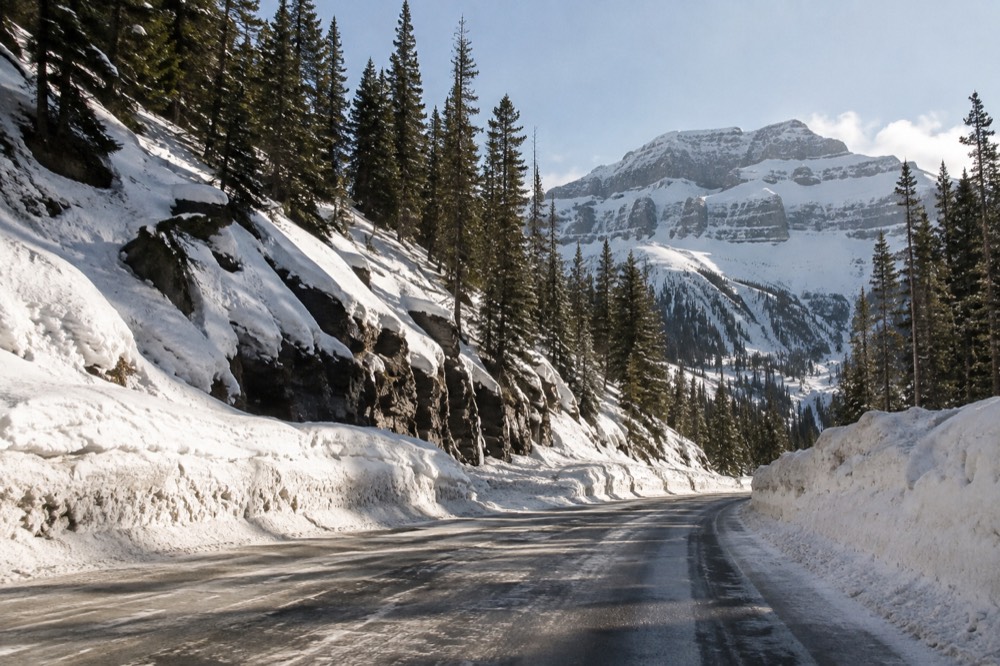
Winter is a different fee world. The $25 vehicle rate applies from November 1 to April 30, the alpine section of Going-to-the-Sun Road is closed, and the bookable winter products change accordingly. The Winter Driving Tour runs 5 to 6 hours from $250 per person with lunch and hotel pickup, carrying a 5 rating across 34 reviews, and a guided snowshoe trek runs from $230 per person. Both are priced like their summer counterparts, but the entrance fee underneath them is $10 cheaper.
What Does A Realistic Trip Budget Look Like?
A family of four U.S. residents arriving by car for a three-day summer trip pays $35 total in entrance fees, plus $1 per person per shuttle day if they use the Logan Pass shuttle, plus whatever tours they add. Entrance is rarely the expensive line: one guided driving tour at $250 per person costs more than twenty-eight times the family's entire gate bill.
That ratio is the honest framing for this whole guide. Entrance fees at Glacier are modest by almost any measure, and the money that actually moves the budget is lodging, tours and travel. Whitefish hotels averaged $378 per night in 2026, rising to roughly $705 in high season, and Granite Park Chalet charges $265 per night for a two-person room. Against those numbers, agonizing over the $35 gate fee is misplaced effort.
| Trip scenario | Entrance cost | Notes |
|---|---|---|
| Couple, car, 7 days, one entry | $35 | standard summer vehicle rate |
| Family of four, car, 7 days | $35 | per vehicle, not per person |
| Family of four using Logan Pass shuttle 2 days | $35 + $8 | $1 per ticket, ages 2 and up |
| Non-US couple, car, 7 days | $35 plus $100 per person aged 16 and over | per-person surcharge |
| Same couple with $250 annual pass | $250 | pass waives entrance and surcharge |
| Fourth-grade family | $0 | Every Kid Outdoors pass covers the vehicle |
The deeper cost breakdown, including what a full trip runs when you add lodging, food and activities, is in how much would a trip to Glacier National Park cost, and the tour-side pricing across every category is collected in Glacier National Park tour prices. For anyone weighing whether this site's Glacier National Park Tour Packages roster is worth the money, the entrance fee is the one line that is almost never the deciding factor.
What Should You Not Confuse With The Entrance Fee?
Camping fees, backcountry permits, boat tours, horseback rides and Red Bus tickets are all separate purchases from the entrance fee, sold by different operators. Backcountry overnights require a wilderness permit year-round, with a $10 reservation fee plus $7 per person per night. Nothing you buy from a concessioner waives the gate fee, and the gate fee waives nothing you buy inside.
The concessioner world inside the park is its own economy. Red Bus tours through Glacier National Park Lodges run from $64 to $138 per adult depending on route and pickup point, and the operator states they tend to sell out daily. Glacier Park Boat Company charges $27.80 for an adult Lake McDonald cruise and $41.70 round-trip at Many Glacier. Sun Tours' Blackfeet-guided trips run $120 to $145 per adult. Every one of those tickets assumes you have already entered the park, and none of them includes entry.
The backcountry line is the one people genuinely miss. Every overnight wilderness trip requires a permit year-round, with 70 percent of summer sites reservable in advance through Recreation.gov after early-access lotteries held March 1 and March 15 in 2026, each with a $10 non-refundable application fee. The camping charge is $7 per person per night on top. That is separate from the $35 you paid at the gate, and a ranger will check both.
The clean mental model is three buckets. Bucket one: the entrance fee, paid to the National Park Service, covering your presence in the park. Bucket two: access management, which in 2026 means no vehicle reservations but a ticketed shuttle and timed parking at Logan Pass. Bucket three: commercial services, from a $9.99 audio app to a $1,499 private SUV day, sold by operators on top of bucket one. Keep the buckets separate and no line item will surprise you.
Common Questions About Glacier National Park Entrance Fees
How Much Is The Glacier National Park Entrance Fee?
A private vehicle pays $35 for seven days in summer and $25 in winter, November 1 to April 30. A motorcycle pays $30 summer and $20 winter, and foot or bicycle entry is $20 per person, or $15 in winter.
Do I Need A Vehicle Reservation To Enter Glacier In 2026?
No. Vehicle reservations were not required at any entrance or corridor in 2026, including Going-to-the-Sun Road, Many Glacier, Two Medicine and the North Fork. The system was paused for the entire season.
Does A Guided Tour Include The Entrance Fee?
Generally no. A tour ticket covers the tour service and the operator's own commercial entrance rate, but your personal entrance fee is separate unless the listing explicitly states otherwise. Read the inclusions on the operator's live listing before booking.
Is The Logan Pass Shuttle Free?
No. The 2026 shuttle required a $1 per-person Recreation.gov processing fee for ages 2 and up, with tickets released 60 days ahead on a rolling basis and next-day tickets released daily at 7 p.m. MDT from June 30. The season ran July 1 to September 7.
Which Pass Is Best For Glacier?
If you enter more than twice in a year, the $70 Glacier annual pass pays off on the third entry. If your trip includes other federal parks, the $80 America the Beautiful resident pass covers them all. Non-US residents pay a $100 per-person surcharge unless they hold an annual pass.
Are There Fee-Free Days At Glacier?
Yes, eight in 2026 for U.S. citizens and residents: February 16, May 25, June 14, July 3 to 5, August 25, September 17, October 27 and November 11. Only the entrance fee is waived; camping, shuttle tickets and tours still cost extra.