Rafting Tours Near Glacier National Park, Compared By River And Season
Glacier National Park rafting happens on the Flathead River system just outside the park boundary, and the same stretch of water can be a genuine whitewater run in June and a calm scenic float by August. Here is how the forks differ, what each trip costs, and which months deliver which experience.
Short answer
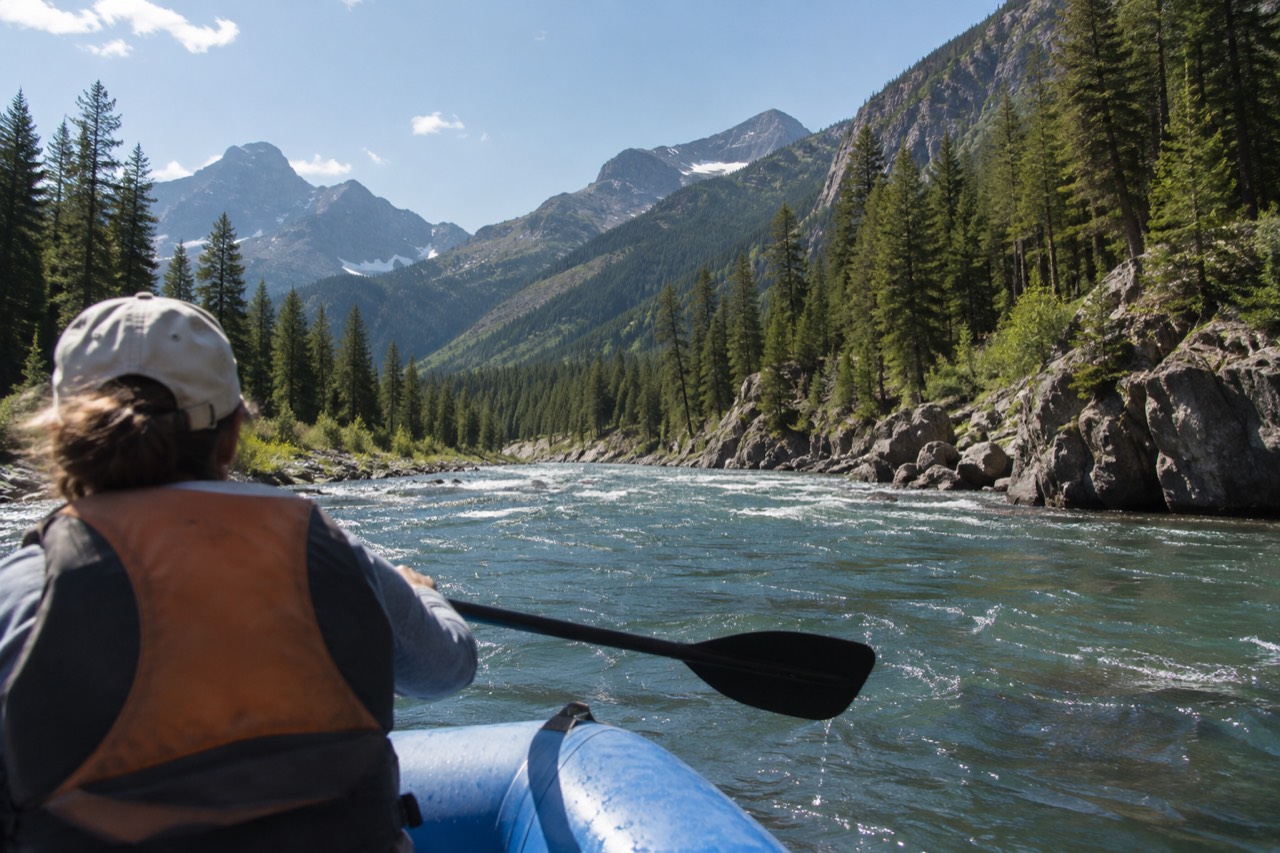
The Middle Fork of the Flathead River is the main rafting river near Glacier National Park. Half-day whitewater trips run from $55 per person, scenic floats from $55, and full-day trips with lunch from $164. June offers the biggest water from snowmelt, while late summer turns most sections into gentle family floating.
The Middle Fork of the Flathead River runs 92 miles from its headwaters in the Bob Marshall Wilderness to its confluence with the North Fork near West Glacier, and for roughly the last stretch of that journey it forms the southern boundary of Glacier National Park. Every commercial rafting trip sold out of West Glacier happens on this river or its neighbor, the North Fork, not inside the park itself. That distinction matters less than you might think, because the canyon the river cuts through, John F. Stevens Canyon, sits directly below Going-to-the-Sun Road's west-side climb, and the rafting season tracks the same snowmelt calendar that opens the alpine road each June.
In 1976, Congress gave the Flathead system Wild and Scenic River designation across 219 miles, covering the North Fork, the Middle Fork and the South Fork. That protection is the reason the river corridor looks the way it does: no dams on the commercial sections, forested banks, and a runoff-driven water cycle that changes the character of the river almost week to week between May and October. Understanding that cycle is the single most useful thing a prospective rafter can do before booking, because the trip described in a review from mid-June and the trip you would take in mid-August can feel like different rivers.
This guide splits the forks by water level, month by month, and then compares the actual bookable trips: half-day whitewater, half-day scenic floats, full-day runs with lunch, small-group versions of both, and the two-day Middle Fork adventure. Prices and ratings below come from each operator's live listing, and the river facts come from the National Park Service and the Flathead National Forest.
Where Does Glacier National Park Rafting Actually Happen?
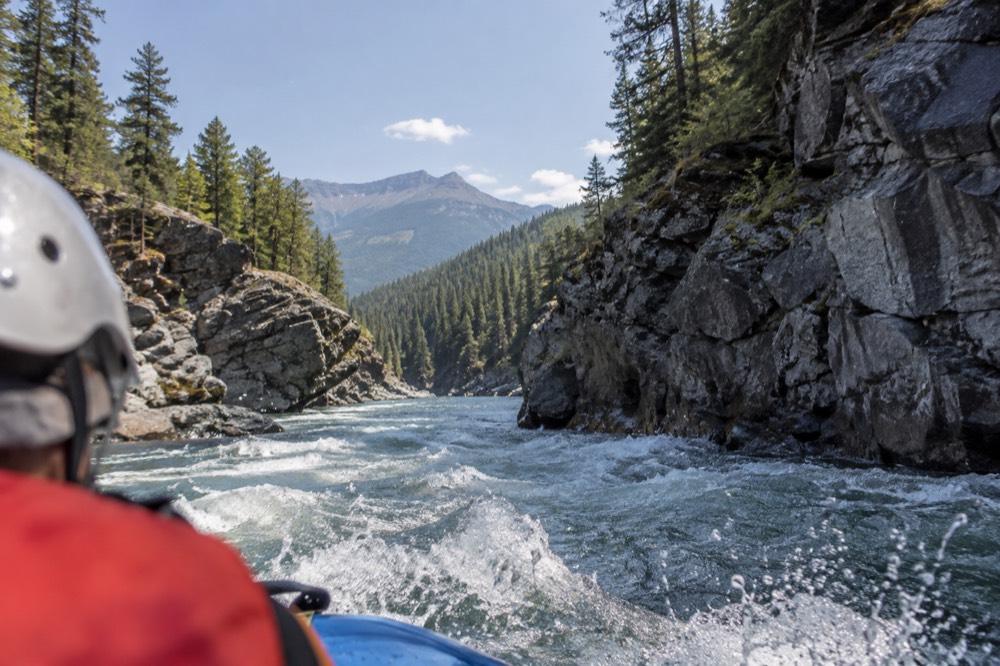
All commercial rafting associated with Glacier National Park happens on the Flathead River system immediately outside the park boundary, mostly on the Middle Fork through John F. Stevens Canyon west of the Continental Divide. Trips launch from West Glacier, roughly a five-minute drive from the west entrance station, and float a river that borders the park rather than flowing through it.
The geography is simple once you see it on a map. Going-to-the-Sun Road climbs out of the Lake McDonald valley along the flanks of the canyon the Middle Fork carved. Rafters on the river look up at the same terrain drivers are crossing. The put-in points near West Glacier sit close enough to the park entrance that most operators advertise their trips as Glacier National Park rafting, and the river genuinely forms the park's southwestern border for many miles, but the park service does not permit commercial whitewater rafting on waters inside the park itself.
The Middle Fork is the workhorse. It holds water later into summer than the North Fork, has the named rapids, and sits closest to the West Glacier lodging cluster. The North Fork, which runs along the park's western boundary up toward Polebridge, is a quieter, shallower river better suited to scenic floating and fishing than whitewater, and commercial outfitters run mostly scenic trips there. The South Fork, below Hungry Horse Reservoir, is dam-controlled and sees little commercial traffic from the West Glacier operators.
| Fork | Character | Commercial use from West Glacier |
|---|---|---|
| Middle Fork | 92 miles from the Bob Marshall Wilderness, nine named Class II-IV rapids in the canyon section | Whitewater, scenic floats, full-day and multi-day trips |
| North Fork | Shallower, runs along the park boundary toward Polebridge | Mostly scenic floats and fishing |
| South Fork | Dam-controlled below Hungry Horse Reservoir | Little commercial traffic |
Only a handful of outfitters hold the special use permits that allow commercial rafting on these reaches. The Flathead National Forest extended ten-year permits to Montana Raft Co., Wild River Adventures, Glacier Raft Co. and Flathead Lutheran Bible Camp for the North and Middle Forks, with Great Northern Raft Co. receiving a two-year extension. Those permits are the reason the roster of trips is short and stable: the same operators have run the same sections for years, and the listings you can book online are those operators' trips sold through their live listings.
When Is The Middle Fork Real Whitewater?
The Middle Fork delivers its biggest, most genuinely whitewater character from late May through early July, when snowmelt from the high country pushes the river to its seasonal peak. By late July the water drops and warms, and the same rapids calm into a splashy intermediate run. From mid-August through September the river settles into mostly gentle water that many families actually prefer.
The driver is snow, not rain. The Flathead River Basin's snowpack determines how much water is stored in the mountains and how fast it releases. In March 2026 the basin stood at 88 percent of median after an unusual winter, which meant a slightly softer runoff than average, though the pattern held: high water in June, dropping through July, low and warm by August. West Glacier's June climate normals show 3.80 inches of precipitation, the wettest summer month, while July and August drop to 1.39 and 1.17 inches respectively, which is why the river falls so fast once the snow is gone.
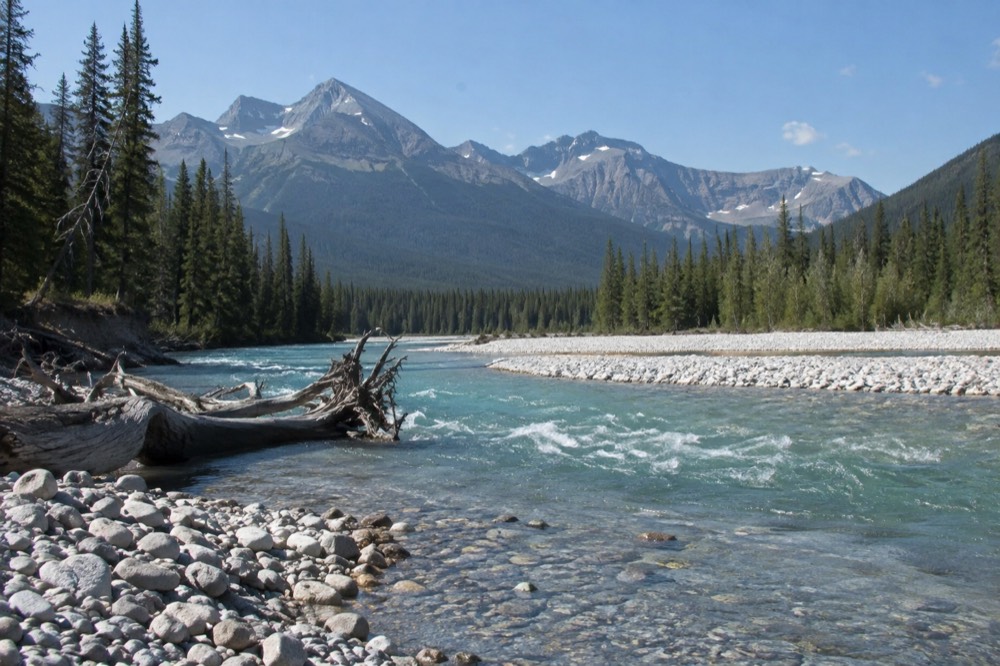
Outfitters run the commercial season from May 1 through September 30. Within that window, the experience shifts enough that a month-by-month read is worth more than any single trip description:
| Month | Typical water character | Best suited to |
|---|---|---|
| May | Rising water, cold, fewest crowds | Confident paddlers in wetsuits |
| June | Peak snowmelt, biggest waves, coldest water | Whitewater seekers |
| July | Dropping but lively, warm days | First-time rafters wanting rapids |
| August | Warm, moderate water, family peak | Families and mixed groups |
| September | Low, gentle, fall color beginning | Scenic floaters and anglers |
The named rapids on the commercial section below Moccasin Creek give you a sense of the gradient: Tunnel Rapids and Bonecrusher at Class III, Washboard at Class II, Big Squeeze and Jaws at the top of the scale, and Pinball close behind. At June flows these run pushy and continuous. At August flows several of them become wave trains that a guide can surf for fun. The rapid names stay the same all season; the experience of running them does not.
One planning note that pairs with the river calendar: Going-to-the-Sun Road's alpine section opened for the season on June 22 in 2026, and the road's full 50-mile length typically stays open to motor vehicles until around the third Monday in October. If your trip is built around both the road and the river, late June through July gives you both at once, with the caveat that it is also the busiest stretch of the summer everywhere in the park.
Which Half-Day Whitewater Trip Should You Book?
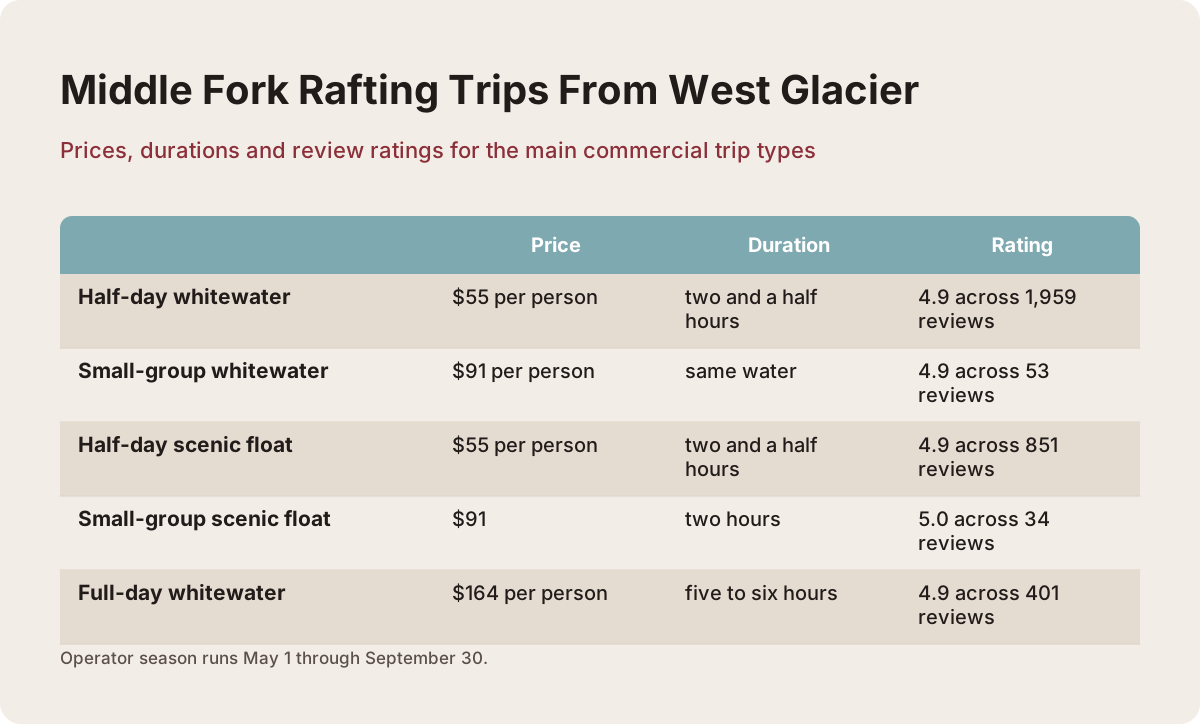
The standard half-day whitewater trip from West Glacier is the most-booked rafting option near the park, rated 4.9 across 1,959 reviews and priced from $55 per person for two and a half hours on the water. A small-group version runs the same water at $91 per person with fewer people per raft, rated 4.9 across 53 reviews.
The standard trip is the volume leader for a reason. It runs daily through the season, it fits into a morning or afternoon around other park plans, and the price is the lowest entry point on the rafting roster. Two and a half hours is enough time to run the canyon's rapid sequence, get thoroughly wet, and be back in West Glacier for lunch. The listing carries free cancellation, which matters in a mountain climate where afternoon storms can reshuffle a day's plans.
The small-group version, sold as a half-day whitewater trip with a small-group cap, costs more per person but puts fewer bodies in the boat. For families with teenagers or groups who want the guide's attention for questions about the canyon's geology and history, the difference is real. For a pair of travelers who just want the rapids, the standard trip delivers the same water for less money.
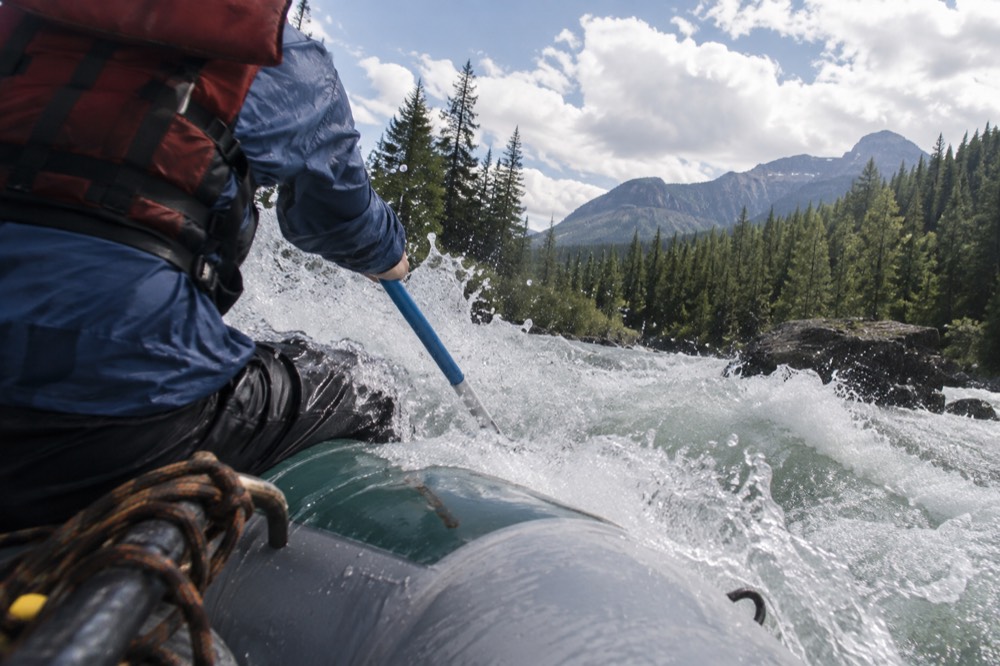
Both half-day trips cover roughly the same canyon section that Glacier Raft Company describes on its own season listing: about 8 miles through nine named Class II and III rapids in John F. Stevens Canyon, operating May 1 through September 30. The operator's direct pricing for the 2026 season started at $79 per adult and $59 per child aged 12 and under, with a minimum weight of 50 pounds required, so compare the live listing's total against the operator's own rate card before committing either way.
If you are weighing a guided river day against other ways to spend a West Glacier morning, the guided hikes inside the park cover different terrain entirely, and many travelers split a day between a morning float and an afternoon drive up the lake. The rafting decision usually comes down to one question: do you want waves, or do you want scenery with your feet dry?
Are Scenic Floats A Better Fit For Families?
For families with children under the minimum weight, travelers who want wildlife and scenery over adrenaline, and anyone rafting in late summer low water, a scenic float is the better choice. Half-day scenic floats on the Middle Fork run from $55 per person for two and a half hours, rated 4.9 across 851 reviews, with a small-group version at $91 rated 5.0 across 34 reviews.
The scenic float covers calmer water on the same river system, and the experience is closer to a moving viewpoint than a ride. Guides row, passengers sit and watch the canyon walls, and the wildlife odds improve because the boat is quiet. Bald eagles, osprey, deer and the occasional moose appear on the banks, and on hot August days the trip doubles as a slow cool-down. The standard float and the whitewater trip cost the same from $55, which makes the choice purely about experience rather than budget.
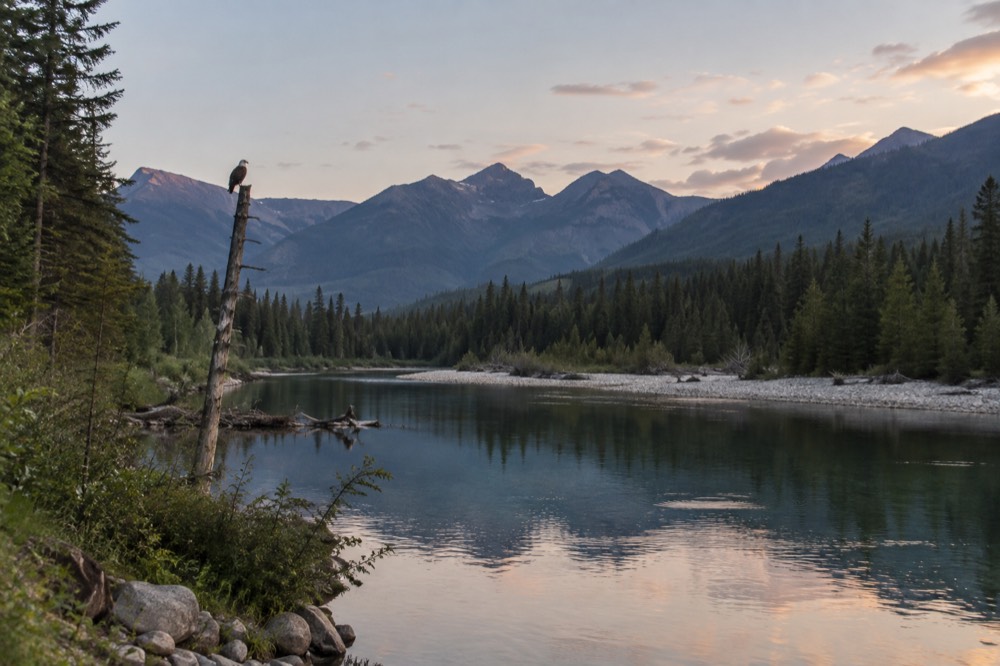
The small-group scenic float runs two hours rather than two and a half, on the Flathead River, and its 5.0 rating across 34 reviews reflects a trip type where the guide's interpretation carries most of the value. Fewer passengers means more room to move around the boat and more conversation. Permitted outfitters ran scenic floats on the Middle and North Forks from May through mid-October in 2026, with half-day adult prices in the low $80s direct from operators before an added river user fee, so again the live listing price and the operator rate card are worth comparing side by side.
Age and size rules are where families should focus. The whitewater trips carry a 50-pound minimum weight, which in practice excludes most children under about six or seven. Scenic floats generally accept younger children, but the exact minimum varies by operator and by water level, and the live listing states each trip's current policy. In June, when the water is high and cold, even some float sections move faster than they do in August, so families with very young children are usually steered toward late summer departures by the outfitters themselves.
What Does The Full-Day Trip Add?
The full-day whitewater adventure runs five to six hours, includes lunch, and costs from $164 per person, rated 4.9 across 401 reviews. It covers substantially more river than the half-day, reaches sections the shorter trips skip, and turns rafting from an activity into the centerpiece of the day.
The half-day and full-day trips share the canyon, but the full-day version continues downstream into stretches that see less traffic and hold some of the bigger named rapids at runnable flows. Lunch is included and taken riverside, which gives the trip a slower rhythm than the sprint of the half-day. For travelers staying two or more nights in West Glacier or Columbia Falls and wanting one big day on the water, this is the version that justifies the morning.
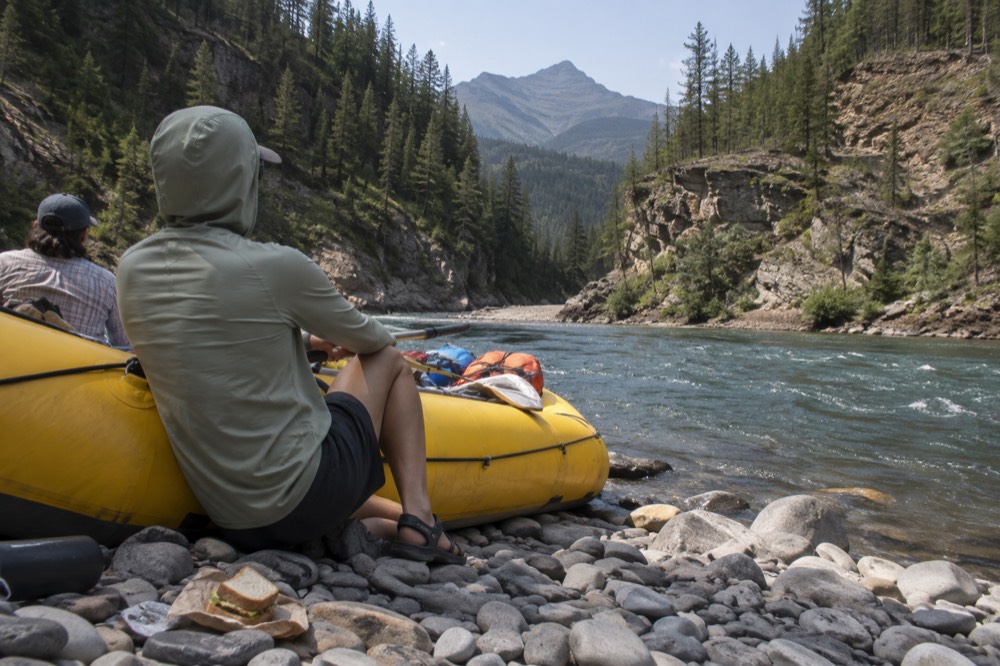
The confirmed stops on the listing are the Middle Fork of the Flathead and Glacier National Park, and the trip carries free cancellation. At $164 it is exactly three times the standard half-day price, which is a fair way to frame the decision: you are paying for roughly double the time on the water, the lunch, and the quieter lower canyon.
Beyond the full day, the roster carries one true multi-day option: a two-day Middle Fork rafting adventure with meals included, from $647.93 per person. It is a new listing with one review and no rating yet, so there is no review pool to lean on, but the format itself is well established on this river. Multi-day Middle Fork trips with the primary outfitter launched from May 25 through September 30 in 2026, with two-day adult rates starting from $599 direct, so the online listing sits at a modest premium over booking the operator directly. Two days buys the wilderness upper reaches of the river that day trips cannot reach, including water inside the Wild and Scenic corridor that most park visitors never see.
How Much Should You Budget For Rafting?
A half-day whitewater or scenic float runs from $55 per person, small-group versions from $91, the full-day trip with lunch from $164, and the two-day adventure from $647.93 per person. Per-person pricing is the norm on this river, so a family of four should simply budget four standard half-day tickets, plus taxes and any river user fee the operator adds.
The price ladder is unusually clean on this roster because the trips share a river and a launch point. What you are paying for at each step is time, group size and food, not a different quality of scenery:
| Trip | Price from | Duration | Rating and reviews |
|---|---|---|---|
| Half-Day Whitewater Rafting | $55 per person | 2 hours 30 minutes | 4.9 across 1,959 reviews |
| Half-Day Scenic Float | $55 per person | 2 hours 30 minutes | 4.9 across 851 reviews |
| Small-Group Whitewater | $91 per person | 3 hours | 4.9 across 53 reviews |
| Small-Group Scenic Float | $91 per person | 2 hours | 5.0 across 34 reviews |
| Full-Day Whitewater With Lunch | $164 per person | 5 to 6 hours | 4.9 across 401 reviews |
Two cost notes worth knowing before you compare. First, operator-direct rates and live listing rates do not always match: the primary West Glacier outfitter's own 2026 rate card listed half-day whitewater from $79 adult and $59 child, and scenic floats in the low $80s before an 8 percent river user fee, so the online price can sit either above or below the direct price depending on the day. Second, the entrance fee for the park itself is separate and irrelevant to the rafting decision, since the river sits outside the boundary: a private vehicle pays $35 for seven days, and that fee covers the drive to the put-in and everything else you do inside the park on the same trip. The broader cost picture, including lodging and food, is laid out in the guide to Glacier tour prices.
What Are The Rules And Safety Requirements?
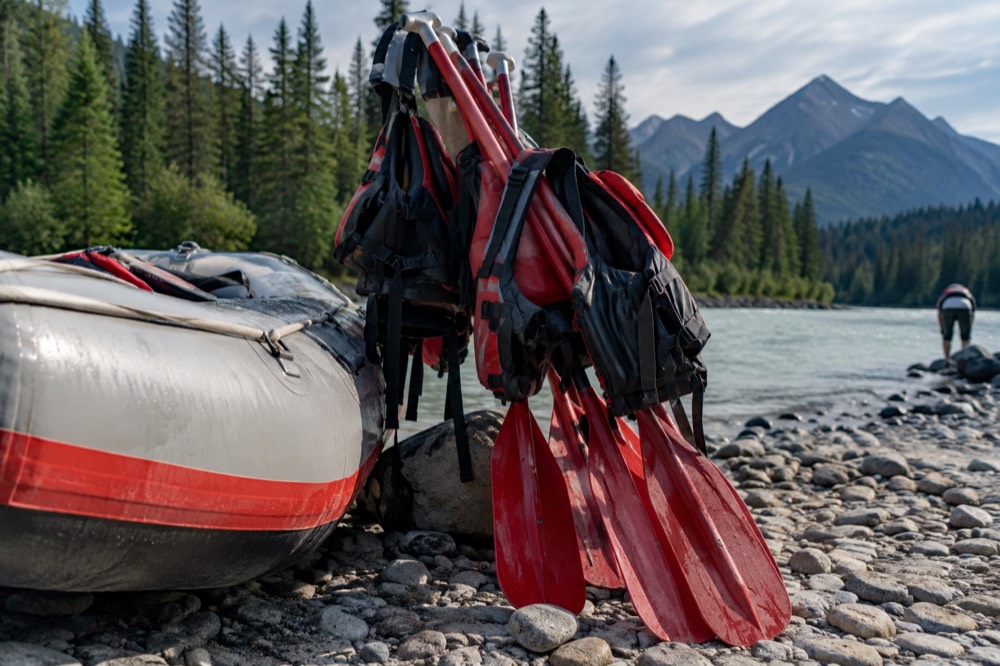
The National Park Service requires aquatic invasive species inspections for all vessels launched on park waters, with stations at Apgar Village, Polebridge Ranger Station, St. Mary Visitor Center and along the Two Medicine Road, though commercial rafts launching outside the park are covered by their outfitters' permits. On the river, the binding rules are the operator's: a 50-pound minimum weight for whitewater trips, personal flotation devices worn at all times, and bear spray secured if carried.
The inspection requirement matters mainly if you are considering a rental kayak or paddleboard in addition to a guided trip. All watercraft launched inside the park, motorized or not, must be inspected before launching and must be clean, drained and dry, and a free launch permit is required. The stations have limited hours, so check them before planning a dawn launch. Guided rafting trips launching from West Glacier put in on the Flathead outside the park boundary and are handled under the outfitters' Forest Service permits, which is one less thing for a guided customer to arrange.
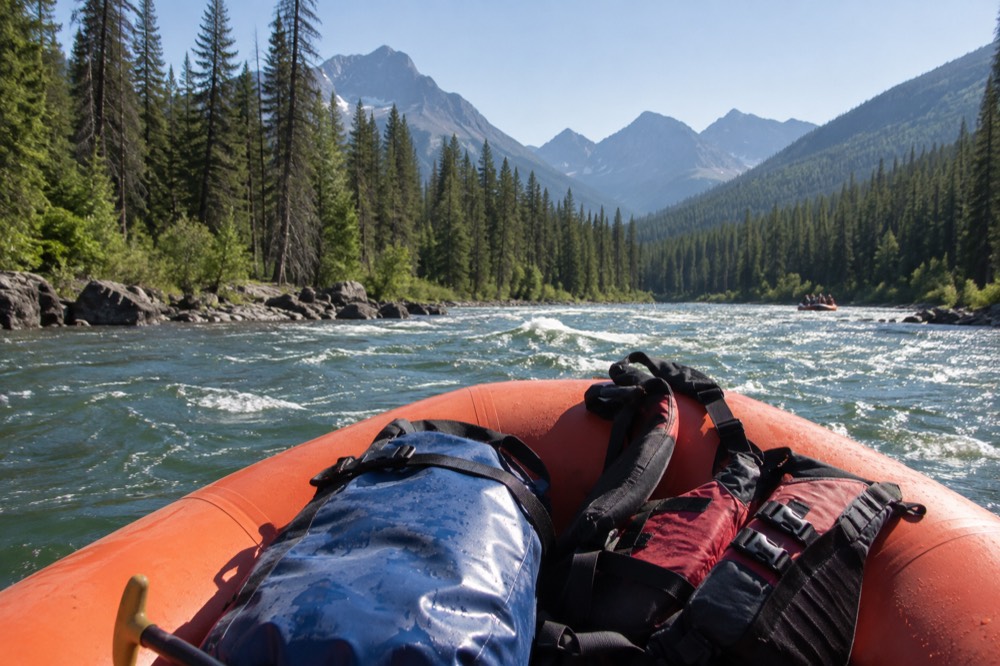
Cold water is the real safety variable. Even in August, the Middle Fork runs snowmelt-cooled water, and in June the river is genuinely cold: hypothermia is the primary hazard West Glacier outfitters brief against. Wetsuit rentals are typically offered, and sometimes required, in May and June. The park's own wildlife rules apply along the banks: stay 100 yards from bears and wolves and 25 yards from all other wildlife, and if you are driving to the put-in and encounter a roadside bear, do not stop near it.
What to bring barely changes between trips: a strap for sunglasses, shoes that can get wet and stay on your feet, a synthetic layer rather than cotton, and a dry bag only if the operator does not provide one. Most half-day trips photograph the rapids and sell the pictures afterward, which is worth knowing before you decide whether to bring a phone on the water at all.
When Should You Book, And What If Plans Change?
Every rafting trip on this roster carries free cancellation, and the practical booking window is one to three weeks ahead for standard half-day trips in most of the season, earlier for July and August weekends and for small-group and multi-day trips. Booking early costs nothing when cancellation is free, and it secures the departure time that fits the rest of your park day.
The season runs May 1 through September 30, and demand follows the park's own calendar. July 2026 recorded 896,386 recreation visits at Glacier, a 17 percent increase over the previous July and the fourth-busiest July on record, so midsummer departures fill first. Morning slots go before afternoon slots in hot weather, and afternoon slots go first in June, when thunderstorms tend to build later in the day and travelers want to be off the water by early afternoon. The operators watch the weather closely and will reschedule rather than run a trip into a storm cell.
One structural fact from the 2026 season is worth carrying into planning for future years: the park removed vehicle reservations entirely, replacing them with a ticketed Logan Pass shuttle and three-hour parking limits at the pass between July 1 and September 7. For rafters, that means the drive from West Glacier lodging to the put-in carries no reservation complication at all, and the river day can be paired with an early or late drive over the road on the same trip. If you are building a full itinerary around both, the best time to visit Glacier National Park guide breaks the trade-offs month by month.
The one booking mistake worth avoiding is treating the two-day Middle Fork adventure like a day trip you can add on arrival. Multi-day river permits and camp logistics are fixed well ahead, the listing is new with a single review so far, and the operator's own multi-day calendar ran from late May through the end of September. If a wilderness river night is part of the dream, reserve it when you reserve your lodging, not the week you fly in.
Whether you end up in a full boat of twelve on a $55 half-day run or a small group surfing Pinball at August levels, the river itself is the constant: a Wild and Scenic corridor that forms the park's border, fed by the same snow that makes Going-to-the-Sun Road such a late opener every year. This site, Glacier National Park Tour Packages, exists to sort which Glacier experiences can be booked online and which cannot, and rafting sits firmly in the first category: real operators, real permits, and a live listing behind every trip compared above.
Common Questions About Rafting Near Glacier National Park
Can You Go Rafting Inside Glacier National Park?
No. Commercial rafting happens on the Flathead River system just outside the park boundary, mostly on the Middle Fork through John F. Stevens Canyon, which borders the park. Trips launch from West Glacier, minutes from the west entrance.
How Much Does Rafting Cost At Glacier National Park?
Half-day whitewater and scenic float trips run from $55 per person, small-group versions from $91, the full-day trip with lunch from $164, and the two-day Middle Fork adventure from $647.93 per person. The park's $35 private vehicle entrance fee is separate and not required for the river itself.
What Is The Best Month For Whitewater Rafting Near Glacier?
June, when snowmelt peaks the Middle Fork and the named rapids run at their biggest and coldest. July offers a lively but more forgiving middle ground, and by August the river has warmed and calmed enough that many families prefer it.
Is Rafting Near Glacier National Park Good For Kids?
It depends on age and trip type. Whitewater trips carry a 50-pound minimum weight, which excludes most children under about six. Scenic floats accept younger children and are the standard family choice, especially from late July onward when the water is warm and gentle.
Which River Do The West Glacier Rafting Trips Use?
The Middle Fork of the Flathead River, a 92-mile Wild and Scenic reach flowing from the Bob Marshall Wilderness to its confluence with the North Fork near West Glacier. The commercial whitewater section runs about 8 miles through nine named Class II and III rapids.
Do I Need To Book Rafting Trips In Advance?
Book one to three weeks ahead for standard half-day trips in most of the season, and earlier for July and August weekends, small-group trips and the two-day adventure. Every trip on the roster carries free cancellation, so reserving early costs nothing if plans change.