How Much Would A Trip To Glacier National Park Cost?
A realistic per-person budget for four days in Glacier National Park, including entrance fees, lodging, food and where a guided day such as a half-day whitewater rafting trip changes the total.
How Much Would A Trip To Glacier National Park Cost?
A four-day trip to Glacier National Park typically costs between a few hundred and well over a thousand dollars per person before airfare, depending almost entirely on where you sleep. The fixed costs are modest: a $35 vehicle entrance pass covers seven days for everyone in the car, and the park's headline activities, including a half-day whitewater rafting trip from $55 per person, cost less than a single night of peak-season lodging in Whitefish. The variable that swings the budget threefold is the bed, not the ticket.
That last sentence is the whole shape of this article. Most cost breakdowns treat guided tours as the expensive line item and lodging as background noise. Around Glacier it is the reverse. The average hotel night in Whitefish runs $378, climbing to roughly $705 in high season, while the most popular bookable experiences in the park's orbit, rafting, floats and audio tours, start at $9.99 per group. A traveler who swaps two lodge nights for two campground nights frees up more money than every guided activity on this site costs combined.
This article builds a real four-day, per-person budget from verified figures, then shows the three places a guided day genuinely changes the total rather than just adding to it. It draws on the park's own fee schedule, current lodging averages and the live prices of the tours themselves.
How Much Would A Trip To Glacier National Park Cost?
For a realistic mid-range example, a four-day summer trip for two people sharing a car and a mid-range hotel is dominated by three lines: lodging at the $378 average Whitefish rate, food, and fuel, with entrance a fixed $35 per vehicle and one guided day at $55 to $250 per person depending on what you choose. The same four days with campsites at around $25 per night instead of hotel rooms shrink the total dramatically. The same four days with in-park lodges and a second guided day push it far higher. Every figure in those sentences comes from a named source, and the table below shows the arithmetic openly so you can substitute your own numbers.
Start with what is fixed. A private vehicle entering the park pays $35 for a seven-day pass, winter rate $25 from November 1 to April 30, per the National Park Service fee schedule. Non-US residents aged 16 and over pay an additional $100 per person surcharge unless they hold an annual pass, a charge new enough that most older budget guides do not carry it. If you fly in and rent a car, the rental itself can rival lodging as the second-largest line, so price it before you price anything else.
Then the part nobody prices correctly: the season. July and August of 2025 drew 1,483,827 recreation visits, 47.3 percent of the park's entire 3,136,557-visit year. Prices, crowds and lodging rates all peak in exactly those eight weeks. Shift the same itinerary to late September and the experience barely changes while the lodging line shrinks and the roads quiet down.
If you are building this trip around experiences rather than just scenery, the bookable highlights are cheaper than most visitors expect. A half-day whitewater rafting trip on the Middle Fork Flathead runs from $55 per person and holds a 4.9 rating across 1,959 reviews, the deepest review pool of any activity near the park. A half-day scenic float costs the same $55 from its listing. A Going-to-the-Sun Road audio tour, played through your own car stereo, is from $9.99 per group of up to 15 people. Those three are the core of a high-value day, and they are the ones compared throughout this article.
What Does A Four-Day Budget Look Like Per Person?
Working from two people sharing costs, the four-day budget has five real lines: a shared $35 vehicle pass, three nights of lodging, food, fuel, and one or two guided days chosen from the $9.99 audio tour up to the $250 small-group driving tour. The budget version camps at around $25 per night and self-caters. The mid-range version takes the $378 average Whitefish hotel room. The premium version takes in-park lodges and a second guided day. The table below lays out each line so the substitutions are yours to make.
| Line item (4 days, 2 people sharing) | Budget (camping) | Mid-range (hotel) | Premium (in-park lodge) |
|---|---|---|---|
| Entrance, one $35 vehicle pass, per-person share | $18 | $18 | $18 |
| Lodging, 3 nights | $25/night campground | $378/night Whitefish average | In-park lodge, seasonal |
| Food, groceries vs restaurant mix | Mostly self-catered | Mixed | Mostly restaurant |
| Fuel and in-park driving | Shared | Shared | Shared |
| Guided day one | $55 half-day whitewater | $55 half-day whitewater | $250 small-group driving tour |
| Guided day two | $9.99 audio tour | $55 scenic float | $164 full-day whitewater with lunch |
Two honest caveats on that table. First, the $378 Whitefish figure is a year-round average across 61 hotels; July rates run near $705, so a mid-range summer trip should be budgeted at the higher number. Second, in-park lodge rates were not verified first-hand for this article, so the premium column is directional: the one verified in-park overnight rate is Granite Park Chalet at $265 per night for a two-person room, plus tax, and that is a backcountry chalet reached on foot, not a road-side hotel.
The infogain box below collects the numbers that most first-page budget guides miss.
One structural point worth pausing on: the guided day barely moves a mid-range total. Swapping the $55 whitewater trip for the $250 small-group driving tour changes one line of the budget by $195 per person. Swapping the hotel for a campground changes the lodging line by hundreds of dollars over three nights. If your budget is tight, fix the bed first and the activities second. And if one guided day is all you want, the whitewater trip is the one most travelers pick first.
Where Do Entrance Fees And Passes Fit Into The Total?
Entrance is the smallest meaningful line in the whole budget: $35 per private vehicle for seven days in summer, $25 in winter, split across however many people are in the car, with a $20 per-person rate on foot or by bicycle. A solo traveler in a rented car pays the full $35; a family of five pays $7 each. An annual park pass at $70 pays for itself on a second trip within a year, and the Glacier pass now carries a single signature line. Entrance is also the one line with legal fee-free days built in.
The pass also unlocks the free layer of the park that many visitors never price in. Ranger-led hikes, evening amphitheater talks and the Native America Speaks programs remained free in 2026, and short permit-free walks such as the 0.7-mile Trail of the Cedars boardwalk need only the standard pass. A traveler who structures two of their four days around ranger programs and roadside pullouts along Going-to-the-Sun Road spends nothing beyond the entrance fee on those days. The full fee schedule and fee-free day list are published by the National Park Service.
Two pass details matter for the arithmetic. The Glacier annual pass at $70 now carries a single signature line, so it no longer covers a rotating cast of drivers. And the America the Beautiful non-resident annual pass costs $250, which for a non-US visitor on a one-week trip is worse value than simply paying the $35 plus the $100 surcharge once. For more on this whole layer, see the site's guide to Glacier entrance fees and passes.
How Much Does Lodging Change The Math?
Lodging is the biggest variable in this entire budget, and the spread is enormous: roughly $25 per night for a campground site versus $378 for the average Whitefish hotel room, with peak July rates climbing toward $705. That means where you sleep can swing your total trip cost by hundreds of dollars per night, making it the single most important decision you make when planning this trip. Over three nights for two people sharing, that gap runs to hundreds of dollars per person. No other decision in the trip, including every guided tour combined, moves the total as much as the bed does. Season shifts it again, on top of the base rate.
The gateway towns set the price band. Whitefish, 28 miles and about an hour from West Glacier, is the most expensive base and the one with the most character. Kalispell, about 33 miles from West Glacier on Highway 2, runs cheaper and sits closer to the airport. West Glacier itself has a thin supply of lodging that books out early in July and August, which is exactly the period when Whitefish short-term rentals were 80 percent occupied. The site's guide on the best town to stay in for seeing Glacier works through that trade-off in detail.
Inside the park, the pricing logic flips. The historic lodges trade money for location: waking up at Lake McDonald or Many Glacier removes two hours of daily driving, which in July is also two hours of parking stress. The one in-park overnight rate verified for this article is Granite Park Chalet at $265 per night for a two-person room, $475 for four, $685 for six, plus tax, and that is a backcountry chalet reached on foot, not a road-side hotel. For most travelers the honest comparison is a gateway hotel plus fuel against an in-park lodge minus fuel.
The shoulder-season play deserves a number. The same Whitefish hotel that averages $378 sits in a town whose July rental occupancy hit 80 percent; by late September, foliage season, demand thins and rates follow. Going-to-the-Sun Road typically stays open to around the third Monday in October, weather permitting, so a late-September trip captures the road, the color and the lower lodging line simultaneously. The trade-off is a real one: light snow closed the alpine section for a day in mid-September 2026, so shoulder travelers should build a flexible day into the itinerary.
Where A Guided Day Changes The Total
A guided day in Glacier costs between $9.99 and about $250 per person, and the cheapest ones deliver the most value per dollar: the $55 half-day whitewater trip carries a 4.9 rating across 1,959 reviews, the most-tested experience near the park. Guided days are not interchangeable, though. Some replace a cost you were already paying, such as driving and parking; others add an experience you could not have self-served, such as running Class II and III rapids. Sorting the roster by which job the tour does is what keeps the budget honest.
The clearest example is the half-day whitewater rafting trip. It runs 2 hours 30 minutes on the Middle Fork Flathead from $55 per person, and it is an activity that cannot be self-served: the rapids require a permitted outfitter, a guide and gear. A 4.9 rating across 1,959 reviews means the price has been tested by more travelers than any other listing in the park's orbit. For a mid-range four-day budget, this is the guided day that earns its line: it replaces an afternoon that would otherwise cost nothing and delivers something the other three days cannot.
The scenic float is the same price doing a different job. At $55 per person for 2 hours 30 minutes, with a 4.9 rating across 851 reviews, it suits families and travelers who want the Flathead's scenery without the rapids. On a budget where the whitewater trip is already booked, the float is a duplicate rather than a complement; on a multigenerational trip it is the better buy of the two.
The audio tour is the one guided product that actively replaces a cost. At from $9.99 per group of up to 15 people, it turns your own car into the tour vehicle for the full 50 miles of Going-to-the-Sun Road, with a 4 rating across 27 reviews. The alternative it replaces is a $250 per person guided driving day, or the new ticketed shuttle system, which charged $1 per ticket in its 2026 season. For a couple, the audio tour is the difference between a $10 line and a $500 line, and it is the reason a budget column above can include a "guided" day for pocket change.
What Does It Cost To Skip The Driving Altogether?
Going fully car-free is possible and changes the budget shape: Amtrak's Empire Builder stops year-round at West Glacier, the park entrance is a $20 per-person walk-in fee for seven days, and a car-free trip trades the rental and fuel lines for shuttle tickets, tour seats and lodging within walking distance of the rail stop. Those replacement costs need booking ahead, because the shuttle and the popular tours both sell out in peak weeks. The car-free version is not automatically cheaper, but it is more predictable.
The 2026 shuttle system is the piece to price carefully. It ran as a ticketed service from July 1 to September 7, with a $1 per-person processing fee and tickets released 60 days ahead on a rolling basis, plus next-day tickets each evening. That is cheap, but it is no longer the free, first-come system older guides describe. The rail-plus-shuttle-plus-audio-tour combination is genuinely workable, and the site's comparison of the park shuttle versus a guided tour lays out when each wins.
The guided alternative to all of this is the small-group driving day. The West Side driving tour runs 6 hours from $250 per person with lunch and hotel pickup included, at 4.8 across 37 reviews, and the Seattle-based 3-day small-group tour with guide covers Lake McDonald, Apgar Visitor Center and Logan Pass from $1,099 per person. Those are real products for travelers who cannot or prefer not to drive the mountain road themselves, particularly relevant since vehicles longer than 21 feet are prohibited on the alpine section. They sit at the top of the budget table, and they earn it by removing the single most stressful task of the trip.
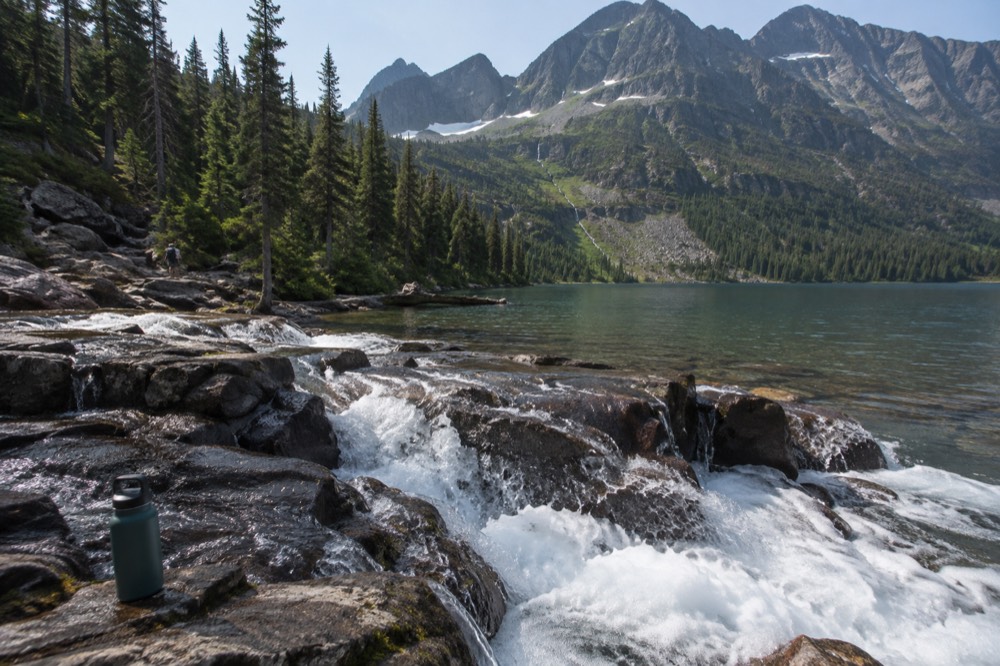
For most readers the honest summary is this: the park itself is cheap, the bed is expensive, and the best-value guided day on the roster costs less than one night of the average hotel room. Build the budget around lodging and season, then spend the savings on the water. A site like Glacier National Park Tour Packages exists mainly because the ticket layer is the part travelers can actually control.
Common Questions About The Cost Of A Glacier National Park Trip
How Much Would A Trip To Glacier National Park Cost?
A four-day trip can cost a few hundred dollars per person if you camp at around $25 per night and self-cater, or well past that with hotel nights at the $378 Whitefish average, all before airfare. Entrance is a fixed $35 per vehicle for seven days, and one guided day, such as the $55 half-day whitewater rafting trip, is a small line compared with lodging.
What Is The Cheapest Way To Do Glacier National Park?
Camp at around $25 per night, enter on a fee-free day if you are a US citizen or resident, build days around free ranger programs and the Trail of the Cedars, and use the $9.99 per group Going-to-the-Sun Road audio tour instead of a guided driving day. That combination strips the budget down to little more than camping, food and fuel before travel to Montana.
Is Going To The Sun Road Free To Drive?
Yes, beyond the $35 seven-day vehicle entrance pass. No vehicle reservations were required anywhere in the park in 2026, though a three-hour parking limit applied at Logan Pass from July 1 through September 7. Vehicles longer than 21 feet or wider than 8 feet including mirrors are prohibited on the alpine section.
How Much Should I Budget For Food At Glacier?
Plan on a modest grocery-based budget up to a full restaurant budget per person per day depending on how much you self-cater. Grocery days with one casual restaurant meal land near the low end; three restaurant meals a day in West Glacier or Whitefish push toward the high end. Full-day guided trips such as the $164 whitewater adventure include lunch, which trims one day's food line.
Are Guided Tours Worth The Money At Glacier?
The water-based ones deliver something you cannot self-serve at a low price: the half-day whitewater trip is $55 per person with a 4.9 rating across 1,959 reviews. Driving tours at $250 per person mainly replace the stress of parking and the alpine road. The audio tour at $9.99 per group is the highest value per dollar on the roster.