Glacier National Park Weather By Month: Conditions, Seasons And What Still Runs
Glacier's weather changes with elevation more than with the calendar: a 68 degree September afternoon in West Glacier can coexist with fresh snow at Logan Pass, 3,400 feet higher. This guide reports the real month-by-month pattern at valley, lake and alpine levels, the wildfire smoke window nobody advertises, and what each condition means for tours.
Short answer
July and August are the warm, busy core months, with West Glacier averaging 80.2 and 79.4 degree highs and 47.3 percent of 2025's 3.1 million visits landing in July and August alone. June and September are cooler and far quieter. The alpine road opened June 22 in 2026 and typically closes by the third Monday in October.
What Is The Weather Actually Like At Glacier National Park?
Glacier's weather is an elevation story before it is a calendar story. West Glacier sits near 3,200 feet, Logan Pass tops out at 6,646 feet, and the National Park Service says the pass runs 10 to 15 degrees Fahrenheit cooler than the valley on any given day. Snow can fall in any month at altitude, and overnight lows can hit freezing anywhere in the park, even in July.
That vertical spread is why two visitors can describe completely different trips from the same week. A party rafting the Middle Fork of the Flathead in late June might swim in 70 degree sunshine near West Glacier, while hikers at Logan Pass cross lingering drifts in 45 degree wind. The park's own weather guidance is blunt about this: plan for four seasons in a single day, because the terrain guarantees them.
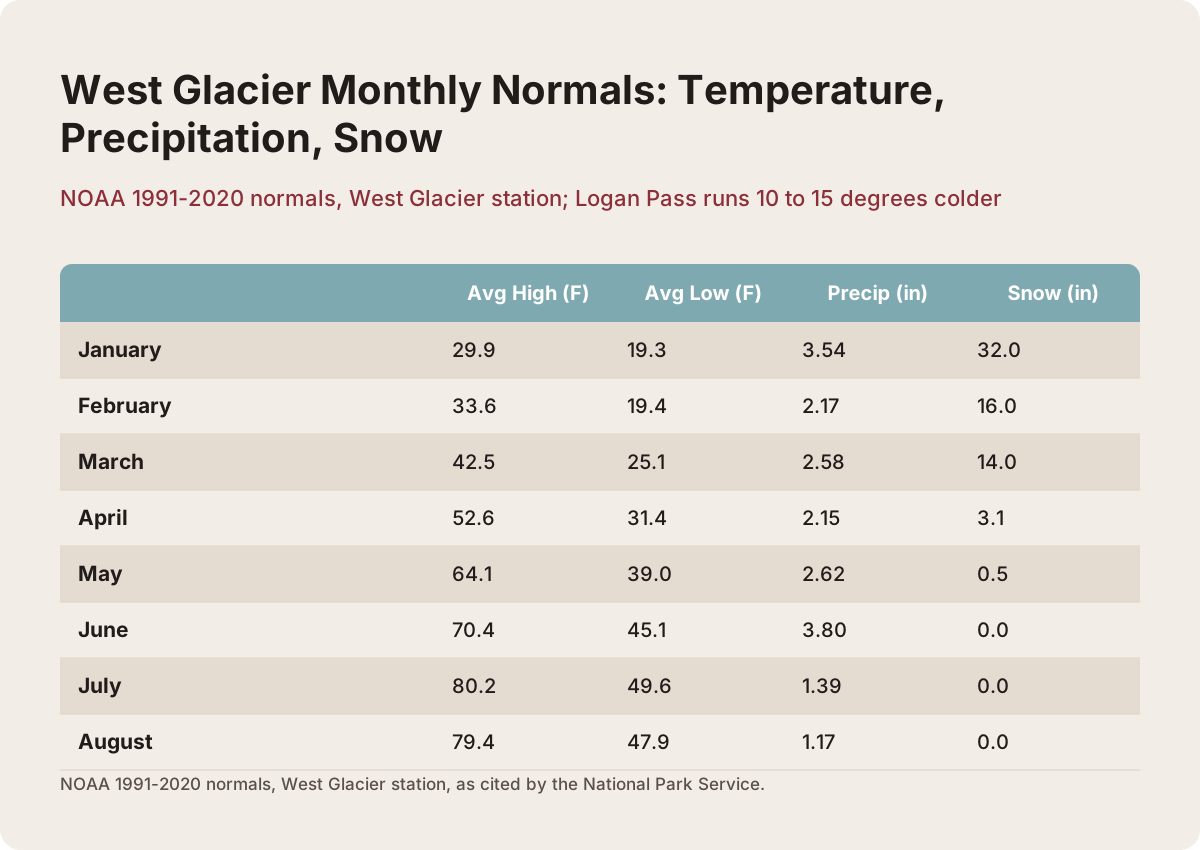
The climate data backs that up. The NOAA 1991-2020 normals for the West Glacier station show July averaging an 80.2 degree high and a 49.6 degree low, with 1.39 inches of precipitation. January averages a 29.9 degree high against a 19.3 degree low, with 32 inches of snow. The west-side lowlands collect about 30 inches of precipitation a year, while isolated high cirques can receive 100 inches or more, according to the park's weather page.
Wind is the wild card most first-time visitors underestimate. East-side downslope gusts often exceed 50 mph and sometimes reach 100 mph, and winter chinook winds can lift the temperature more than 30 degrees in minutes. One historic blizzard dropped 44 inches of snow in a single day. If your itinerary includes the St. Mary or Two Medicine entrances, check the forecast for wind as seriously as you check it for rain.
Glacier National Park Weather By Month: The Full Table
The table below shows the 1991-2020 NOAA monthly normals for the West Glacier station, the most commonly cited baseline for the park. Valley readings understate the high country: Logan Pass runs 10 to 15 degrees colder, and snowfall settles to an average snowpack of roughly 16 feet up high. June through September delivered 83.3 percent of the park's 2025 visitation.
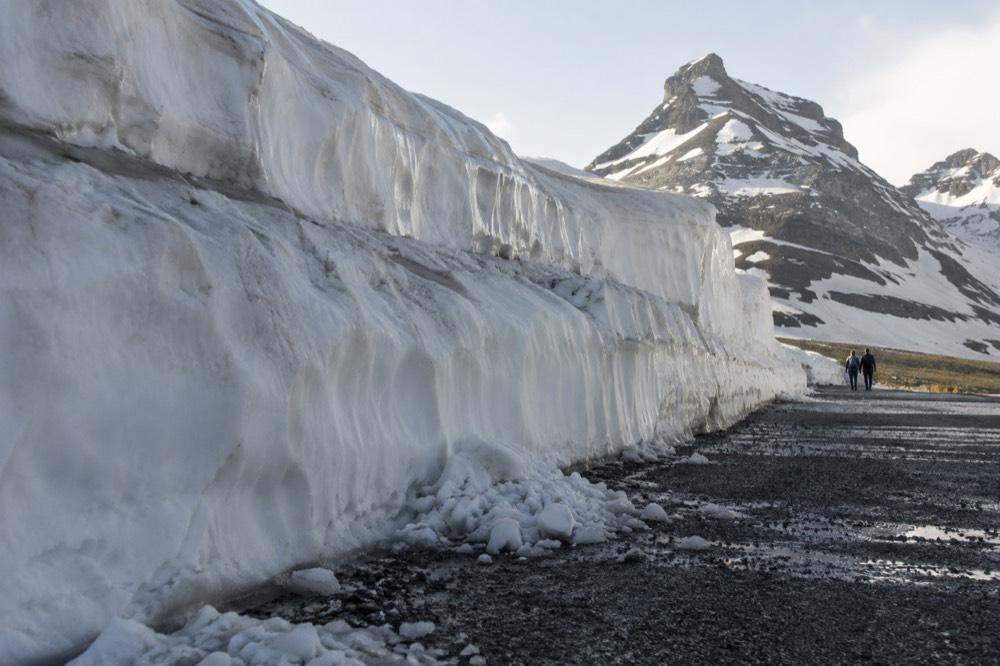
Read the valley numbers as the floor, not the ceiling, of what you will experience. Precipitation peaks in June at 3.80 inches, which is why early summer waterfalls are spectacular and early summer trails are muddy. Snowfall is a winter phenomenon in the valley but not in the mountains, where the snowpack accumulates all season and takes months to plow off Going-to-the-Sun Road.
| Month | Avg High (F) | Avg Low (F) | Precip (in) | Snow (in) |
|---|---|---|---|---|
| January | 29.9 | 19.3 | 3.54 | 32.0 |
| February | 33.6 | 19.4 | 2.17 | 16.0 |
| March | 42.5 | 25.1 | 2.58 | 14.0 |
| April | 52.6 | 31.4 | 2.15 | 3.1 |
| May | 64.1 | 39.0 | 2.62 | 0.5 |
| June | 70.4 | 45.1 | 3.80 | 0.0 |
| July | 80.2 | 49.6 | 1.39 | 0.0 |
| August | 79.4 | 47.9 | 1.17 | 0.0 |
| September | 68.0 | 40.8 | 1.96 | 0.0 |
| October | 51.7 | 32.9 | 3.05 | 2.0 |
| November | 37.0 | 26.4 | 3.23 | 16.2 |
| December | 29.2 | 19.9 | 3.21 | 31.4 |
The visitation pattern follows the warmth almost exactly. In 2025 the park recorded 3,136,557 recreation visits, and July alone accounted for 765,061 of them, against 17,984 in January. Anyone with schedule flexibility should read those two numbers together: the best weather and the biggest crowds are the same months.
When Does Going-To-The-Sun Road Actually Open And Close?
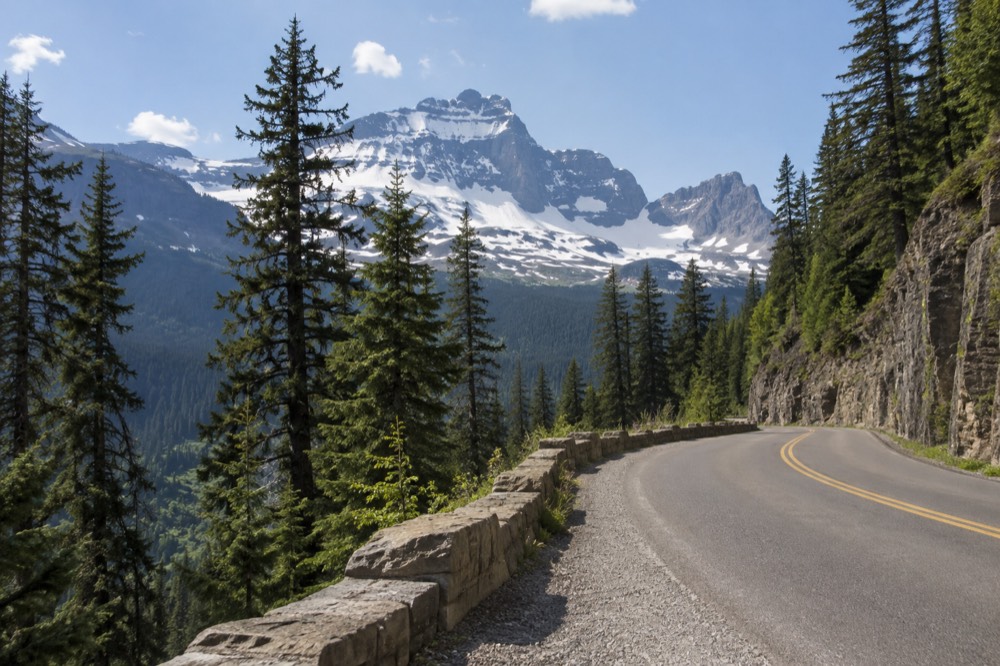
The full 50-mile road, including the alpine section over 6,646-foot Logan Pass, typically opens in late June or early July and closes by the third Monday in October, weather permitting. In 2026 it opened on June 22. Plowing starts April 1 and the Big Drift, the final snow obstacle, is not usually cleared until late May, so June openings are never guaranteed.
The historical record shows how wide the window really is. The official NPS table of Logan Pass openings runs from June 16 in 2016 to July 13 in both 2011 and 2022, a spread of nearly a month. In 2020 a portion of the road stayed closed for the entire season for the first time in park history. Anyone booking a trip in the first half of June should plan around the road possibly not being open over the top.
| Year | Logan Pass Opened | Logan Pass Closed |
|---|---|---|
| 2016 | June 16 | Oct 10 |
| 2017 | June 28 | Sept 3 |
| 2018 | June 22 | Sept 29 |
| 2019 | June 22 | Sept 25 |
| 2020 | July 13 | Oct 9 |
| 2021 | June 25 | Oct 13 |
| 2022 | July 13 | Oct 16 |
| 2026 | June 22 | Typically third Monday in October |
Closures are not only seasonal. The September 14, 2026 snowfall shut the alpine section between Avalanche Creek and Jackson Glacier Overlook temporarily, and the park's status tools are the only reliable way to know the road's state on a given morning. NPS offers road updates by texting GNPROADS to 333111, plus live webcams of the Logan Pass parking lot, detailed on the road information page.
Vehicle size matters here too. Vehicles longer than 21 feet or wider than 8 feet are prohibited between Avalanche Creek and Rising Sun, and vehicles over 10 feet tall may struggle under rock overhangs west of the pass. That restriction is why guided driving tours exist: the park itself tells oversized-vehicle visitors to either take the shuttle or book a tour with an authorized operator.
What Is The Smoke Season Nobody Advertises?
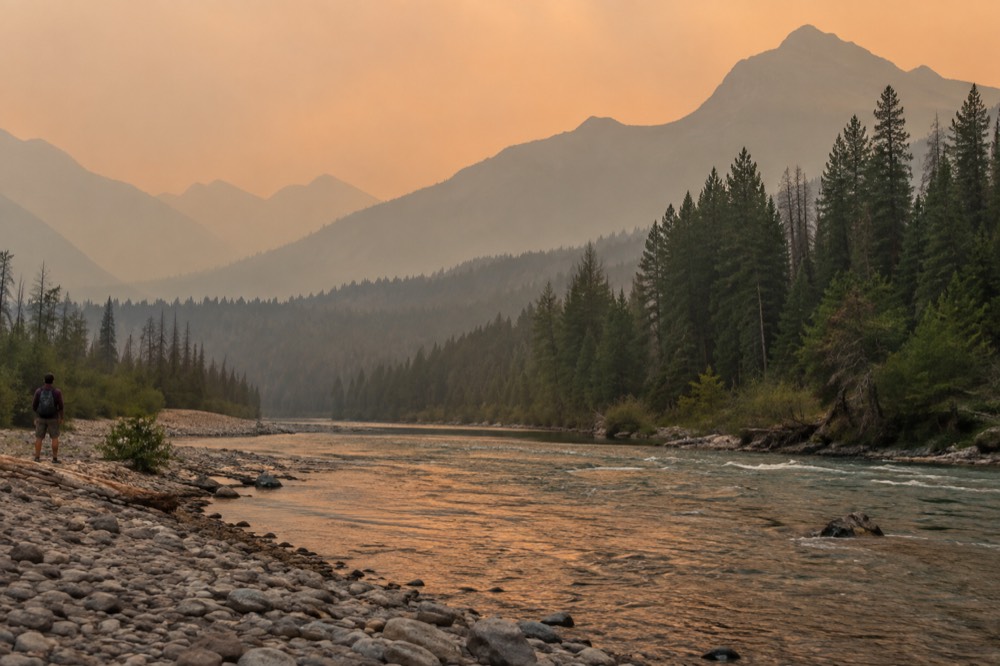
Wildfire smoke is a real, recurring factor in Glacier's late July-through-September weather, and it can shut views for days at a time even when the sky above your campsite looks clear. In 2026 the lightning-ignited Quartz Fire on the west side grew to 1,163 acres, with associated trail and campground closures. Smoke does not follow the rain gauge, so it deserves its own line in any month-by-month plan.
The mechanics are simple. Montana's fire season peaks in late summer, when the July and August precipitation numbers in the table above, 1.39 and 1.17 inches, have baked the forest into fuel. Smoke drifts from fires inside the park, like the Quartz Fire in the Quartz Lake drainage, and from much larger fires elsewhere in the northern Rockies. The result is haze that can reduce visibility at Logan Pass to a few miles on the worst days.
The practical response is to build flexibility into the second half of your trip. Morning hours often carry clearer air than afternoons, and valley activities, rafting, lake kayaking, fly fishing, tolerate haze better than the big-view alpine objectives. A visitor who front-loads Going-to-the-Sun Road and the Highline Trail early in a week leaves room to swap in river days if smoke arrives. The park's daily conditions report lists active fires and closures each morning.
Smoke also interacts with the road itself. Fire activity has closed road sections in past seasons, and the Sprague Fire closed Going-to-the-Sun Road early in 2017. Checking both the fire report and the road status on the same morning is standard practice for late-summer visits, not paranoia.
What Are May, June And Early July Really Like?
May and June are the park's wettest, greenest and least predictable months: June averages 3.80 inches of rain in West Glacier, snow lingers at Logan Pass, and the alpine road may not open until late June or even July. The payoff is roaring waterfalls, empty trails and peak river flows. Mid-June 2026 snowpack was below median after a mild winter, which helped the road open June 22.
May is a shoulder month with a split personality. Valley trails dry out and the 64.1 degree average high feels genuinely pleasant, but Lake McDonald Lodge only opened May 15 in 2026, many high trails hold snow, and the alpine road is still a plowing project. The Apgar area, Lake McDonald shoreline and lower elevation walks are the reliable objectives.
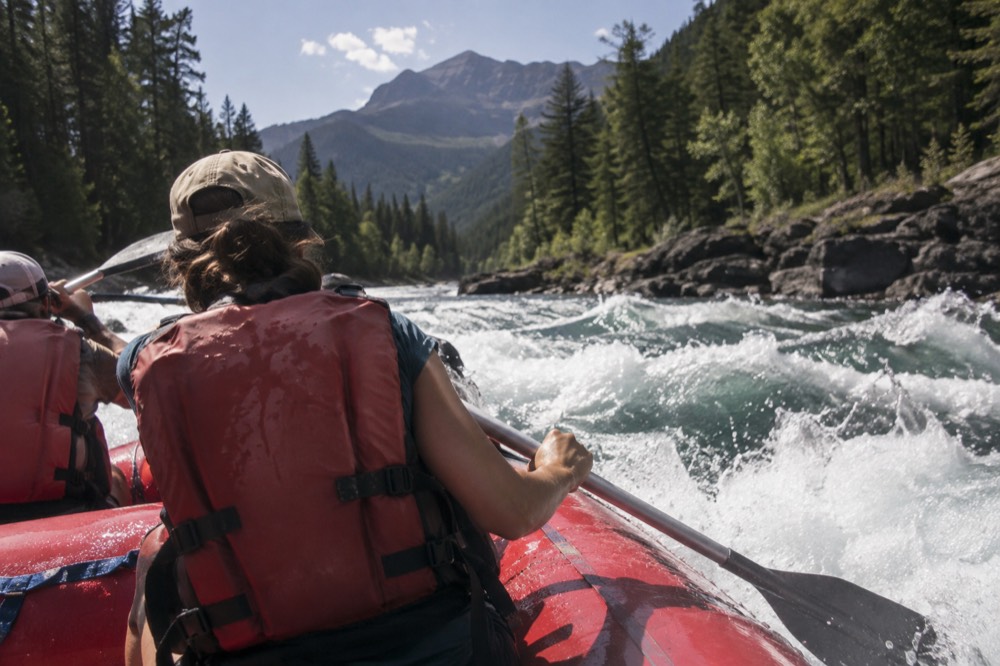
June is the month of trade-offs. Rain is at its annual maximum, mosquitoes are at theirs, and the Highline Trail was still closed by snow into mid-September 2026 after a September snowfall, let alone in June. But the waterfalls are at full throttle, the rafting is at its most exciting because the Middle Fork runs high with snowmelt, and crowds are a fraction of July's. The half-day whitewater trip on the Middle Fork, rated 4.9 across 1,959 reviews and priced from $55 per person, is arguably at its best right now, with the caveat that high water can mean higher minimum ages or weight rules at the outfitter's discretion.
Early July is the transition to peak season. The road opening, the shuttle system start on July 1 and the arrival of the full tour calendar all land within about ten days of each other. Book the marquee items for the second week of July onward if the alpine section is the point of your trip, and read the Going-to-the-Sun Road opening dates guide before locking anything in.
What Are September And October Really Like?
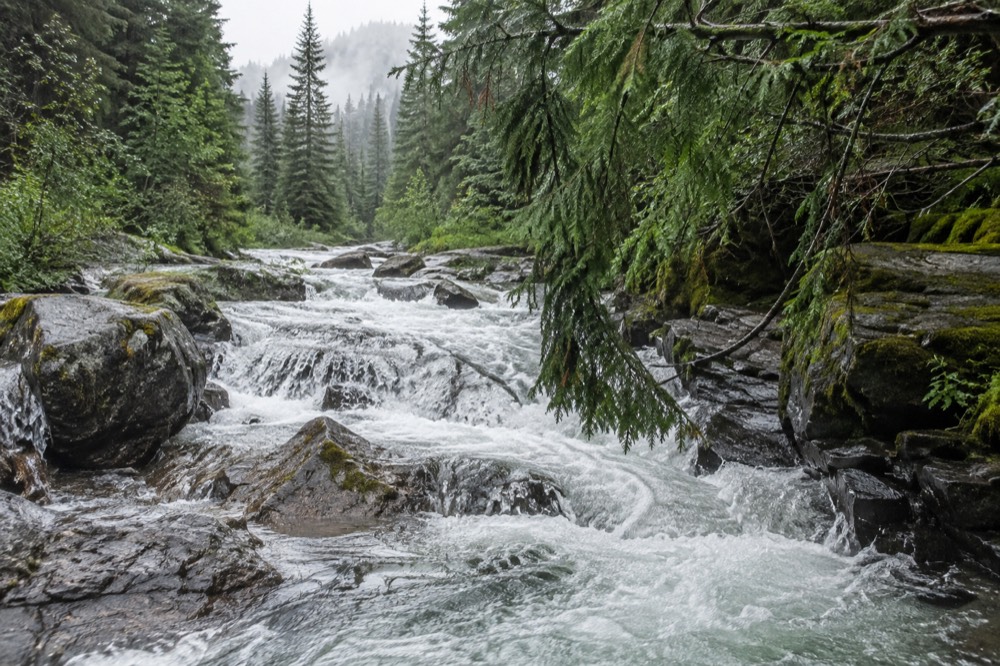
September averages a 68.0 degree high in West Glacier against 552,479 visits in 2025, a third fewer than July, and it is the best-kept shoulder window: warm days, active wildlife and the first fall color. The risk is real cold: snow can fall at lower elevations as early as mid-September, and the September 14, 2026 storm closed the alpine road and the Highline and Hidden Lake trails in one morning.
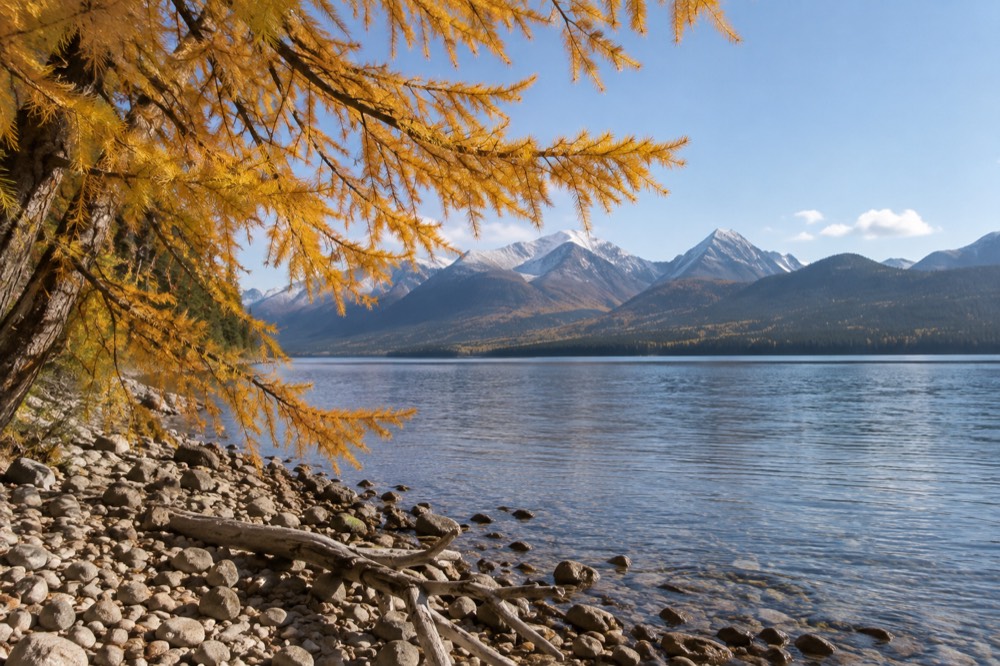
The first half of September is, in many locals' judgment, the finest weather window of the year. Larch and aspen color builds toward late September, with peak foliage forecast around September 27 in 2026 and western larch turning around October 10. Wildlife is active, trail traffic is down, and the 40.8 degree average low is cold at dawn but comfortable by afternoon at lake level.
The second half of the month is when the alpine gamble begins. The 2026 season proved the point: a single September 14 snowfall, with snow levels to 6,500 feet, closed the road above Avalanche and shut the Logan Pass trails. That closure was temporary, but it signals the season's direction. By October the pattern is set: the third Monday in October is the typical road closure date, October's average high drops to 51.7 degrees, and valley snow returns with a 2.0 inch monthly average.
October visitors get something July visitors never see: empty overlooks, golden larch and the park to themselves, with the understanding that the alpine section may close on any given morning and that most concessioner tours have ended for the season. The West Side Crown of the Continent Red Bus tour, for instance, ran only through September 20, 2026. Check what is actually operating before you drive out, and pair this guide with the site's best time to visit Glacier National Park planning page.
What Is Winter Like And What Still Runs?
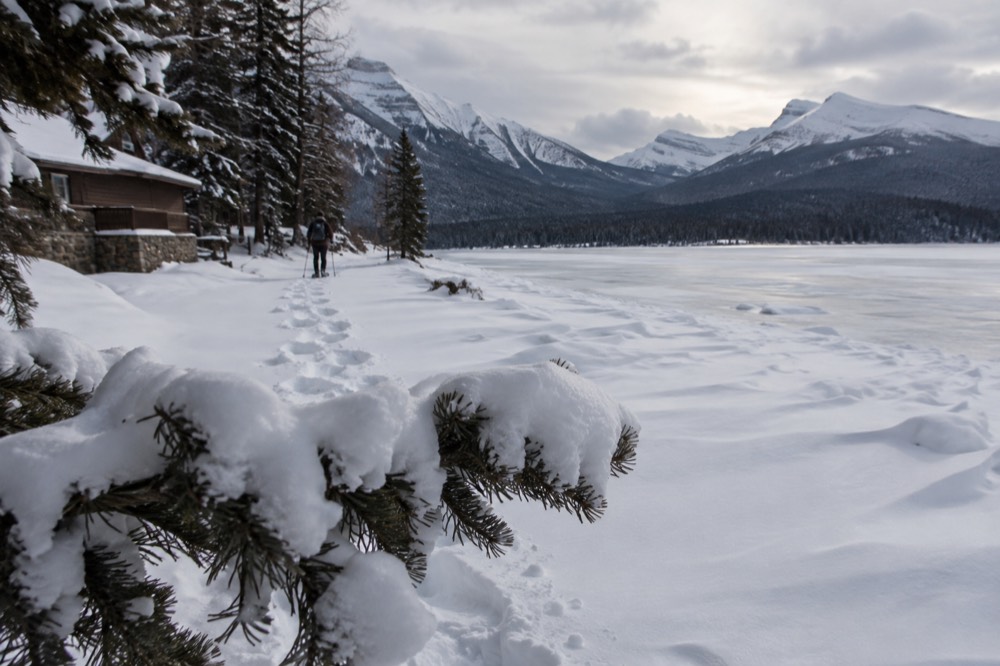
Winter, November through April, is the longest season in the park: December and January average 29.2 and 29.9 degree highs, monthly valley snowfall of roughly 32 inches, and visitation collapses to under 50,000 per month. Going-to-the-Sun Road is closed at the alpine section, but the west side stays open to Lake McDonald, and a small set of guided winter tours operates from West Glacier.
The road closure defines the season. Vehicles can reach Lake McDonald and Apgar from the west, and the St. Mary side keeps partial access, but the alpine section is a ski and snowmobile corridor until spring plowing begins. The entrance fee drops to $25 per vehicle for the winter rate from November 1 to April 30, and several fee-free days, including November 11 and February 16, fall inside the season for U.S. citizens and residents, per the park's fees page.
What still runs is a short but genuine list. The Winter Driving Tour, a 5 to 6 hour guided trip with hotel pickup and lunch included, rated 5.0 across 34 reviews and priced from $250 per person, covers West Glacier, Apgar and Lake McDonald when the high country is shut. Guided snowshoe treks operate from $230 per person, including a combo driving-plus-snowshoe option. For travelers whose image of Glacier is the summer alpine road, these winter trips are the honest answer to what is possible.
Cross-country skiing and snowshoeing on your own are the other winter anchors, with the Apgar area and the closed road surface itself serving as routes. The practical constraints are cold, short daylight and limited services: many gateway lodges and nearly all in-park concessions close for the winter. The free things to do in Glacier National Park guide covers the no-cost winter options, including ranger-led snowshoe walks when they are offered.
How Does Weather Change Which Tours Run?
Weather is the single biggest variable in Glacier's tour calendar: rafting runs May through September with peak water in June, alpine-dependent driving and hiking tours run only between the road opening and the typical mid-October closure, and winter tours fill the rest of the year. Ratings and prices below come from each tour's live listing, and every trip listed includes free cancellation.
The pattern sorts the roster cleanly. Water-based trips, the half-day whitewater run and the half-day scenic float, both 4.9-rated and both from $55 per person, tolerate almost any summer weather and benefit from June's high water. Road-dependent trips, like the West Side Driving Tour, 4.8 across 37 reviews from $250 per person, need the road but not the alpine section, which is why it runs even when Logan Pass is closed. Snow-dependent trips, the snowshoe treks, need the opposite.
| Season | Road Status | Best Tour Fits | Typical West Glacier High |
|---|---|---|---|
| Nov to Apr | Alpine section closed | Winter Driving Tour, snowshoe treks | 29.2 to 52.6 F |
| May to mid-June | Valley sections only | Rafting at peak flow, nature walks | 64.1 to 70.4 F |
| Late June to Sept | Full road open | Driving tours, guided hikes, floats | 68.0 to 80.2 F |
| Oct | Closures begin | West-side driving, e-bikes on low routes | 51.7 F |
Booking strategy follows the same logic. Reserve alpine-dependent trips for the back half of your window so a snow closure does not erase the centerpiece, and hold a river or lake day as the flexible fallback. The site's Glacier National Park Tour Packages comparison pages break the full roster down by activity, price basis and review count, which matters because eleven listings price per group rather than per person.
One planning note that saves real money: the 2026 season required no vehicle reservations anywhere in the park, but the ticketed Logan Pass shuttle ran July 1 to September 7 with a $1 per-ticket processing fee. Travelers who assume last summer's reservation chaos still applies are over-preparing for a problem the park has paused.
What Should You Pack For Glacier's Weather?
Pack for a 30 degree daily swing and possible precipitation in any month: layers, a real rain shell, sun protection for the high country and warm gear for evenings that drop to the 40s even in July. Winter demands full snow equipment. The one item the park singles out for trail users is bear spray, which rangers call the most effective deterrent shown, and which must be carried accessible, not buried in a pack.
The layering math is straightforward. July's 80.2 degree valley high cools to a 49.6 degree average low, and Logan Pass runs 10 to 15 degrees colder than the valley, so a July afternoon at Logan Pass can sit in the mid 60s or, with wind and cloud, in the 40s. A base layer, a fleece or insulated mid layer and a waterproof shell cover every realistic combination. Sun protection matters more than newcomers expect: the sun at 6,646 feet is strong, and snow glare doubles exposure into July.
| Season | Core Layers | Extras | Bear Spray |
|---|---|---|---|
| Nov to Apr | Insulated jacket, base layers, snow boots | Traction devices, gloves, hat | Carry on low trails |
| May to June | Rain shell, fleece, quick-dry layers | Insect repellent, waterproof footwear | Carry, required on trails |
| July to Aug | Sun shirt, light fleece, rain shell | Sun hat, sunglasses, warm sleep layer | Carry, required on trails |
| Sept to Oct | Fleece, insulated jacket, rain shell | Warm hat, gloves for alpine starts | Carry, required on trails |
Footwear deserves its own sentence: June's 3.80 inches of rain means mud on nearly every trail, and snow lingers on shaded high routes well into summer. Waterproof hiking shoes are not optional in the shoulder months. The park's guided hikes guide covers which trails hold snow longest if you are choosing between guided and independent options.
Bear spray rules are specific: it must be EPA-registered with 1 to 2 percent capsaicinoids, carried only for defense against aggressive wildlife, and never used as a repellent on gear or campsites. Canadian customs accepts U.S. EPA-labeled canisters, which matters for Waterton combination trips. Keep 100 yards from bears and wolves and 25 yards from all other wildlife, and if an animal's behavior changes because of you, you are too close.
Common Questions About Glacier National Park Weather
What Is The Best Month For Weather At Glacier National Park?
July and August are the warmest and driest, with West Glacier averaging 80.2 and 79.4 degree highs and the lowest monthly precipitation of the year. Early September is the best shoulder compromise: a 68.0 degree average high, far fewer crowds, and fall color beginning, with the caveat that snow can close the alpine road as early as mid-September.
Does It Snow At Glacier National Park In Summer?
Yes. The National Park Service states that snow can fall in any month, and overnight lows can hit freezing anywhere in the park. On September 14, 2026, snow levels dropped to 6,500 feet and closed the alpine section of Going-to-the-Sun Road and the Highline and Hidden Lake trails, all before the official end of summer.
How Much Cooler Is Logan Pass Than West Glacier?
Logan Pass runs 10 to 15 degrees Fahrenheit cooler than West Glacier, per the park's weather page. On a day when the valley hits 80 degrees, the pass at 6,646 feet can be in the mid 60s, and with wind it can feel 20 degrees colder. Add a layer for any alpine stop.
When Is Smoke Season At Glacier National Park?
Smoke from wildfires is most likely from late July through September, when dry fuels and regional fire activity combine. In 2026 the Quartz Fire on the west side grew to 1,163 acres with trail and campground closures. Check the park's daily conditions report each morning, and keep flexible plans so smoke days can become river or lake days.
What Is The Coldest Month At Glacier National Park?
January, with an average high of 29.9 degrees and an average low of 19.3 degrees at the West Glacier station, plus an average of 32 inches of snow. December is nearly identical, with a 29.2 degree high and 31.4 inches of snow. Visitation reflects it: January 2025 saw just 17,984 recreation visits.
Does Bad Weather Cancel Tours At Glacier National Park?
Rarely for rain. Rafting and float trips run in almost all summer conditions, and driving tours run rain or shine, with alternate routes if the alpine road is closed, as the Red Bus operator's own terms state. The trips that genuinely stop are the ones weather makes impossible: alpine tours when the road is closed, and water trips when the river is at flood stage. Every listing on this site's roster carries free cancellation.