Which Is Better To Visit, Yellowstone Or Glacier?
An honest comparison of Yellowstone and Glacier on the things that actually differ: wildlife, driving, season length, and how much each park rewards a guide.
Which Is Better To Visit, Yellowstone Or Glacier?
Neither park is objectively better, but they are better at different things. Yellowstone concentrates its icons around a drivable loop and stays reachable by car for most of the year. Glacier offers wilder alpine scenery, a shorter and more fragile access season, and a famous road that large vehicles cannot legally drive at all. The honest answer depends on your dates, your vehicle, and whether you want geology or alpine wilderness.
Start with what the two parks are. Yellowstone is built around thermal spectacle: geysers, hot springs, and mud pots, with wildlife drawn to the open valleys between them. Glacier is built around rock and ice: 184 named mountains, 135 named lakes, and 26 glaciers that still meet the 25-acre threshold, scattered across more than a million acres of Montana wilderness. The scenery you remember from Yellowstone is largely visible from a car window. The scenery you remember from Glacier is mostly vertical, and a great deal of it sits at the end of a trail.
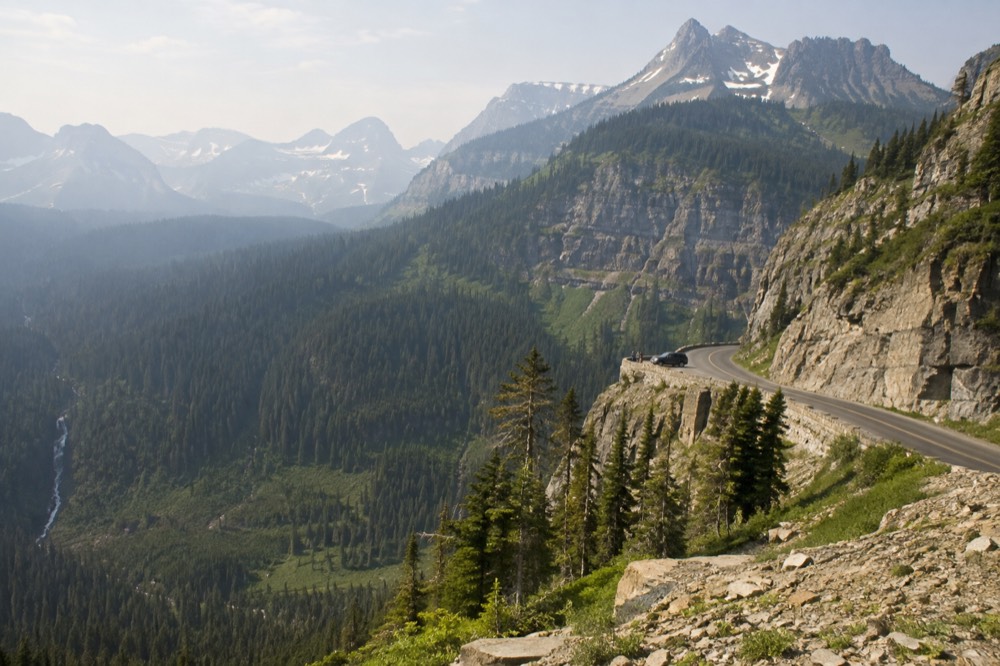
The practical difference shows up in the calendar. Glacier's alpine section of Going-to-the-Sun Road, the 50-mile crossing that ties the park together, typically opens in late June or early July and closes around the third Monday in October, weather permitting. In 2026 the full road opened on June 22, and light snowfall closed the alpine section temporarily as early as September 14. That is a roughly fifteen-week window for the park's single most famous drive, and snow can fall at lower elevations as early as mid-September. Whatever you have heard about Yellowstone's shoulder seasons, Glacier's alpine season is simply shorter and less predictable.
There is also a difference in what a guide adds. Glacier is the park where the guided-versus-independent question genuinely matters, because of vehicle size limits, parking pilots, and a shuttle system that changed completely in 2026. If your interest is a self-drive trip with maximum flexibility, Yellowstone rewards that. If your interest is alpine scenery you cannot legally reach in a rental RV, Glacier is where a tour earns its price.
If you already know Glacier is your pick, these three options cover the main ways travelers experience the park:
Which Park Has Better Wildlife Viewing?
Yellowstone is the more reliable wildlife park, because its open valley geography concentrates animals within view of the road network, while Glacier's dense forest and steep terrain hide them. Glacier still holds roughly 300 grizzly bears by National Park Service estimates referenced in 2026 reporting, plus mountain goats, bighorn sheep, and moose, but sightings there are more a matter of timing and trail choice than of driving a loop.
The honest mechanics matter here. In Glacier, the rules are strict and enforced: staying at least 100 yards from bears and wolves, and 25 yards from everything else, is not a suggestion but a regulation. Roadside bears cause traffic jams, and the park asks drivers to travel at least 100 yards past a bear before pulling over safely. Most Glacier visitors who see wildlife do so on early-morning drives along the Many Glacier or Two Medicine roads, or on trails like the Highline, where mountain goats work the cliffs near Logan Pass.
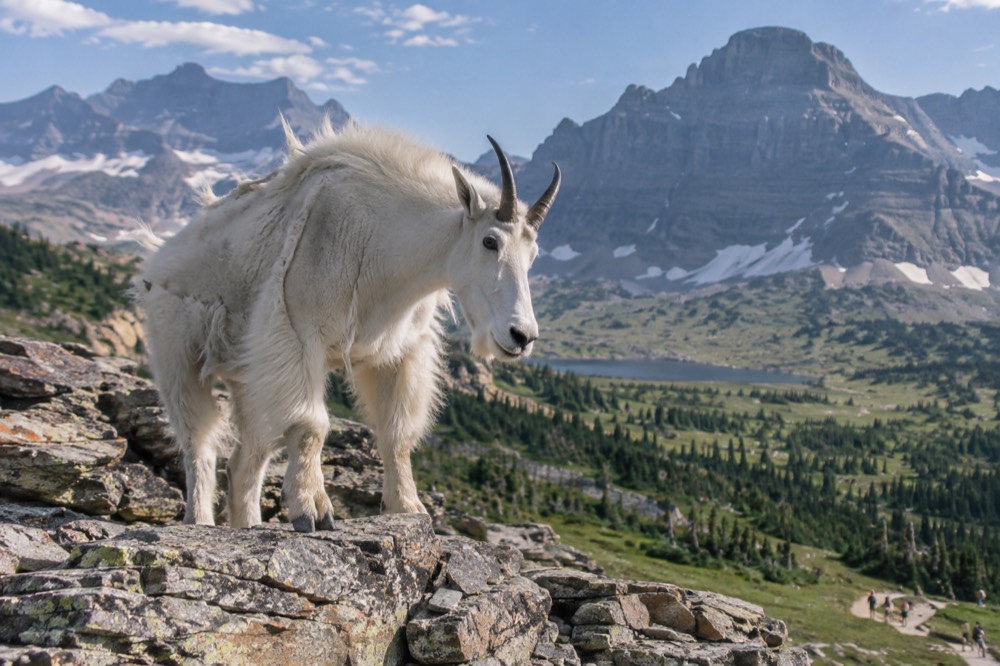
One caution worth planning around: Glacier's mountain goat numbers dropped 45 percent between 2008 and 2019, according to a USGS analysis published in 2026, with median goats per site falling from 77.8 to 42.3 before stabilizing. The goats are still there at Logan Pass, but the easy assumptions older guidebooks make about abundance deserve a discount. The National Park Service states the wildlife distance rules plainly on its bear safety page, and they apply to photographers as much as to hikers.
What Glacier offers that Yellowstone cannot is the setting. Watching a grizzly forage in a meadow below high peaks, or a goat graze above Going-to-the-Sun Road, is a different experience from watching bison from a boardwalk queue. It is less guaranteed and more memorable when it happens. Travelers who want both often split the difference: Yellowstone for volume, Glacier for the backdrop.
Which Park Is Easier To Drive?
Yellowstone is dramatically easier to drive, with a loop road system designed for ordinary vehicles and year-round access to most of its lower-elevation roads. Glacier's signature drive has a hard legal limit: vehicles longer than 21 feet including bumpers, or wider than 8 feet including mirrors, are prohibited on the alpine section between Avalanche Creek and Rising Sun. Most rental RVs and many large campervans simply cannot make the drive.
The 21-foot rule is the single most consequential driving fact in either park, and it is why Glacier has a guided tour industry at all. The National Park Service states the restriction on its Going-to-the-Sun Road information page, and the park itself names a commercial guided tour as the answer for drivers of oversized vehicles who still want to reach Logan Pass. In 2026 the park also ran a three-hour parking limit at the Logan Pass lot from July 1 through September 7, a pilot aimed at turnover in a lot that fills early.
| Driving factor | Yellowstone | Glacier |
|---|---|---|
| Signature road | Loop road network, multiple entrances | Going-to-the-Sun Road, 50 miles, one crossing |
| Vehicle size limits | No comparable alpine restriction | No vehicles over 21 feet long or 8 feet wide on the alpine section |
| Peak parking | Busy but spread across many lots | Logan Pass lot capped at a three-hour stay in summer |
| Entry system in 2026 | Standard entrance fees | No vehicle reservations required anywhere, but a ticketed shuttle to Logan Pass ran July 1 to September 7 |
| Typical alpine access | Roads reachable most of the year | Late June or early July to around the third Monday in October, weather permitting |
For 2026 specifically, Glacier removed vehicle reservations entirely after five years of timed-entry systems, which made independent driving easier than it has been since 2020. The trade-off is that the park replaced reservations with the shuttle and parking pilots, so the alpine corridor still demands either an early start or a shuttle ticket bought on Recreation.gov for a $1 per-person processing fee. If you want to compare the two access philosophies in depth, the site's guide on driving yourself versus a guided tour at Glacier works through the numbers.
If you are leaning toward Glacier and driving your own car, an audio tour turns the 50-mile road into a narrated drive without adding a schedule:
Not sure yet whether a narrated drive or a seat-based tour suits you better?
Which Park Has The Longer Season?
Yellowstone's season is meaningfully longer, with roads and key attractions reachable across most of the calendar, while Glacier's alpine core is a summer-only proposition. Glacier's 2025 visitation numbers show the compression starkly: July and August alone accounted for 1,483,827 of the year's 3,136,557 recreation visits, 47.3 percent of the annual total. Outside that window, Glacier becomes a different, quieter, much colder park.
The monthly shape of Glacier's year is worth seeing in full, because it is the strongest planning argument either park can make:
| Month (2025) | Recreation visits | Month (2025) | Recreation visits |
|---|---|---|---|
| January | 17,984 | July | 765,061 |
| February | 15,202 | August | 718,766 |
| March | 25,909 | September | 552,479 |
| April | 48,576 | October | 127,537 |
| May | 238,766 | November | 27,967 |
| June | 576,577 | December | 21,733 |
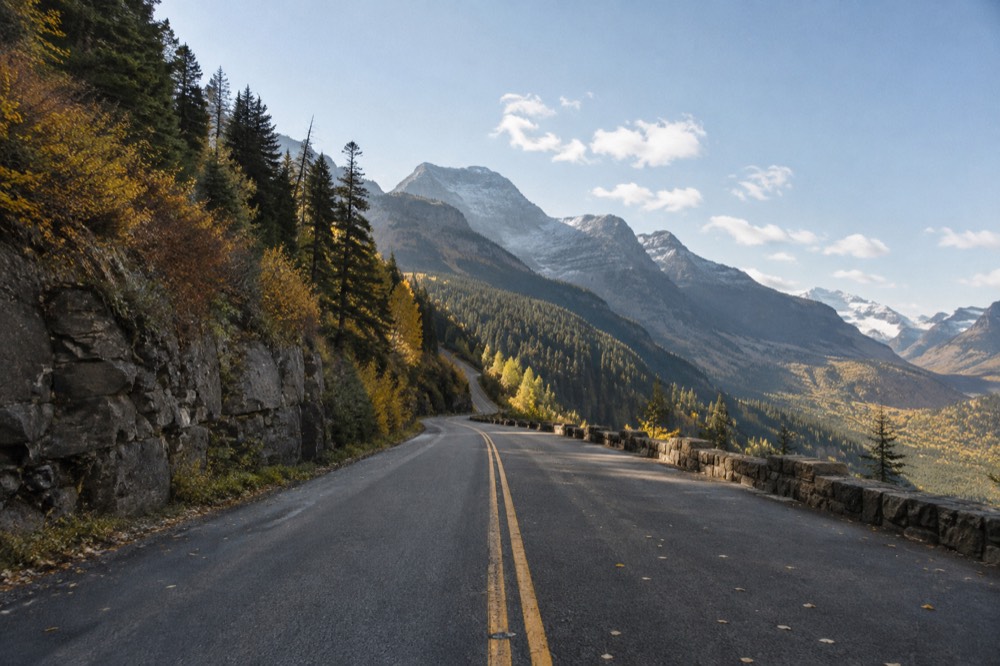
That is not an argument against Glacier so much as an argument for timing it. September there is a genuinely different experience: 552,479 visits spread over 30 days instead of July's crush, active wildlife, and fall color that in 2026 was forecast to peak around September 27, with western larch turning around October 10. The risk is weather. In 2026, snow closed the alpine road and the Highline Trail on September 14, the kind of event that can end an alpine itinerary with little warning. West Glacier's climate averages show September highs of 68 degrees, but Logan Pass runs 10 to 15 degrees cooler than the valley, and snow can fall in any month.
Winter flips the comparison again. Glacier in November through April is a snowsports and quiet-roads park, with the West Glacier station averaging more than 30 inches of snow in both January and December. Winter driving tours out of West Glacier do run, priced from $250 per person with lunch and hotel pickup included. But if your mental image of the trip is iconic drives and full access, Glacier's honest season is roughly late June through late September, and Yellowstone gives you far more calendar to work with. The site's deeper breakdown of the best time to visit Glacier covers the shoulder-season trade-offs in detail.
Which Park Rewards A Guided Tour More?
Glacier rewards a guided or semi-guided day more than Yellowstone does, because its constraints are exactly the problems tours solve: the 21-foot vehicle limit, the Logan Pass parking cap, and a short season in which mistakes are expensive. In Yellowstone, a guide mostly adds interpretation to a drive you could make yourself. In Glacier, a tour can be the difference between reaching the alpine section and watching it from below.
Consider the concrete options. A traveler arriving in an RV has three realistic routes to Logan Pass: the ticketed shuttle, a seat in an authorized tour vehicle, or the park's own answer, a commercial guided tour. Only two operators, Glacier National Park Lodges with the Red Buses and Sun Tours, are authorized to run motor vehicle tours on the key road segment between Lake McDonald Lodge and Rising Sun. Those sell direct through the operators, and the Red Bus fleet of 33 historic vehicles, each capped at 16 passengers, tends to sell out daily in season.
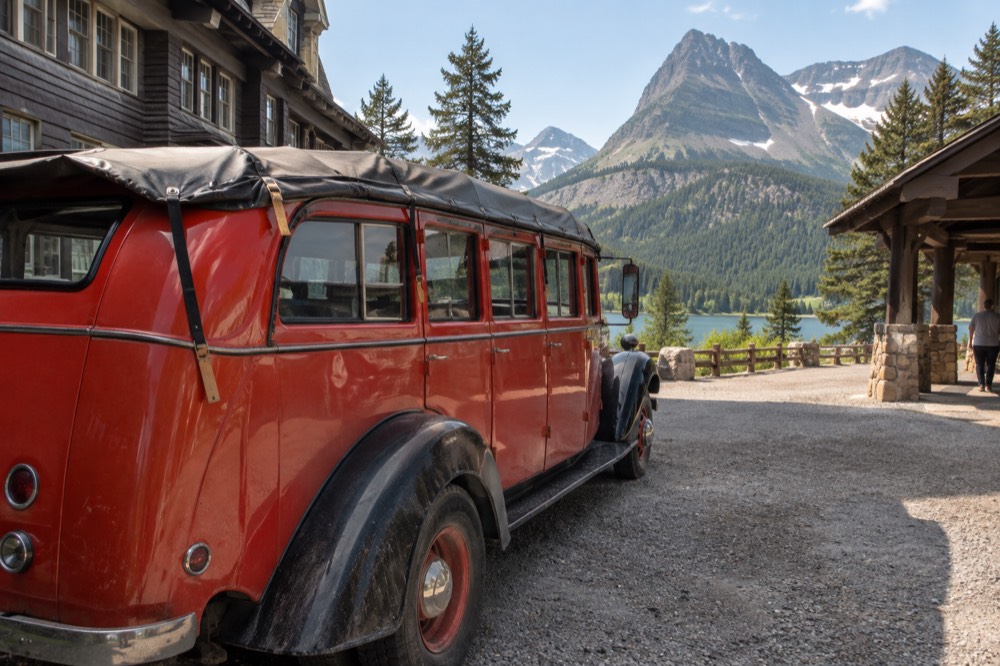
The bookable alternatives on the affiliate side are real but different in kind. The Going-to-the-Sun Road audio tour, from $9.99 per group for up to 15 people, turns your own car into the tour vehicle, with a 4 rating across 27 reviews and narration at 27 confirmed stops from West Glacier to Saint Mary. A fuller private audio driving tour runs from $19.99 per group for up to 8, holding 4.4 across 118 reviews. Neither replaces a live guide, and neither gets an oversized vehicle past the 21-foot rule, but both solve the interpretation problem for ordinary cars at a price no seat-based tour can approach. This site, Glacier National Park Tour Packages, exists largely because that distinction, what is bookable online versus what must be booked direct, confuses so many planners.
For travelers who want the full guided structure without driving at all, a 3-day small-group tour from Seattle with a guide, from $1,099 per person, covers Lake McDonald, Apgar Visitor Center, and Logan Pass with hotel pickup included. It is a new listing with no reviews yet, so it carries no rating worth quoting, but it is the closest thing on the roster to a packaged Glacier trip:
Can You Visit Both Parks On One Trip?
Yes, and it is a common plan: a typical road-trip itinerary linking Glacier and Yellowstone covers 10 to 12 days and roughly 900 miles, with 3 to 4 days allocated to each park and driving segments routed via Helena or Missoula. The pairing works because the parks complement rather than duplicate each other. Ten days is the realistic floor; anything shorter turns the drive into the trip.
The route logic is simple. From West Glacier, the park's western hub, the drive south runs through Kalispell and then down the corridor toward Helena or Missoula before bending toward Yellowstone's northern or western entrances. Breaking it up matters: the middle day of driving passes through Montana ranch country and a couple of genuinely worthwhile small towns, and travelers who rush it tend to regret arriving at the second park tired. Give Glacier the alpine days and Yellowstone the wildlife mornings, and the two parks stop competing.
The main planning trap is season alignment. Glacier's alpine season opens in late June at the earliest, which pushes the combined trip into July or September, and both parks are at their busiest in July. A mid-September version is the connoisseur's itinerary: Glacier's fall color and thinning crowds, Yellowstone's elk rut, and lower lodging prices, at the cost of Glacier's weather risk. Anyone attempting it should watch Glacier's road status closely, since the park posts updates and offers a text alert service for Going-to-the-Sun Road conditions. The site's dedicated piece on combining Glacier and Yellowstone in one trip lays out the routing in more detail.
Before you commit to either park, these are the three formats most travelers compare for Glacier:
Common Questions About Choosing Between Yellowstone And Glacier
Which Is Better To Visit, Yellowstone Or Glacier?
It depends on what the trip is for. Yellowstone is better for guaranteed roadside wildlife, thermal features, and a longer visiting season. Glacier is better for alpine scenery, a shorter and wilder season, and a famous mountain road that rewards planning. If you can only choose one and your dates fall outside late June through September, Yellowstone is the safer pick.
Is Glacier Harder To Visit Than Yellowstone?
In practical terms, yes. Glacier's alpine core is reachable only in summer, its signature road bans vehicles over 21 feet long or 8 feet wide, and its Logan Pass parking was capped at three hours during the 2026 peak season. Yellowstone spreads its traffic across a loop system and multiple entrances and keeps most roads open far longer.
Do You Need A Guide At Glacier National Park?
You do not need one, but a guide or audio tour solves real problems there. The 21-foot vehicle limit keeps most RVs off the alpine road, the authorized Red Bus and Sun Tours vehicles sell direct and often sell out, and audio tours from $9.99 to $19.99 per group let ordinary cars drive the full 50 miles with narration.
Which Park Is Less Crowded?
Glacier outside its peak, by a wide margin. Glacier drew 3,136,557 recreation visits in 2025, and 47.3 percent of them arrived in July and August. Its September, May, and shoulder months are dramatically quieter, while its July is intense. Yellowstone spreads its visitors across a longer season and a larger road network.
Can You See Glaciers And Geysers On The Same Trip?
Not on the same day, but on the same 10 to 12 day road trip, yes. The two parks sit roughly 900 driving miles apart, usually routed via Helena or Missoula, and the pairing is common enough that several multi-park operators sell it as a single package.
When Is The Worst Time To Visit Glacier?
Late October through late June if your goal is the alpine section of Going-to-the-Sun Road, which typically closes by the third Monday in October and reopens in late June or early July. Winter visits are possible and beautiful, but they are a different kind of trip, built for snowshoeing and quiet roads rather than the famous drive.